

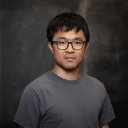
 Shi Chen
· 4 previous affiliations
- Massachusetts Institute of TechnologySince 2024
- Instructor · 2024–2027
- University of Wisconsin–Madison2018–2024
- PhD student · 2018–2024
- Intern · 2022
- Tsinghua University2013–2018
- Undergrad student · 2013–2018
6 other authors named Shi Chen: Shi Chen (International Computer Science Institute · 39 papers), Shi Chen (Zhejiang University · 9 papers), Shi Chen (4 papers), Shi Chen (2 papers), Shi Chen (1 paper), and 1 more
Research Overview
Shi Chen focuses on the mathematical foundations of machine learning and the asymptotic analysis of multiscale partial differential equations. His trajectory bridges rigorous mean-field limits for neural networks with advanced numerical methods for physical systems. Recently, his work investigates the theoretical dynamics of deep learning architectures, including transformers and generative models, to understand their scaling and convergence properties.
Research Trajectory
Chen's early work established a strong foundation in the asymptotic analysis of physical systems and partial differential equations. In 2021, he investigated the classical limit of quantum dynamics, deriving a radiative transfer equation from the varying-mass Schrödinger equation in Classical limit for the varying-mass Schrödinger equation with random inhomogeneities. This contributed to the broader area of Overcoming the Resolution Bottleneck in Highly Oscillatory Simulations. Expanding on multiscale problems, he introduced a domain decomposition framework in Manifold Learning and Nonlinear Homogenization (2022), which leverages manifold learning to accelerate the solution of nonlinear PDEs, advancing the research direction of Learning Sub-Grid Physics for Efficient High-Fidelity Simulation.
Concurrently, Chen began applying mean-field analysis to the optimization of deep neural networks. With collaborators, he examined the phenomenon of zero-loss global optimization in overparameterized networks. In Overparameterization of Deep ResNet: Zero Loss and Mean-field Analysis, the training of Residual Neural Networks was modeled as a gradient flow for a probability distribution. This theoretical framework was further formalized in On the Global Convergence of Gradient Descent for multi-layer ResNets in the mean-field regime, which established convergence properties for large networks by translating the training process into a gradient-flow PDE.
In 2023, his research expanded across numerical methods, optimization, and geometric deep learning. Addressing instabilities in continuous-depth models, he contributed to Correcting auto-differentiation in neural-ODE training, proposing post-processing techniques to stabilize gradients in high-order numerical solvers—a key development in the area of Mitigating Instability in High Order Neural Differential Solvers. Returning to physical inverse problems, he demonstrated how unstable wave-based models converge to well-posed particle-based models in High-Frequency Limit of the Inverse Scattering Problem: Asymptotic Convergence from Inverse Helmholtz to Inverse Liouville, contributing to the direction of Regularizing Ill-Posed Inverse Problems in Physical Systems.
During this period, Chen also explored accelerated optimization techniques beyond Euclidean spaces. He introduced a Hamiltonian-flow approach in Accelerating optimization over the space of probability measures, achieving high-order convergence rates. This work intersects with several research areas, including Scaling Particle Filters to High Dimensional State Spaces, Optimization on the Manifold of Probability Distributions, and Riemannian Optimization for Non-Euclidean Machine Learning. In the domain of geometric deep learning, he participated in developing a multi-resolution framework for molecular properties in Learning Harmonic Molecular Representations on Riemannian Manifold. This approach utilized Laplace-Beltrami eigenfunctions to bypass standard equivariance constraints, advancing work in Surface Centric Geometric Learning for Molecular Interactions and Relaxing Symmetry Constraints in Geometric Deep Learning, alongside the area of Laplacian Spectral Geometry for Deformable Shape Analysis.
Moving into 2024, Chen applied his expertise in interacting particle systems to probabilistic modeling. He provided a rigorous mathematical justification for ensemble-based sampling algorithms in Bayesian sampling using interacting particles, contributing to the area of Macroscopic Limits for Interacting Agent Populations. He also investigated the theoretical guarantees of generative models. In A Good Score Does not Lead to A Good Generative Model, he and his co-authors presented a sample complexity counter-example demonstrating that accurately learning a score function does not strictly guarantee high-quality sample generation. This analysis informs the broader areas of Distinguishing Memorization from Generalization in Generative Models and the Implicit Bias of Gradient Descent in Overparameterized Networks.
Most recently, Chen's focus has shifted toward the theoretical dynamics of modern architectures like transformers and graph neural networks. In Quantitative Clustering in Mean-Field Transformer Models (2025), he modeled token evolution as an interacting particle system, establishing exponential rates of synchronization and clustering. He also contributed to the theoretical understanding of representation collapse in Residual connections provably mitigate oversmoothing in graph neural networks, proving convergence rates that explain how residual connections preserve expressiveness. This advanced the areas of Architectures for Deep Graph Neural Networks and Feature Learning Dynamics Beyond the Linear Regime. Extending this analysis to large language models, he provided a rigorous proof for preventing token collapse in Critical attention scaling in long-context transformers (2026). This work demonstrated that logarithmic scaling balances the network, contributing to the direction of Logarithmic Scaling for Stable Long Context Attention and Frequency Dynamics of Rotary Position Embeddings in Transformers.
Current Directions
The most recent papers in the evidence indicate a strong focus on the theoretical dynamics and scaling properties of modern deep learning architectures. Current work investigates the behavior of tokens in transformer models through the lens of interacting particle systems, seeking to mathematically understand and mitigate phenomena like attention collapse and clustering in long-context settings. Additionally, ongoing research addresses the structural properties of graph neural networks, specifically analyzing how architectural choices like residual connections can provably prevent oversmoothing and preserve feature expressiveness as network depth increases.
Profile updated
Loading new papers…
Other researchers whose papers cluster into the same research directions — a proxy for overlapping technical interests and shared intellectual neighborhoods.
See something wrong? Report a mistake