

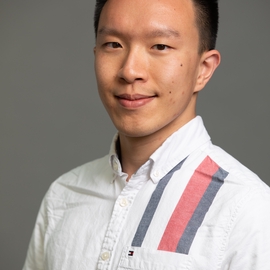
 Shengpu Tang
· 3 previous affiliations
- Emory UniversitySince 2024
- Assistant Professor · Since 2024
- University of Michigan2015–2024
- Doctor of Philosophy - PhD, Computer Science and Engineering · 2020–2024
- Graduate Student Research Assistant · 2019–2024
- Master's degree, Computer Science and Engineering · 2018–2020
- Undergraduate Research Assistant · 2017–2018
- Research Group Mentor, Big Data Summer Institute · 2018
- Undergrad student · 2015–2018
- Intern · 2022
Research Overview
Shengpu Tang focuses on reinforcement learning, time-series modeling, and artificial intelligence for healthcare decision-making. His trajectory spans from developing flexible preprocessing pipelines for electronic health records to designing sample-efficient offline reinforcement learning algorithms for complex clinical environments. Currently, his work addresses the safe deployment of adaptive policies, counterfactual evaluation, and the integration of foundation models into resource-constrained medical devices.
Research Trajectory
Tang’s early research established foundational tools for modeling clinical data. He contributed to novel recurrent neural network architectures in Relaxed Parameter Sharing: Effectively Modeling Time-Varying Relationships in Clinical Time-Series, which relaxed the assumption of constant patient-outcome relationships to better predict conditions like sepsis. Recognizing the labor-intensive nature of preparing electronic health record (EHR) data for machine learning, he subsequently developed Democratizing EHR analyses with FIDDLE: a flexible data-driven preprocessing pipeline for structured clinical data, an open-source framework designed to standardize and streamline data extraction.
Building on this clinical data infrastructure, Tang’s focus shifted toward optimizing clinical decision support through reinforcement learning (RL). In Clinician-in-the-Loop Decision Making: Reinforcement Learning with Near-Optimal Set-Valued Policies, he addressed the rigidity of standard RL by proposing policies that recommend a set of near-equivalent actions, granting clinicians greater flexibility. He continued to refine RL methodologies for medical contexts in Model Selection for Offline Reinforcement Learning: Practical Considerations for Healthcare Settings, tackling the challenges of generalizing across complex state and action spaces using purely historical data.
As his work progressed, Tang increasingly addressed the high-dimensional nature of real-world medical interventions, where treatments are often administered simultaneously rather than in isolation. He introduced methods to handle these overlapping treatments in Leveraging Factored Action Spaces for Efficient Offline Reinforcement Learning in Healthcare. This research advanced the research direction Factored Action Spaces for High Dimensional Control and contributed to the broader area of Efficient Learning for Combinatorial Action Spaces. Concurrently, he formalized protocols for evaluating adaptive agents before deployment in Towards Data-Driven Offline Simulations for Online Reinforcement Learning, proposing offline learner simulation to safely measure how algorithms would behave in production.
The challenge of safely evaluating policies without risky online testing led Tang to explore counterfactual reasoning. He designed a semi-offline framework in Counterfactual-Augmented Importance Sampling for Semi-Offline Policy Evaluation, which utilized expert-provided annotations to expand data support and improve evaluation accuracy. This significantly pushed forward work in Safe Offline Reinforcement Learning for High Stakes Environments. He expanded on this approach with CANDOR: Counterfactual ANnotated DOubly Robust Off-Policy Evaluation, demonstrating that incorporating potentially noisy expert feedback directly into the reward model yielded highly reliable estimators for critical domains.
In recent years, Tang has deeply investigated the foundational design choices that govern how RL agents learn from clinical data. He demonstrated that temporal discretization fundamentally alters policy performance in Exploring Time-Step Size in Reinforcement Learning for Sepsis Treatment, advocating for finer-grained time steps. Similarly, he identified critical flaws in standard data aggregation practices in Off by a Beat: Temporal Misalignment in Offline RL for Healthcare, showing how conventional alignment allows policies to inadvertently rely on future information. Directing research on reward shaping, he examined the impact of survival-focused versus mixed sparse rewards in Between Life and Death: Examining Sparse Reward Designs in Healthcare RL. Tang synthesized these theoretical insights with practical bedside applications in Transforming Healthcare Decision Making Using Artificial Intelligence, detailing the translation of data-efficient RL methods into active hospital workflows. He also applied machine learning to diagnostic efficiency, creating a two-stage predictive model in An Adaptive Machine Learning Triage Framework for Predicting Alzheimer's Disease Progression that reduces the need for invasive testing while maintaining high accuracy.
Expanding beyond purely clinical RL, Tang has collaborated on broader challenges in artificial intelligence. He contributed to the area of Temporal Patching for Time Series Transformers by helping develop a knowledge distillation framework for wearable devices in PPG-Distill: Efficient Photoplethysmography Signals Analysis via Foundation Model Distillation. Further collaborative work explored the intersection of causality and policy optimization in Causal Discovery for Efficient Offline RL with Factored Action Spaces, which leverages causal structures to handle combinatorial actions without introducing bias. He also participated in research on stabilizing large language models in Slow-Fast Policy Optimization: Reposition-Before-Update for LLM Reasoning, addressing the volatility of reinforcement learning updates during reasoning tasks.
Current Directions
Recent work investigates the intersection of causal inference, resource-efficient foundation models, and the stabilization of advanced reasoning systems. Tang is exploring how causal discovery can be integrated into offline policy optimization to manage complex, multi-agent, and combinatorial action spaces more efficiently. Additionally, his research addresses the deployment of time-series foundation models to edge devices, focusing on knowledge distillation techniques that preserve waveform and rhythm fidelity on resource-constrained wearables. He is also examining broader reinforcement learning stability, particularly through structured update trajectories designed to improve the reasoning capabilities of large language models.
Profile updated
Loading new papers…
Other researchers whose papers cluster into the same research directions — a proxy for overlapping technical interests and shared intellectual neighborhoods.
See something wrong? Report a mistake