

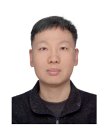
 Shengen Yan
· 5 previous affiliations
- Tsinghua UniversitySince 2024
- Associate Professor · Since 2024
- Peking University2022–2023
- Associate Professor · 2022–2023
- Sensetime (China)2017–2022
- Principal Researcher · 2017–2022
- Chinese University of Hong Kong2015–2017
- Postdoc · 2015–2017
- Chinese Academy of Sciences2009–2014
- PhD student · 2009–2014
Research Overview
Shengen Yan focuses on high-performance computing and the systems-level optimization of large-scale machine learning models. His trajectory spans early work in GPU kernel optimization and distributed training architectures to recent methods for compressing and accelerating foundation models. Currently, his research addresses memory efficiency, quantization, and attention compression for large language and vision-language models.
Research Trajectory
Yan’s early research concentrated on maximizing the computational throughput of parallel architectures, particularly GPUs. He contributed to empirical modeling for GPU performance bottlenecks with GPURoofline: A Model for Guiding Performance Optimizations on GPUs. He subsequently developed novel parallel algorithms, introducing StreamScan: fast scan algorithms for GPUs without global barrier synchronization to reduce memory accesses and synchronization overhead. Expanding on this focus, he designed yaSpMV: yet another SpMV framework on GPUs, which proposed the blocked compressed common coordinate (BCCOO) format to alleviate memory bandwidth and load imbalance issues in sparse matrix-vector multiplication.
As deep learning workloads scaled, Yan’s focus shifted toward distributed systems and hardware-specific acceleration. He directed the development of cluster management systems for distributed machine learning, such as the dynamically-partitioned approach in Towards Distributed Machine Learning in Shared Clusters: A Dynamically-Partitioned Approach. Concurrently, he explored hardware acceleration for convolutional neural networks, demonstrating how the Winograd algorithm could reduce arithmetic complexity in Evaluating Fast Algorithms for Convolutional Neural Networks on FPGAs. This work evolved into broader strategies for GPU kernel fusion, culminating in Enabling Efficient Fast Convolution Algorithms on GPUs via MegaKernels.
To address the communication and resource bottlenecks of large-scale training, he led research into elastic and distributed training systems. This included Elan: Towards Generic and Efficient Elastic Training for Deep Learning, which introduced hybrid scaling mechanisms to balance training efficiency and model performance. He further optimized network backends with GradientFlow: Optimizing Network Performance for Large-Scale Distributed DNN Training, integrating ring-based allreduce and mixed-precision techniques. Recognizing that data processing pipelines also constrained large-scale training, he developed DIESEL+: Accelerating Distributed Deep Learning Tasks on Image Datasets to accelerate the entire I/O pipeline. During this period, he also participated in research on hardware abstraction, contributing to AMOS: enabling automatic mapping for tensor computations on spatial accelerators with hardware abstraction.
In recent years, Yan’s research has addressed the massive computational and memory demands of foundation models, including Large Language Models (LLMs), Vision-Language Models (VLMs), and Diffusion Transformers (DiTs). A major theme of this work is post-training compression and quantization. He contributed to the research direction of Modality Sensitivity Asymmetry in Vision Language Models through MBQ: Modality-Balanced Quantization for Large Vision-Language Models, which applies different quantization weights to language and vision tokens based on their varying sensitivity to error. He also advanced the area of KV Cache Compression for Long-Context Inference by participating in the design of PM-KVQ: Progressive Mixed-precision KV Cache Quantization for Long-CoT LLMs, a framework that dynamically adjusts bit-widths to support long reasoning chains without exhausting GPU memory.
Beyond quantization, Yan has explored architectural and token-level redundancies. In the area of Exploiting Temporal Redundancy in Iterative Generative Models, he collaborated on DiTFastAttn: Attention Compression for Diffusion Transformer Models, which skips redundant computations across denoising steps. Similarly, his work in the broader area of Spatiotemporal Token Merging for Efficient Video Understanding includes FrameFusion: Combining Similarity and Importance for Video Token Reduction on Large Visual Language Models, a method for pruning and merging tokens to accelerate video-based LVLMs.
Yan has also continued to optimize the infrastructure of model training. He guided the development of BitSnap: Checkpoint Sparsification and Quantization in LLM Training, an engine that significantly reduces the storage footprint of LLM checkpoints via bitmask-based sparsification. To improve training stability and throughput, he contributed to Reducing GPU Memory Fragmentation via Spatio-Temporal Planning for Efficient Large-Scale Model Training, which introduces an allocator (STAlloc) to mitigate out-of-memory errors. Finally, exploring the area of Evolutionary Optimization for Model Weight Fusion, he co-authored Linear Combination of Saved Checkpoints Makes Consistency and Diffusion Models Better, demonstrating how evolutionary search can blend intermediate training checkpoints to improve generative model quality without additional training overhead.
Current Directions
The most recent papers in the evidence indicate a strong focus on the deployment and training efficiency of massive foundation models. Recent work investigates post-training compression techniques, particularly quantization strategies that adapt to the specific sensitivities of different modalities in vision-language models or the growing memory demands of long-context reasoning tasks. Additionally, Yan is actively exploring token reduction methods to accelerate diffusion transformers and video-based models by exploiting spatial and temporal redundancies. Alongside inference optimization, his current research addresses the infrastructural challenges of large-scale training, developing novel memory allocators to prevent GPU fragmentation and sparsification engines to manage the storage overhead of model checkpoints.
Profile updated
Loading new papers…
Other researchers whose papers cluster into the same research directions — a proxy for overlapping technical interests and shared intellectual neighborhoods.
See something wrong? Report a mistake