

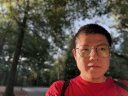
 Shengbo Gong
· 3 previous affiliations
- Emory UniversitySince 2024
- PhD student · Since 2024
- Zhejiang University of Technology2021–2024
- MS student · 2021–2024
- Shanghai Jiao Tong University2016–2020
- Undergrad student · 2016–2020
Research Overview
Shengbo Gong focuses on graph neural networks, graph reduction techniques, and blockchain data mining. Early work explored financial security and cryptocurrency analysis using graph-based methods, while more recent research addresses the computational bottlenecks of large-scale graph learning through dataset condensation and heterophily-aware architectures. Current efforts investigate higher-order interactions in dynamic hypergraphs for complex systems modeling.
Research Trajectory
Gong's early research applied graph mining techniques to blockchain ecosystems and cryptocurrency markets. Participating as a co-author in several collaborative projects, Gong contributed to frameworks for identifying malicious accounts and analyzing financial interactions on decentralized platforms. A representative work from this period is Cross Cryptocurrency Relationship Mining for Bitcoin Price Prediction, which utilized dynamic time warping to extract lead-lag relationships between Bitcoin and alternative cryptocurrencies, aiming to capture synchronous and asynchronous market impacts for improved forecasting.
By 2023, Gong's focus shifted toward the fundamental architectural challenges of Graph Neural Networks (GNNs), particularly the problem of heterophily—where connected nodes in a graph possess different labels or features. Traditional GNNs rely heavily on the homophily assumption, which often degrades performance on heterophilous datasets. Leading this line of inquiry as a first author, Gong published Clarify Confused Nodes Through Separated Learning. This research introduced a novel separation metric to distinguish homophilous from heterophilous nodes, allowing them to be trained through distinct pathways. The approach addressed the inefficiencies of generic models that apply shared weights across diverse and noisy node neighborhoods.
In 2024, Gong expanded into the research direction of Dataset Distillation for Efficient Model Training, focusing specifically on graph condensation. As graph datasets grow exponentially, training GNNs becomes computationally prohibitive. Graph condensation aims to synthesize a much smaller graph that retains the essential training signal of the original. Gong led the development of GC-Bench: A Benchmark Framework for Graph Condensation with New Insights. This work addressed the fragmented progress in the field by providing standardized data splits, unified evaluation metrics, and consistent baselines, aligning closely with the broader area of Standardized Benchmarking for Graph Machine Learning.
To further systematize this emerging subfield, Gong co-authored A Comprehensive Survey on Graph Reduction: Sparsification, Coarsening, and Condensation. This survey established a unified taxonomy for graph reduction techniques, clarifying the distinctions between sparsification, coarsening, and condensation while outlining the primary challenges in scaling graph learning. Gong's contributions here also intersect with themes such as Structural Knowledge Distillation for Efficient Graph Learning, emphasizing the need to preserve essential structural properties while minimizing computational overhead.
Current Directions
The most recent papers in the evidence, published in 2024 and 2025, indicate a continued interest in refining graph representations for complex, real-world systems. Recent work investigates higher-order interactions through dynamic hypergraph neural networks, moving beyond pairwise connections to model intricate structural patterns in domains like epidemic modeling and contact tracing.
Additionally, Gong continues to explore the intersection of graph compression and security. Recent collaborative efforts apply feature and topology lightweighting to detect malicious accounts in large-scale blockchain transaction networks. Together, these directions reflect an overarching focus on making graph learning both computationally efficient and capable of capturing complex, non-Euclidean relationships across diverse application domains.
Profile updated
Loading new papers…
Other researchers whose papers cluster into the same research directions — a proxy for overlapping technical interests and shared intellectual neighborhoods.
See something wrong? Report a mistake