

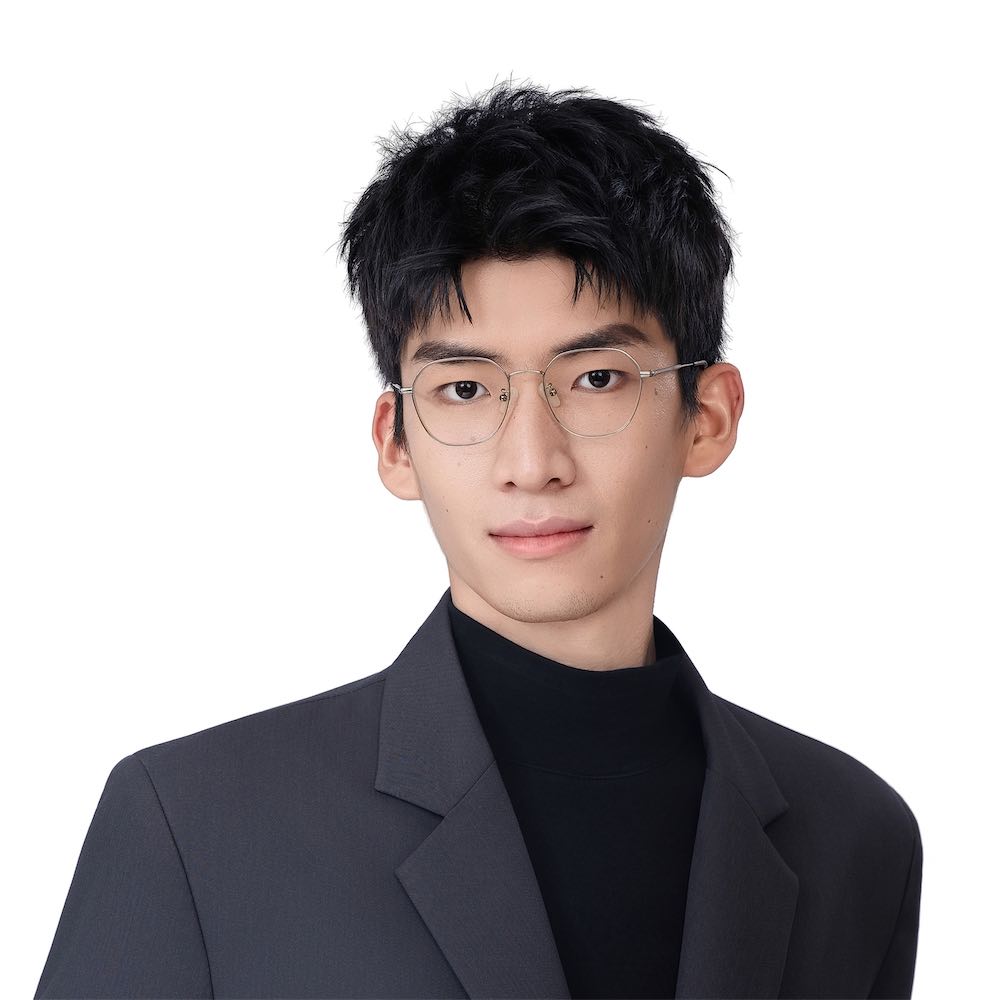
 Sheng Wang
· 2 previous affiliations
- University of Hong KongCurrent
- Current
- Postdoc · 2025–2026
- PhD, Computer Science · 2022–2025
- Research Assistant, Computer Science · 2021–2022
- Undergrad student · 2017–2021
7 other authors named Sheng Wang: Sheng Wang (University of Washington · 18 papers), Sheng Wang (Wuhan University · 15 papers), Sheng Wang (Origin Ark · 4 papers), Sheng Wang (University of Illinois Urbana-Champaign · 3 papers), Sheng Wang (ByteDance (China) · 1 paper), and 2 more
Research Overview
Sheng Wang focuses on parameter-efficient fine-tuning, data synthesis, and the alignment of large language models. His trajectory spans from optimizing low-rank adaptation and accelerating autoregressive inference to developing robust frameworks for generating diverse training data. Currently, his work addresses the challenges of scaling synthetic data generation and improving agentic reasoning systems.
Research Trajectory
During his doctoral studies at The University of Hong Kong, Wang's early research concentrated on optimizing the architecture and training dynamics of large language models. In 2024, he introduced methods to improve Low-Rank Adaptation (LoRA). PRoLoRA: Partial Rotation Empowers More Parameter-Efficient LoRA addresses the impracticality of serving numerous LoRAs concurrently by proposing an intra-layer sharing mechanism with partial rotation, enhancing model capacity while remaining highly parameter-efficient. He further investigated the regularization of these models in LoRA Meets Dropout under a Unified Framework, confirming that parameter-efficient techniques remain prone to overfitting and adapting dropout methods to mitigate this issue.
Around the same time, he contributed to the area of Distilling Reasoning Trajectories into Small Language Models through ProReason: Multi-Modal Proactive Reasoning with Decoupled Eyesight and Wisdom. This work tackles the over-reliance on language priors in large vision-language models by decoupling visual perception from logical reasoning. To address the computational bottlenecks of model deployment, he also developed techniques in the research direction of The Memory Bandwidth Bottleneck in Transformer Decoding. Specifically, he designed QSpec: Speculative Decoding with Complementary Quantization Schemes, a training-free framework that accelerates inference. By combining ultra-fast, low-precision quantization for drafting tokens with high-precision verification, this approach advances the broader area of Training-Free and Self-Speculative Decoding for LLM Acceleration.
Moving into 2025, Wang continued his focus on model customization by introducing MoS: Unleashing Parameter Efficiency of Low-Rank Adaptation with Mixture of Shards. This method addresses the massive memory bottlenecks encountered when serving thousands of customized large language models, further refining the scalability of LoRA.
A significant portion of his recent trajectory shifts toward data synthesis and model alignment. In TreeSynth: Synthesizing Diverse Data from Scratch via Tree-Guided Subspace Partitioning, he tackled "space collapse"—the tendency of models to generate repetitive or narrow samples—by proposing a tree-guided method to synthesize diverse, high-quality training data from scratch. He also explored failure-induced exploration in Forewarned is Forearmed: Harnessing LLMs for Data Synthesis via Failure-induced Exploration. This framework trains a proposer model to discover failure-inducing queries, which are subsequently used to fine-tune the target model for improved safety, honesty, and reasoning.
His collaborative work extends to the area of Difficulty-Aware Data Re-balancing for LLM Self-Improvement. He participated in the design of DAST: Difficulty-Aware Self-Training on Large Language Models, which dynamically estimates query difficulty and up-samples challenging problems to prevent models from producing shallow responses. Additionally, he contributed to the domain of Scaling Language Models to the Global Long Tail through Developing and Utilizing a Large-Scale Cantonese Dataset for Multi-Tasking in Large Language Models. This project curated a massive Cantonese dataset to train a specialized model that achieves strong performance on dialectal benchmarks.
Current Directions
The most recent papers in the evidence address the critical bottlenecks of data quality and parameter efficiency in scaling large language models. Recent work investigates advanced data synthesis techniques, focusing on generating diverse, high-quality training samples while actively exploring model weaknesses to improve safety and reasoning. Concurrently, ongoing efforts explore dynamic self-training methodologies and the continued refinement of low-rank adaptation to support the massive-scale customization of language models.
Profile updated
Loading new papers…
Other researchers whose papers cluster into the same research directions — a proxy for overlapping technical interests and shared intellectual neighborhoods.
See something wrong? Report a mistake