

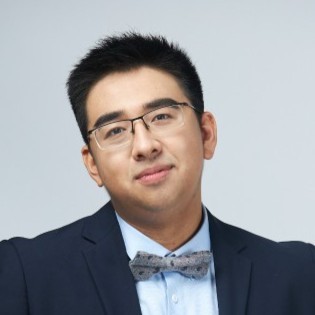
 Sheng Gao
· 7 previous affiliations
- Citadel SecuritiesSince 2022
- Quantitative Researcher · Since 2023
- Quantitative Research Intern · 2022
- Non-TrivialSince 2023
- Researcher · Since 2023
- University of PennsylvaniaCurrent
- Current
- PhD student · 2018–2023
- The Wharton School2018–2023
- Doctor of Philosophy - PhD, Statistics · 2018–2023
- Baidu (China)2021
- Research Intern · 2021
- University of Cambridge2014–2018
- MS student · 2017–2018
- Undergrad student · 2014–2017
- Research Assistant · 2016
- NSF REU Researcher · 2017
Research Overview
Sheng Gao focuses on high-dimensional statistics, differential privacy, and machine learning theory, with a particular emphasis on developing robust algorithms for complex data structures. His work spans theoretical foundations in generalized correlation analysis and practical applications in bioinformatics, forensic science, and quantitative finance. By integrating statistical rigor with computational efficiency, he addresses challenges in high-dimensional data modeling, privacy-preserving machine learning, and interdisciplinary data analysis.
Research Trajectory
The evolution of Sheng Gao’s research reflects a transition from applied information systems and natural language processing toward deep theoretical inquiries in statistics and machine learning. In the late 1990s and early 2000s, his work was primarily concerned with the development of information systems for disaster reduction and the quantification of linguistic rules. During this period, he explored the integration of grammar rules into statistical language models, contributing to the broader field of Dialogue Level Dependency Parsing and Cross Utterance Syntax. This early phase established a foundation in handling structured data and optimizing classification performance through novel learning algorithms.
By the early 2010s, his focus shifted toward networked data and recommendation systems. He investigated link prediction problems, developing models that could simultaneously account for latent features of objects and the local structure of networks. This period marked an increasing interest in latent factor models and their ability to capture complex dependencies in large-scale datasets, which later informed his work on cross-domain recommendation and information fusion.
In the late 2010s and early 2020s, during his doctoral studies at the Wharton School, his research became more mathematically focused, targeting fundamental problems in high-dimensional statistics and differential privacy. He developed new frameworks for generalized correlation analysis (GCA), extending classical canonical correlation analysis to accommodate multiple datasets with sparse structures. Simultaneously, he contributed to the theory of differential privacy by introducing analytical methods for tracking privacy loss under composition. His most recent work applies these advanced statistical techniques to diverse domains, including forensic toolmark analysis and Material Aware Computer Vision with Hyperspectral Signatures, demonstrating a commitment to bridging theoretical innovation with practical utility.
Current Directions
Currently, Sheng Gao’s research is concentrated on the intersection of high-dimensional statistics and privacy-preserving computation. A major theme is the development of the "Edgeworth Accountant," a framework designed to provide tight, analytical bounds for privacy loss in complex machine learning pipelines. This work is critical for the deployment of differentially private algorithms in real-world settings where precise privacy-utility trade-offs are required.
Another significant area of focus is the refinement of generalized correlation analysis for high-dimensional settings. By formulating GCA as a generalized eigenvalue problem and employing thresholded gradient descent, he seeks to uncover latent relationships across disparate data sources, such as single-cell spatial omics and multi-modal biological data. His recent involvement in quantitative research further extends these interests into systematic equities, where high-dimensional modeling and robust statistical inference are central to understanding market dynamics.
Representative Work
Sparse GCA and Thresholded Gradient Descent In this work, Sheng Gao addresses the challenge of uncovering linear relationships across multiple high-dimensional datasets. He generalizes canonical correlation analysis (CCA) to a multi-dataset framework, termed Generalized Correlation Analysis (GCA). The paper formulates sparse GCA as a generalized eigenvalue problem at both population and sample levels, introducing specific normalization constraints to ensure identifiability. To solve the resulting high-dimensional optimization problem, he proposes a thresholded gradient descent algorithm based on a Lagrangian formulation. This approach provides a computationally efficient means of estimating loading matrices with a small number of nonzero rows, making it applicable to sparse CCA and sparse PCA of correlation matrices.
Analytical Composition of Differential Privacy via the Edgeworth Accountant Addressing the problem of tracking privacy loss in composed private algorithms, this research introduces the Edgeworth Accountant. The framework utilizes the $f$-differential privacy (f-DP) paradigm to losslessly track privacy guarantees through privacy-loss log-likelihood ratios (PLLRs). By applying the Edgeworth expansion, the method provides analytical upper and lower bounds on the probability of privacy loss. This contribution is significant for its ability to offer more precise privacy accounting than traditional central limit theorem-based approaches, particularly in the context of modern machine learning algorithms that involve numerous iterations of private sub-routines.
Revolutionizing Forensic Toolmark Analysis: An Objective and Transparent Comparison Algorithm This interdisciplinary study seeks to replace subjective human judgment in forensic science with an objective, algorithmic approach. Sheng Gao and his collaborators developed a comparison algorithm for 3D toolmarks generated by screwdrivers at various angles. Using Partitioning Around Medoids (PAM) clustering, the research demonstrates that toolmarks cluster more strongly by the specific tool used than by the angle or direction of the mark's creation. By fitting Beta distributions to the densities of known matches and non-matches, the work establishes a transparent method for deriving likelihood ratios, providing a statistical basis for forensic identification that enhances the reliability of evidence in legal contexts.
Link prediction via latent factor BlockModel This paper tackles the problem of link prediction in social networks and recommender systems. Sheng Gao proposes a model that integrates latent feature-based approaches with latent blockmodels. While previous methods often focused on either the individual characteristics of nodes or the local structural blocks of the network, this novel model incorporates both simultaneously. By modeling the relation graph as a function of both latent feature factors and block-level structures, the approach improves the accuracy of predicting missing links in complex networked data.
SSC and pH Prediction and Maturity Classification of Grapes Based on Hyperspectral Imaging In the domain of agricultural technology, Sheng Gao developed a non-destructive method for monitoring fruit quality using hyperspectral imaging (HSI). The research combines the Iteratively Retains Informative Variables (IRIV) algorithm with Partial Least Squares Regression (PLSR) and Extreme Learning Machines (ELM). This methodology allows for high-accuracy prediction of soluble solids content (SSC) and pH levels in grapes, as well as precise classification of maturity stages. The work illustrates the application of high-dimensional signal processing and machine learning to real-time quality control in biological systems.
A MFoM learning approach to robust multiclass multi-label text categorization This early work proposes a multiclass classification scheme for text categorization that leverages both positive and negative training examples. Sheng Gao introduces a maximal figure-of-merit (MFoM) learning algorithm designed to train high-performance classifiers simultaneously. Unlike conventional binary classification approaches that treat each category independently, this scheme assigns a uniform score function to each category, allowing for the application of classical Bayes decision rules. The simultaneous training of all multiclass MFoM classifiers results in a more robust system for handling complex, multi-label text datasets.
Profile updated
Loading new papers…
Other researchers whose papers cluster into the same research directions — a proxy for overlapping technical interests and shared intellectual neighborhoods.
See something wrong? Report a mistake