

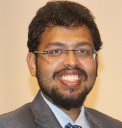
 Shashanka Venkataramanan
· 6 previous affiliations
- valeo.aiSince 2024
- Researcher · Since 2024
- Qualcomm (United States)Since 2026
- Research Scientist · Since 2026
- Research Intern · 2022
- Qualcomm AI ResearchCurrent
- Current
- University of Central Florida2018–2020
- Graduate Research Assistant · 2019–2020
- MS student · 2018–2020
- PhD student · 2020
- Deep Learning Intern · 2019
Research Overview
Shashanka Venkataramanan focuses on visual representation learning, exploring both supervised and self-supervised paradigms to enhance instance- and category-level understanding. His early work investigated anomaly localization and advanced data augmentation techniques in embedding spaces. More recently, his research emphasizes self-supervised learning from continuous video data and the efficient adaptation of large-scale vision foundation models.
Research Trajectory
His early research addressed challenges in specialized recognition and localization tasks. In 2017, he collaborated on Improved Low Resolution Heterogeneous Face Recognition Using Re-ranking, which proposed a re-ranking strategy for matching low-resolution near-infrared probe images to visible light galleries in surveillance contexts. Transitioning to unsupervised methods, he introduced a convolutional adversarial variational autoencoder (CAVGA) in Attention Guided Anomaly Localization in Images (2020). This work demonstrated how to localize anomalous regions without relying on anomalous training samples by preserving spatial information through a convolutional latent variable.
Between 2022 and 2023, his focus shifted toward the area of Implicit Data Augmentation for Efficient Training, specifically advancing mixup techniques for deep metric learning and classification. It Takes Two to Tango: Mixup for Deep Metric Learning (2022) bridged the gap between metric learning losses and data augmentation by interpolating examples to encourage discriminative representations. He further refined this approach in AlignMixup: Improving Representations By Interpolating Aligned Features (2022), which geometrically aligned images in the feature space before interpolation to avoid the low-quality deformations typical of standard autoencoders. This trajectory culminated in the development of MultiMix, detailed in Teach me how to Interpolate a Myriad of Embeddings (2023) and Embedding Space Interpolation Beyond Mini-Batch, Beyond Pairs and Beyond Examples (2023). By moving interpolation entirely into the embedding space, MultiMix allowed models to sample from the convex hull of an entire mini-batch, significantly improving classification accuracy and adversarial robustness with minimal computational overhead.
In 2024, his research expanded to address the efficiency of vision transformers and the scaling of self-supervised pretraining. Skip-Attention: Improving Vision Transformers by Paying Less Attention contributed to the research direction of Exploiting Cross-Layer Redundancy in Transformer Architectures. The proposed SkipAT method replaced redundant self-attention blocks with a lightweight parametric function, increasing throughput while maintaining performance across classification and dense prediction tasks. Simultaneously, he explored the richness of temporal data in Is ImageNet worth 1 video? Learning strong image encoders from 1 long unlabelled video. This work introduced DORA, a self-supervised method that learns robust image encoders by tracking objects through a single, long egocentric video, challenging the necessity of massive, disconnected image datasets.
His most recent work from 2025 and 2026 heavily emphasizes video-based learning and foundation model adaptation. He contributed to End-to-End Driving through Generative Video Pretraining (2025), which developed VaVAM, a video-action model trained on unannotated driving footage to build a perception-to-action pipeline, intersecting with the broader area of Aligning Video Generation Models with Physical Laws. Continuing the theme of temporal consistency, MoSiC: Optimal-Transport Motion Trajectory for Dense Self-Supervised Learning (2025) leveraged motion trajectories to enforce spatio-temporal consistency for semantic segmentation, advancing work in the area of Spatiotemporal Continuity as a Self-Supervised Signal.
In parallel, he addressed parameter-efficient fine-tuning by collaborating on IPA: An Information-Reconstructive Input Projection Framework for Efficient Foundation Model Adaptation (2025). This framework introduced feature-aware projections to replace data-agnostic initializations, contributing to areas such as Informed Initialization for Low-Rank Adaptation and Low-Rank Weight Decomposition for Efficient Model Adaptation. He also led the development of Franca: Nested Matryoshka Clustering for Scalable Visual Representation Learning (2025), an open-source vision foundation model utilizing hierarchical clustering to produce dense representations. Most recently, he participated in developing 3DPoV: Improving 3D understanding via Patch Ordering on Videos (2026), a post-training strategy that enforces temporal consistency in patch-level similarity rankings to enhance the 3D spatial reasoning of existing foundation models.
Current Directions
The most recent papers in the evidence indicate a strong focus on the scalable training and efficient adaptation of vision foundation models. A primary theme is the use of continuous video data and motion trajectories as rich, self-supervised signals to teach models dense spatial and temporal consistency without manual annotations. Additionally, recent work investigates parameter-efficient fine-tuning (PEFT) methods, specifically designing feature-aware projections that preserve critical input information during low-rank adaptation. This dual focus aims to build highly capable, open-source visual representation models that can reason effectively about 3D environments and adapt efficiently to downstream tasks.
Profile updated
Loading new papers…
Other researchers whose papers cluster into the same research directions — a proxy for overlapping technical interests and shared intellectual neighborhoods.
See something wrong? Report a mistake