

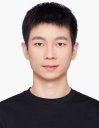
 Shaoyu Chen
· 2 previous affiliations
- Horizon Robotics (China)Current
- Current
- Researcher · 2019–2026
- PhD student · 2019–2025
- Undergrad student · 2015–2019
1 other author named Shaoyu Chen: Shaoyu Chen (miHoYo · 1 paper)
Research Overview
Shaoyu Chen focuses on 3D scene perception, autonomous driving systems, and the integration of vision-language models with reinforcement learning for robotic control. His early work addressed point cloud segmentation and vectorized map construction, establishing foundational representations for driving environments. More recently, he investigates end-to-end autonomous driving policies that leverage generative modeling, probabilistic planning, and advanced reasoning architectures.
Research Trajectory
Chen's early research focused on 3D scene perception and instance segmentation in point clouds. He developed Hierarchical Aggregation for 3D Instance Segmentation, a clustering-based framework that progressively groups points into sets and sets into complete instances. This work introduced a sub-network for noisy point filtering and mask quality scoring, advancing the research direction of Geometric Centroid Voting in 3D Point Clouds and contributing to the broader area of Learning Instance Specific Clustering Margins. Continuing in 3D perception, he introduced AziNorm: Exploiting the Radial Symmetry of Point Cloud for Azimuth-Normalized 3D Perception, which normalizes point clouds along the radial direction to eliminate azimuth variability and improve optimization via a divide-and-conquer strategy. During this period, he also participated in the development of 2D segmentation techniques, contributing to Sparse Instance Activation for Real-Time Instance Segmentation, which proposed using a sparse set of instance activation maps and bipartite matching for one-to-one object prediction.
His focus subsequently expanded to autonomous driving and environmental representation. He proposed a novel 2D-to-Bird's Eye View (BEV) representation learning mechanism in Efficient and Robust 2D-to-BEV Representation Learning via Geometry-guided Kernel Transformer, leveraging geometric priors and a look-up table indexing method for fast inference without runtime camera calibration. This transition into driving systems led to significant work on high-definition (HD) mapping. With collaborators, he developed MapTR: Structured Modeling and Learning for Online Vectorized HD Map Construction, an end-to-end Transformer that models map elements as permutation-equivalent point sets and uses a hierarchical query embedding scheme. To address the computational intensity of dense rasterized maps, he co-authored VAD: Vectorized Scene Representation for Efficient Autonomous Driving, which models the driving scene as a fully vectorized representation to provide explicit instance-level planning constraints. Recognizing the spatial extensibility challenges of generating these maps at scale, he designed VMA: Divide-and-Conquer Vectorized Map Annotation System for Large-Scale Driving Scene, an annotation framework that abstracts diverse geometric patterns into a unified point sequence representation.
In recent years, Chen's trajectory has integrated reinforcement learning (RL) and large-scale generative models into end-to-end autonomous driving policies. He introduced DiffusionDriveV2: Reinforcement Learning-Constrained Truncated Diffusion Modeling in End-to-End Autonomous Driving, which uses scale-adaptive noise to generate diverse, collision-free driving options. This work, along with his development of AlphaDrive: Unleashing the Power of VLMs in Autonomous Driving via Reinforcement Learning and Reasoning, heavily engages with the research direction of Group Relative Policy Optimization for Large Reasoning Models. AlphaDrive specifically adapts the chain-of-thought reasoning capabilities of vision-language models to the high-stakes domain of driving.
Addressing the limitations of imitation learning in out-of-distribution scenarios, he collaborated on RAD: Training an End-to-End Driving Policy via Large-Scale 3DGS-based Reinforcement Learning. He also contributed to foundational vision-language model architectures with InfiniteVL: Synergizing Linear and Sparse Attention for Highly-Efficient, Unlimited-Input Vision-Language Models, which maintains a constant memory footprint by combining Gated DeltaNet with sparse sliding window attention. This advanced areas such as Gated Linear Attention for Efficient Sequence Modeling and Hybrid Architectures for Efficient Long Context Modeling. This effort was extended in InfiniteVL: A Systematic Approach to Highly-Efficient, Ultra-Long Multimodal Understanding, establishing a linear-sparse hybrid framework with capability-oriented knowledge transfer for long-video analysis and streaming real-time scene perception. Most recently, he co-authored VADv2: End-to-End Vectorized Autonomous Driving via Probabilistic Planning, which shifts away from deterministic trajectory regression by predicting probability distributions over a discretized planning vocabulary. Further refining end-to-end driving architectures, Chen co-developed ReDrive: Shaping Representations with World Modeling for End-to-End Driving, which leverages future representation prediction during training to reinforce planning-oriented features without introducing runtime auxiliary perception or prediction overhead.
Current Directions
The most recent papers in the evidence indicate a strong focus on end-to-end autonomous driving systems that move beyond traditional imitation learning. Current work investigates the application of reinforcement learning and probabilistic planning to handle the inherent uncertainty of human driving and complex, out-of-distribution scenarios. This includes adapting the chain-of-thought reasoning capabilities of large vision-language models for split-second driving decisions, as well as utilizing generative diffusion models to synthesize diverse, collision-free trajectories. Additionally, recent architectural research explores hybrid attention mechanisms to efficiently process unlimited-input multimodal streams, supporting the real-time computational demands of these advanced driving policies.
Profile updated
Loading new papers…
Other researchers whose papers cluster into the same research directions — a proxy for overlapping technical interests and shared intellectual neighborhoods.
See something wrong? Report a mistake