

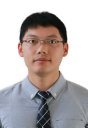
 Shaowei Wang
· 1 previous affiliation
- Guangzhou UniversitySince 2020
- Associate Professor · Since 2020
1 other author named Shaowei Wang: Shaowei Wang (2 papers)
Research Overview
Shaowei Wang focuses on differential privacy, distributed data aggregation, and secure machine learning. His early work established foundational mechanisms for local differential privacy across diverse data types, including ordinal, set-valued, and streaming data. Recently, his research has expanded into the shuffle model of privacy, machine unlearning in large language models, and the theoretical dynamics of differentially private optimization.
Research Trajectory
Beginning in the mid-2010s, Wang's research primarily addressed the challenges of data aggregation under varying privacy constraints. He introduced mechanisms allowing participants to publish data at personalized differential-privacy levels in Personalized Privacy-Preserving Data Aggregation for Histogram Estimation (2015). Building on this foundation, he developed techniques for locally preserving privacy in specialized data types. This included Local private ordinal data distribution estimation (2017), which utilized geo-indistinguishability constraints to capture the intrinsic dissimilarity in ordinal data, and Local Differential Private Data Aggregation for Discrete Distribution Estimation (2019), which provided rigid local differential privacy (LDP) guarantees for user-contributed categorical data.
As his focus on LDP matured, Wang tackled increasingly complex data structures and analytical tasks. He investigated set-valued data publication, establishing tight error bounds and efficient mechanisms in Set-valued Data Publication with Local Privacy: Tight Error Bounds and Efficient Mechanisms (2020). He later extended this to preference data, proposing mechanisms to simultaneously improve statistical utility and defend against LDP-specific poisoning attacks in Analyzing Preference Data With Local Privacy: Optimal Utility and Enhanced Robustness (2023). Addressing the need for real-time analysis, he demonstrated that private data analytics could be conducted online without excess utility loss in Optimal Locally Private Data Stream Analytics (2024), presenting a streamable mechanism for sparse vector estimation. He also refined set-valued data analysis for mobile applications, introducing the computationally efficient Wheel mechanism for distribution estimation and heavy-hitter identification in Locally Private Set-Valued Data Analyses: Distribution and Heavy Hitters Estimation (2024).
Around 2024, Wang's trajectory expanded significantly into the shuffle model of differential privacy, contributing heavily to the research direction of Privacy Amplification by Shuffling. He oversaw a comparative analysis of distributed differential privacy architectures in Distributed Differential Privacy via Shuffling Versus Aggregation: A Curious Study (2024), examining how intermediate untrusted shufflers amplify privacy without explicitly adding noise. He further formalized these dynamics in Privacy Amplification via Shuffling: Unified, Simplified, and Tightened (2024). To accommodate heterogeneous user preferences within this framework, he pioneered segmented privacy levels in the multi-message shuffle model with Segmented Private Data Aggregation in the Multi-message Shuffle Model (2024), advancing work in the broader area of Bridging the Local Central Privacy Utility Gap. This line of inquiry culminated in new paradigms for personalized computations, such as matching and recommendation systems, detailed in Beyond Statistical Estimation: Differentially Private Individual Computation via Shuffling (2025). Bridging both local and shuffle models, he also developed the optimal Collision mechanism for distributed gradient and key-value data aggregation in Differentially Private Numerical Vector Analyses in the Local and Shuffle Model (2025).
In parallel with his core privacy research, Wang has guided projects applying secure and distributed frameworks to emerging network architectures. He served as the principal investigator on AIGC-Assisted Digital Watermark Services in Low-Earth Orbit Satellite-Terrestrial Edge Networks (2024), exploring the intersection of 6G architecture and generative AI. Similarly, he led the development of a proof-of-reputation consensus mechanism for secure data trading in the Internet of Vehicles, published as LBDT: A Lightweight Blockchain-Based Data Trading Scheme in Internet of Vehicles Using Proof-of-Reputation (2025).
Most recently, Wang has investigated the optimization and security of large-scale machine learning models. He contributed to the area of Preserving Model Utility During Machine Unlearning through his participation in Machine Unlearning in Large Language Models (2024), which introduced a highly efficient cluster-based framework for removing harmful or private information without full retraining. His latest work delves into the mechanics of Differentially Private Stochastic Gradient Descent (DP-SGD). He co-authored SlaClip: Gradient Norm Slacks can be Indicator for Adaptive Clipping in DP-SGD (2026), proposing a plug-and-play adaptive clipping method that tunes thresholds using gradient norm slacks without consuming additional privacy budget. Furthermore, he contributed to foundational theoretical frameworks in Understanding Private Learning From Feature Perspective (2026). This research explains how DP models learn features versus memorizing noise, advancing several interconnected research directions, including The Privacy-Utility Trade-off in Differentially Private Learning, Weight Decomposition for Understanding Neural Generalization, and the broader area of The Privacy Noise Floor in Small Sample Regimes.
Current Directions
The most recent papers in the evidence indicate a strong focus on the theoretical and practical optimization of differentially private machine learning. Recent work investigates the internal dynamics of DP-SGD, specifically addressing how to manage gradient clipping adaptively without expending additional privacy budget. Furthermore, Wang is actively exploring the fundamental mechanics of private learning, analyzing the signal-to-noise ratios required for models to capture useful features rather than memorizing noise. Alongside these machine learning optimizations, his ongoing research continues to refine the shuffle model of differential privacy, extending its application beyond basic statistical estimation to enable secure, personalized computations in distributed systems.
Profile updated
| Paper | Venue | Year |
|---|---|---|
| Fine-grained Private Knowledge DistillationGitHubliyuntong9/ | arXiv | 2022 |
Loading new papers…
Other researchers whose papers cluster into the same research directions — a proxy for overlapping technical interests and shared intellectual neighborhoods.
See something wrong? Report a mistake