

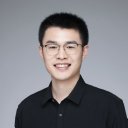
 Shaoshuai Shi
· 3 previous affiliations
- Didi Chuxing (China)Since 2023
- Researcher · Since 2023
- Max Planck Institute for Informatics2021–2023
- Postdoc · 2021–2023
- Chinese University of Hong Kong2017–2021
- PhD student · 2017–2021
Research Overview
Shaoshuai Shi focuses on 3D scene understanding, object detection, and motion prediction for autonomous systems. His early work established foundational architectures for processing raw point clouds and hybrid point-voxel representations in 3D perception. More recently, his research addresses multi-agent trajectory forecasting, simulation, and the integration of large-scale reasoning models into autonomous driving pipelines.
Research Trajectory
Shaoshuai Shi’s early research explored hardware acceleration for neural networks, participating in the development of FP-DNN: An Automated Framework for Mapping Deep Neural Networks onto FPGAs with RTL-HLS Hybrid Templates (2017). He subsequently transitioned to 3D computer vision, introducing a novel training objective in GAL: Geometric Adversarial Loss for Single-View 3D-Object Reconstruction (2018). This work moved beyond simple point-to-point distances to enforce global geometric consistency and semantic realism, contributing to the area of Fusing 2D Semantic Features with 3D Geometric Representations.
Between 2019 and 2021, his focus shifted heavily toward LiDAR-based 3D object detection. He developed PointRCNN: 3D Object Proposal Generation and Detection From Point Cloud., a bottom-up framework that directly processes raw point clouds to generate high-quality 3D proposals, addressing the research direction of Mitigating Long Range Sparsity in 3D Object Detection. Building on this, he introduced the PV-RCNN framework in PV-RCNN: Point-Voxel Feature Set Abstraction for 3D Object Detection. This architecture deeply integrated 3D voxel Convolutional Neural Networks with PointNet-based set abstraction, advancing the broader area of Hybrid Point Voxel Representations for 3D Deep Learning. During this period, he also collaborated on 3D instance segmentation, exploring the void spaces between objects in PointGroup: Dual-Set Point Grouping for 3D Instance Segmentation.
Continuing his work in 3D detection, he leveraged intra-object part locations from 3D ground truth to improve detection accuracy in From Points to Parts: 3D Object Detection From Point Cloud With Part-Aware and Part-Aggregation Network, contributing to the field of Sparse Volumetric Convolution for Efficient 3D Perception. He further investigated voxel-based architectures, collaborating on Voxel R-CNN: Towards High Performance Voxel-based 3D Object Detection, which demonstrated that precise raw point positioning is not strictly necessary for high-performance detection. To address the challenge of deploying these models across different environments, he developed a domain adaptive self-training pipeline in ST3D: Self-Training for Unsupervised Domain Adaptation on 3D Object Detection.
In 2022 and 2023, his research expanded to include model efficiency and autonomous driving behavior. He explored model compression techniques in Towards Efficient 3D Object Detection with Knowledge Distillation and refined his earlier point-voxel architecture in PV-RCNN++: Point-Voxel Feature Set Abstraction With Local Vector Representation for 3D Object Detection. Concurrently, while building an AI research team at DiDi Autonomous Driving, his work increasingly emphasized motion prediction. He proposed the MTR framework in Motion Transformer with Global Intention Localization and Local Movement Refinement, modeling motion prediction as the joint optimization of global intention localization and local movement refinement. This work aligns closely with the research direction of Modeling Reciprocal Dynamics in Multi-Agent Trajectory Prediction.
From 2024 onward, his trajectory reflects a strong integration of generative modeling, reinforcement learning, and world modeling into autonomous systems. He adapted GPT-style next-token prediction paradigms for motion forecasting in AMP: Autoregressive Motion Prediction Revisited with Next Token Prediction for Autonomous Driving. To overcome the limitations of pure imitation learning, he investigated the "copycat problem" by introducing a closed-loop simulator and a hybrid baseline in Exposing the Copycat Problem of Imitation-based Planner: A Novel Closed-Loop Simulator, Causal Benchmark and Joint IL-RL Baseline. He also oversaw the development of ColaVLA: Leveraging Cognitive Latent Reasoning for Hierarchical Parallel Trajectory Planning in Autonomous Driving, which replaced slow text-based reasoning with efficient latent-space reasoning, contributing to the broader area of Unifying Camera and LiDAR for Robust 3D Perception.
His recent collaborative efforts extend into advanced simulation and scene reconstruction. He contributed to multi-agent traffic simulation using iterative reinforcement learning in Advancing Multi-agent Traffic Simulation via R1-Style Reinforcement Fine-Tuning. In the domain of dynamic scene reconstruction, he co-authored UniSplat: Unified Spatio-Temporal Fusion via 3D Latent Scaffolds for Dynamic Driving Scene Reconstruction, which utilizes a unified 3D latent scaffold to fuse multi-view and temporal data. Finally, he addressed the issue of exposure bias in autoregressive video models in LIVE: Long-horizon Interactive Video World Modeling, aiming to improve the coherence of interactive world simulators.
Current Directions
The most recent papers in the evidence indicate a strong focus on advanced reasoning, closed-loop simulation, and world modeling for autonomous driving. Recent work investigates the application of autoregressive paradigms and latent-space reasoning to trajectory planning, moving away from slow text-based chain-of-thought approaches toward more efficient hierarchical parallel planners.
Additionally, there is an emphasis on closed-loop simulation and reinforcement learning to address the limitations of pure imitation learning, specifically targeting the "copycat problem" where models extrapolate poorly in complex scenarios. This extends to multi-agent traffic simulation using iterative reinforcement fine-tuning to achieve high realism. Finally, recent contributions explore dynamic driving scene reconstruction via 3D latent scaffolds and tackle exposure bias in long-horizon interactive video world modeling, aiming to build more robust and coherent simulators for autonomous systems.
Profile updated
Loading new papers…
Other researchers whose papers cluster into the same research directions — a proxy for overlapping technical interests and shared intellectual neighborhoods.
See something wrong? Report a mistake