

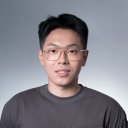
 Shaolei Zhang
· 2 previous affiliations
- Renmin University of ChinaSince 2025
- Assistant Professor · Since 2025
- Chinese Academy of Sciences2020–2025
- PhD student · 2020–2025
Research Overview
Shaolei Zhang focuses on large language models, multimodal systems, and simultaneous sequence generation. His early work addressed the latency and quality trade-offs in real-time machine translation and speech processing. More recently, his research investigates cross-lingual alignment, efficient multimodal architectures, and the development of autonomous agentic systems for complex data science tasks.
Research Trajectory
Zhang's early trajectory centers on simultaneous machine translation (SiMT) and real-time sequence generation, where models must balance translation quality with latency. He participated in the development of the Future-Guided Incremental Transformer for Simultaneous Translation, which explored farsighted approaches to real-time translation. Building on this foundation, he introduced the Hidden Markov Transformer for Simultaneous Machine Translation, treating the optimal moments to begin translating as hidden events within a Markov model. To further optimize this delicate balance, he developed Learning Optimal Policy for Simultaneous Machine Translation via Binary Search, a method that uses binary search during training to maximize quality gains at lower latencies. Expanding these principles to broader streaming tasks, he proposed a Unified Segment-to-Segment Framework for Simultaneous Sequence Generation. Addressing the research direction of Simultaneous Translation Across Divergent Word Orders, he also designed the Non-autoregressive Streaming Transformer for Simultaneous Translation, which departs from traditional step-by-step generation to improve both speed and accuracy.
As large language models (LLMs) became central to natural language processing, Zhang's focus expanded to cross-lingual alignment and the integration of LLMs into real-time and speech tasks. He contributed to work in the area of Linguistic Data Imbalance in Multilingual Pretraining Corpora through the development of BayLing: Bridging Cross-lingual Alignment and Instruction Following through Interactive Translation for Large Language Models. This interactive translation approach successfully transferred English-centric capabilities to other languages, a line of inquiry later extended to over 100 low-resource languages in BayLing 2: A Multilingual Large Language Model with Efficient Language Alignment. Returning to simultaneous translation, he integrated LLMs into the SiMT pipeline with Agent-SiMT: Agent-assisted Simultaneous Machine Translation with Large Language Models, splitting the task into a policy agent and a translation agent to reduce hallucinations.
During this period, Zhang also advanced the field of Non-Autoregressive Architectures for Speech Processing. He introduced ComSpeech in Can We Achieve High-quality Direct Speech-to-Speech Translation without Parallel Speech Data?, demonstrating that zero-shot speech-to-speech translation could rival supervised models using a novel vocabulary adaptor. He further contributed to the domain of Preserving Speaker Identity in Synthetic Speech with StreamSpeech: Simultaneous Speech-to-Speech Translation with Multi-task Learning, an all-in-one direct model that jointly learns translation and timing policies. Concurrently, he investigated the internal representations of LLMs, proposing TruthX: Alleviating Hallucinations by Editing Large Language Models in Truthful Space, an inference-time intervention that maps representations into semantic and truthful latent spaces to activate truthful responses.
In his most recent work, Zhang has focused on optimizing large models for efficiency, multimodality, and autonomous agentic behavior. He developed LLaVA-Mini: Efficient Image and Video Large Multimodal Models with One Vision Token, which drastically reduces computational cost by pre-fusing visual data into text tokens. He also contributed to Stream-Omni: Simultaneous Multimodal Interactions with Large Language-Vision-Speech Model, integrating text, vision, and speech into a single backbone via layer-dimension mapping for real-time interactions. To improve the efficiency of deploying these massive models, he introduced IG-Pruning: Input-Guided Block Pruning for Large Language Models, a dynamic framework that skips unnecessary transformer blocks based on input semantics.
Continuing his work on multilingual and multitask capabilities, Zhang proposed AlignX: Advancing Multilingual Large Language Models with Multilingual Representation Alignment, a two-stage framework that aligns the internal representations of models across languages. He also explored gradient-free optimization in PSO-Merging: Merging Models Based on Particle Swarm Optimization, treating model parameters as particles to efficiently combine multiple expert models. Most recently, he introduced DeepAnalyze: Agentic Large Language Models for Autonomous Data Science, an 8B-parameter model trained via a curriculum-based paradigm to autonomously navigate complex data science pipelines.
Current Directions
The most recent papers in the evidence indicate a strong focus on the efficiency, multimodality, and autonomous capabilities of large language models. Recent work investigates methods for drastically reducing the computational overhead of multimodal systems, such as compressing visual inputs to a single token or aligning speech directly to internal model layers for real-time interaction. Alongside architectural efficiency, current research addresses dynamic model optimization, including input-aware block pruning during inference and gradient-free model merging techniques. Furthermore, there is an active emphasis on developing specialized agentic systems capable of independently executing complex, open-ended workflows, particularly in the domain of autonomous data science.
Profile updated
Loading new papers…
Other researchers whose papers cluster into the same research directions — a proxy for overlapping technical interests and shared intellectual neighborhoods.
See something wrong? Report a mistake