

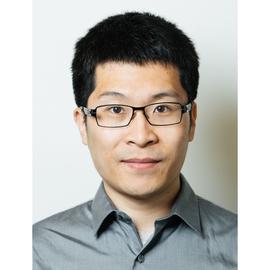
 Shaobo Han
· 2 previous affiliations
- NEC (United States)Since 2019
- Researcher · Since 2019
- Duke UniversityCurrent
- Current
- Postdoc · 2016–2019
- PhD student · 2010–2016
Research Overview
Shaobo Han focuses on probabilistic generative models, parameter-efficient transfer learning, and signal processing for real-world sensing applications. His trajectory spans foundational work in Bayesian statistics and structured variational methods to recent innovations in cross-domain model adaptation. Currently, he investigates extreme parameter-efficient fine-tuning for foundation models and AI-driven distributed acoustic sensing over fiber-optic networks.
Research Trajectory
Han’s early research concentrated on Bayesian statistics, latent variable models, and multi-task learning. In 2012, he introduced methods for heterogeneous domain adaptation in Cross-Domain Multitask Learning with Latent Probit Models, proposing a latent probit model to jointly learn sparse domain transforms and shared classifiers. This work contributed to the broader area of Mitigating Dataset Imbalance in Multi-Task Learning. Expanding on structured variational methods, he developed Integrated Non-Factorized Variational Inference in 2013, which unified the integrated nested Laplace approximation (INLA) under a variational framework. This approach enabled fast, decoupled optimization for non-differentiable priors, advancing the research directions of Correcting Variance Underestimation in Mean Field Variational Inference, Expressive Non-Gaussian Priors for Latent Variable Models, and Massively Parallel Hyperparameter and Architecture Search.
Continuing his focus on complex dependency structures, Han explored multiscale priors in Hierarchical Infinite Divisibility for Multiscale Shrinkage (2014) and addressed time-evolving ordinal data in Dynamic Rank Factor Model for Text Streams (2014). The latter proposed a dynamic rank factor model capable of discovering topic prevalence and contemporary dependence structures in text streams while accommodating heavy-tailed innovations. In 2015, he collaborated on Alternating Minimization Algorithm with Automatic Relevance Determination for Transmission Tomography under Poisson Noise, applying these optimization techniques to imaging challenges.
Moving toward deep generative models and scalable inference, Han participated in the development of VAE Learning via Stein Variational Gradient Descent (2017), which integrated Stein variational gradient descent with importance sampling to learn variational autoencoders without restrictive parametric assumptions. In 2018, his work on spatial data structures led to Multiresolution Tensor Decomposition for Multiple Spatial Passing Networks, a framework utilizing multiresolution tensor decomposition to identify recurring spatial passing patterns in sports analytics. This research provided new visualization techniques for team strategies, aligning with the broader area of Additive Parts Based Representation Learning.
By 2022, Han’s research expanded into domain adaptation, reinforcement learning, and diffusion models. He co-authored Learning Transferable Reward for Query Object Localization with Policy Adaptation, which formulated a transferable reward signal via ordinal metric learning to enable test-time policy adaptation for query object localization in new environments. Concurrently, he investigated zero-shot domain generalization in Provable Adaptation across Multiway Domains via Representation Learning, presenting explicit sample complexity bounds for adaptation across multiway domains using low-rank tensor structures. He also contributed to Compositional Image Generation and Manipulation with Latent Diffusion Models, exploring compositional image generation by training latent diffusion models with auxiliary classifiers to navigate semantic latent spaces. Returning to foundational variational inference, Han introduced Variational Gaussian copula inference in 2023, presenting a framework that leverages copulas to capture both multivariate dependencies and complex univariate marginals in Bayesian models.
In 2024 and 2025, Han’s trajectory shifted toward extreme parameter efficiency and applied signal processing for telecommunications infrastructure. He co-developed VB-LoRA: Extreme Parameter Efficient Fine-Tuning with Vector Banks (2024), which introduced a "divide-and-share" paradigm utilizing a global vector bank to drastically reduce the storage costs of fine-tuning large language models. This was followed by Uni-LoRA: One Vector is All You Need (2025), a unified framework demonstrating that massive language models can be fine-tuned using a single trainable vector projected through a fixed, isometric matrix. Parallel to his work on foundation models, Han advanced distributed acoustic sensing (DAS) technologies. He authored Energy-based Generative Models for Distributed Acoustic Sensing Event Classification in Telecom Networks (2025), applying energy-based generative models to event classification. He also led research on data augmentation and real-world deployment, developing Text-guided Device-realistic Sound Generation for Fiber-based Sound Event Classification (2025) and conducting Field Tests of AI-Driven Road Deformation Detection Leveraging Ambient Noise over Deployed Fiber Networks (2025).
Current Directions
The most recent papers in the evidence point to two primary research themes. First, Han is investigating the theoretical and practical limits of parameter-efficient fine-tuning (PEFT) for large-scale foundation models. This work focuses on extreme parameter reduction techniques—such as global vector banks and unified isometric projections—that maintain adaptation performance while minimizing storage and computational overhead. Second, he is actively developing AI-driven signal processing solutions for distributed acoustic sensing over deployed fiber-optic networks. This applied direction combines generative modeling, text-guided sound generation for training data augmentation, and field testing to enable real-world infrastructure monitoring, such as road deformation detection and environmental event classification across existing telecommunications hardware.
Profile updated
Loading new papers…
Other researchers whose papers cluster into the same research directions — a proxy for overlapping technical interests and shared intellectual neighborhoods.
See something wrong? Report a mistake