

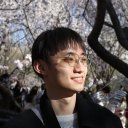
 Shaoan Wang
· 3 previous affiliations
- Light OriginsSince 2026
- Technical staff · Since 2026
- Peking UniversityCurrent
- Current
- PhD student · 2021–2026
- Beijing Institute of Technology2017–2021
- Undergrad student · 2017–2021
Research Overview
Shaoan Wang focuses on embodied artificial intelligence, visual-language navigation, and multimodal robot perception. His early work addressed high-precision pose estimation and camera calibration for complex surfaces and surgical robotics. More recently, his research centers on developing vision-language-action models and foundation models that enable robust, real-time navigation and object tracking in dynamic environments.
Research Trajectory
Wang’s early research concentrated on visual localization and pose estimation, particularly overcoming the limitations of traditional flat fiducial markers in complex physical environments. He introduced methods to achieve subpixel accuracy on non-planar geometries, detailing this approach in Accurate Detection and Localization of Curved Checkerboard-Like Marker Based on Quadratic Form. Building on this foundation, he developed CylinderTag: An Accurate and Flexible Marker for Cylinder-Shape Objects Pose Estimation Based on Projective Invariants, a novel cyclic visual marker designed specifically for developable curved surfaces. By leveraging the cross-ratio in projective invariance, this work enabled highly accurate pose estimation for cylindrical objects.
Alongside marker-based localization, Wang investigated advanced camera systems and their calibration. He designed a spatiotemporal calibration framework for hybrid camera setups in EF-Calib: Spatiotemporal Calibration of Event- and Frame-Based Cameras Using Continuous-Time Trajectories. This toolkit utilized a continuous-time trajectory representation via piece-wise B-splines to align the asynchronous data of bio-inspired event cameras with standard frame-based sensors. During this period, Wang also applied visual systems to medical contexts, contributing to the Spatially Compact Visual Navigation System for Automated Suturing Robot Toward Oral and Maxillofacial Surgery. His collaborative work in the medical domain extended to image analysis, where he participated in developing Accurate and Automatic Dental Crown Components Segmentation With Multi-Scale Attention Based U-Net and Hybrid Level Set Models and An Evidence-Based Tri-Branch Cross-Pseudo Supervision Method for Semi-Supervised Medical Image Segmentation.
Transitioning toward complex scene understanding, Wang explored the integration of event-camera data with large language models. With collaborators, he contributed to LET-US: Long Event-Text Understanding of Scenes, a framework that employs adaptive compression and text-guided filtering to process massive event streams, allowing multimodal models to interpret long-duration asynchronous sensor data.
Through his ongoing doctoral research and affiliations with robotics organizations such as GALBOT and ByteDance Seed Robotics, Wang’s focus expanded significantly into embodied artificial intelligence and Vision-Language-Action (VLA) models. He presented TrackVLA: Embodied Visual Tracking in the Wild, a model that unifies object recognition and trajectory planning within a shared large language model backbone, enabling zero-shot deployment for visual tracking in dynamic environments. This architecture was subsequently enhanced in TrackVLA++: Unleashing Reasoning and Memory Capabilities in VLA Models for Embodied Visual Tracking. By embedding explicit spatial reasoning and a confidence-gated memory module that freezes updates during occlusions, this work advanced the area of Memory Augmented Architectures for Persistent Object Tracking and contributed to the broader field of Dual System Architectures for Real Time Robotic Control.
Continuing his work on unified navigation architectures, Wang was a core contributor to Uni-NaVid: A Video-based Vision-Language-Action Model for Unifying Embodied Navigation Tasks. Utilizing an online visual token merging strategy, the model achieved real-time inference rates capable of handling instruction following, object searching, and human following from egocentric video. This work aligns closely with the research direction of Unified Multimodal Prompting for Generalist Embodied Navigation and the domain of Unified Whole-Body Loco-Manipulation.
Most recently, Wang’s research has scaled toward generalist foundation models for robotics. He collaborated on the Embodied Navigation Foundation Model (NavFoM), which was trained on millions of navigation samples to operate across diverse embodiments, including quadrupeds, drones, and autonomous vehicles. He also contributed to Hydra-Nav: Object Navigation via Adaptive Dual-Process Reasoning, an architecture that mimics human cognition by dynamically switching between a deliberative planning system and a fast, reactive execution system to optimize both success rates and computational efficiency in complex environments.
Current Directions
The most recent papers in the evidence indicate a strong focus on scaling embodied AI through generalist foundation models and adaptive reasoning architectures. Wang is actively investigating cross-embodiment navigation systems that can generalize across vastly different hardware platforms—such as wheeled robots, quadrupeds, and drones—using shared visual-language representations. A major theme in his current work is the development of dual-process cognitive architectures for robots, which balance computationally expensive, long-horizon strategic planning with lightweight, high-frequency reactive control. By integrating explicit memory modules and adaptive chain-of-thought mechanisms into Vision-Language-Action models, his research aims to enable persistent, real-time autonomous navigation and object tracking in highly dynamic, unstructured real-world environments.
Profile updated
Loading new papers…
Other researchers whose papers cluster into the same research directions — a proxy for overlapping technical interests and shared intellectual neighborhoods.
See something wrong? Report a mistake