

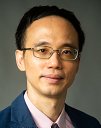
 Shang-Wei Lin
· 5 previous affiliations
- Singapore Institute of TechnologySince 2024
- Associate Professor · Since 2024
- Nanyang Technological University2015–2024
- Assistant Professor · 2015–2024
- Postdoctoral Research Fellow · 2014–2015
- Research Scientist · 2011
- National Chung Cheng University2004–2010
- 2004–2010
Research Overview
Shang-Wei Lin focuses on formal methods and their application to the verification and synthesis of complex software systems, including real-time, concurrent, and cyber-physical systems. His work bridges the gap between theoretical computer science—specifically model checking and theorem proving—and practical software engineering challenges in domains such as blockchain security, smart contract verification, and the reliability of machine learning models. Currently an Associate Professor at the Singapore Institute of Technology, Lin’s research trajectory has evolved from foundational work in timed automata and compositional verification toward the automated analysis of decentralized systems and the enhancement of neural network robustness and efficiency.
Research Trajectory
Lin’s early research, spanning approximately 2011 to 2014, was primarily concerned with the formal verification of real-time systems. During his tenure at the National University of Singapore and Temasek Laboratories, he addressed the "state-space explosion" problem, a fundamental barrier in model checking where the number of possible system states grows exponentially with the complexity of the system. His work during this period focused on event-recording automata (ERAs) and the development of compositional verification techniques. By breaking down large systems into smaller, manageable components and using learning-based algorithms to verify them, he contributed to making formal verification more scalable for industrial-scale real-time applications. A significant component of this work involved Parameter Synthesis for Parametric Timed Automata, where the goal is to identify the precise timing constraints under which a system remains safe and functional.
Following his move to Nanyang Technological University in 2015, Lin’s research program expanded to include the security of decentralized technologies. As blockchain and smart contracts gained prominence, he began applying formal methods to identify vulnerabilities in these immutable programs. This transition represented a shift from verifying traditional real-time control logic to verifying economic and semantic invariants in distributed environments. His work in this area moved beyond static code analysis—which often suffers from high false-positive rates—toward dynamic exploit generation and formal specification. This period also saw an increased focus on program synthesis and automated testing, particularly for human-machine interfaces (HMIs) and mobile platforms.
In the most recent phase of his career (2020–2026), Lin has increasingly integrated machine learning into his research while simultaneously applying formal rigor to the evaluation of machine learning models themselves. This includes participation in research regarding Sequential Behavioral Modeling for Malicious Intent Detection, which utilizes deep learning to identify sophisticated malware patterns that evade traditional signature-based detection. Furthermore, he has contributed to the study of actionable warning identification, using pre-trained models to help developers distinguish between critical software bugs and benign warnings generated by static analysis tools.
Current Directions
Lin’s current research agenda is characterized by three primary pillars: the security of emerging technologies, the efficiency of deep learning architectures, and the formal verification of quantum programs. In the realm of machine learning security, he explores the "generalization gap" and the vulnerability of models to Generalizing to Zero-Day Attacks in Machine Learning Security. This involves developing techniques like inverse adversarial training to improve model calibration, ensuring that safety-critical systems—such as autonomous vehicles—provide reliable confidence scores for their predictions.
Another significant current focus is model compression and deployment. As neural networks grow in size, Lin participates in research aimed at Post-Training Quantization for Efficient Model Deployment and Universal Structural Pruning for Diverse Neural Architectures. These techniques are essential for running complex models on resource-constrained hardware, such as IoT devices and mobile phones, without significant loss in accuracy.
Finally, Lin is extending his expertise in formal methods to the domain of quantum computing. His interests include quantum algorithm design and the verification of quantum circuits. This represents a new frontier for formal methods, requiring the adaptation of classical verification logic to the probabilistic and linear-algebraic nature of quantum states.
Representative Work
Automatic Compositional Verification of Timed Systems In this work, Lin addresses the scalability of model checking for real-time systems. He presents a toolkit designed for event-recording automata (ERAs) that supports system modeling and simulation alongside a fully automatic compositional verification framework. By utilizing learning techniques to manage component interactions, the approach demonstrates an ability to outperform traditional timed model checkers in handling complex, multi-component systems.
Parameter synthesis for hierarchical concurrent real-time systems This research focuses on the design of safety-critical systems where timing delays are often uncertain or fluctuating. Lin explores the synthesis of parameters for hierarchical systems, providing a method to determine the valid ranges for timing constants that guarantee system correctness. This is particularly relevant for industrial controllers and medical devices where precise temporal windows are mandatory for safety.
Oracle-Supported Dynamic Exploit Generation for Smart Contracts As the second author of this study, Lin contributed to the development of ContraMaster, a framework for identifying vulnerabilities in smart contracts. Unlike tools that rely on rigid code patterns, ContraMaster monitors semantic invariants and uses a general-purpose test oracle to mutate transaction sequences. This approach successfully identified 26 previously unknown vulnerabilities while significantly reducing the false positives common in existing security tools.
A Survey of Smart Contract Formal Specification and Verification In this comprehensive survey, Lin and his collaborators provide a taxonomy of the formal methods landscape as applied to blockchain technology. By reviewing over 200 works, the paper categorizes the field into modeling, specification, and verification, documenting the transition from basic vulnerability hunting to the rigorous verification of functional correctness in decentralized applications.
A Holistic Automated Software Structure Exploration Framework for Testing This paper introduces ASSET, a reinforcement-learning-powered framework for exploring the structure of Human-Machine Interface (HMI) software. The framework combines computer vision and natural language processing to analyze visual feedback and follow human instructions during the testing phase. This work addresses the difficulty of validating complex HMI products that must adhere to strict predefined test conditions.
Towards Calibration Enhanced Network by Inverse Adversarial Attack In this collaborative work, Lin participates in the development of Inverse Adversarial Training (IAT). While standard adversarial training focuses on overconfidence in incorrect predictions, this research introduces the Inverse Adversarial Attack (IAA) to identify "underconfidence" in correct predictions. By training models on these examples, the researchers improve the calibration of neural networks, making them more reliable for deployment in safety-critical environments.
Profile updated
Loading new papers…
Other researchers whose papers cluster into the same research directions — a proxy for overlapping technical interests and shared intellectual neighborhoods.
See something wrong? Report a mistake