

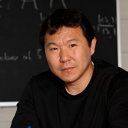
 Shang-Hua Teng
· 9 previous affiliations
- University of Southern CaliforniaSince 2009
- Full Professor · 2009–2026
- Associate Professor · 1997–2011
- Full Professor · 2000–2002
- Boston University2002–2009
- Full Professor · 2002–2009
- Akamai (United States)1999–2002
- Principal Researcher · 1999–2002
- University of Minnesota1994–1997
- Assistant Professor · 1994–1997
- Lecturer · 1992–1994
- Researcher · 1993
- Xerox (United States)1991–1992
- Postdoc · 1991–1992
- Carnegie Mellon University1988–1991
- 1988–1991
Research Overview
Shang-Hua Teng focuses on theoretical computer science, scalable algorithms, and the mathematical foundations of machine learning. His early trajectory established fundamental paradigms in network analysis and the smoothed analysis of algorithms to explain practical algorithmic efficiency. Recently, his focus has expanded to encompass the computational complexity of combinatorial games and the theoretical limits of multiclass learning.
Research Trajectory
Teng's early work addressed fundamental problems in scientific computing and graph partitioning. He participated in research demonstrating that spectral methods effectively find small separators in bounded-degree planar graphs and finite element meshes, as detailed in Spectral Partitioning Works: Planar Graphs and Finite Element Meshes. Building on this, he developed Fast Nested Dissection for Finite Element Meshes, contributing to the broader research direction of Mitigating Fill-in in Sparse Matrix Operations.
A major milestone in his trajectory was the introduction of smoothed analysis, a framework designed to explain why certain algorithms perform well in practice despite poor worst-case guarantees. In Smoothed analysis of algorithms: Why the simplex algorithm usually takes polynomial time, he and his collaborators proved that the simplex algorithm has polynomial smoothed complexity. This work significantly advanced the area of Beyond Worst-Case Analysis of Algorithmic Performance. During this period, he also resolved a major open problem in algorithmic game theory. In Settling the complexity of computing two-player Nash equilibria, his research group proved that finding a Nash equilibrium in a two-player game is PPAD-complete, establishing foundational limits on the efficient computation of economic equilibria.
Teng's focus on scalable algorithms led to breakthroughs in network analysis and linear systems throughout the 2010s. He contributed to the area of Strongly Local Graph Clustering by developing A Local Clustering Algorithm for Massive Graphs and Its Application to Nearly Linear Time Graph Partitioning. He subsequently helped design a new class of ultra-sparsifier techniques and recursive preconditioning strategies in Nearly Linear Time Algorithms for Preconditioning and Solving Symmetric, Diagonally Dominant Linear Systems. This work achieved nearly linear time complexity for solving Laplacian systems, driving progress in the broader field of Managing Hidden Constant Overhead in Algorithm Design.
In recent years, Teng has investigated the mathematical structure of combinatorial games. His work in the research direction of Computational Complexity of Stochastic and Parity Games includes Nimber-preserving reduction: Game secrets and homomorphic Sprague-Grundy theorem, which introduced a stronger form of game reduction and demonstrated a homomorphic property for computing the strategic value of summed games. This line of inquiry also intersects with the area of Computational Barriers to Nash Equilibria in Markov Games.
Alongside combinatorial games, Teng's recent research heavily emphasizes the theoretical foundations of machine learning, particularly multiclass classification. He formalized questions about the expressivity of algorithmic templates in Open Problem: Can Local Regularization Learn All Multiclass Problems?. His group further characterized the role of regularization using one-inclusion graphs in Regularization and Optimal Multiclass Learning. Investigating the structural properties of supervised learning, he established that the global learnability of infinite systems is determined by their finite subsystems in Transductive Learning is Compact. Extending this to the constraints of hypothesis classes, he explored the conditions under which problems are properly learnable in Proper Learnability and the Role of Unlabeled Data.
Moving into 2026, Teng has continued to explore both game theory and the mechanics of modern AI systems. He participated in a theoretical analysis of language model planning in Benefits and Pitfalls of Reinforcement Learning for Language Model Planning: A Theoretical Perspective, which contrasts the generalization capabilities of reinforcement learning against supervised fine-tuning. Returning to combinatorial games, he demonstrated a computational complexity jump when summing "superstar" games in A tractability gap beyond nim-sums: It's hard to tell whether a bunch of superstars are losers. Finally, his ongoing work in graph theory includes the study of robust asymmetry and reconstruction, as seen in Semi-Random Graphs, Robust Asymmetry, and Reconstruction.
Current Directions
Recent work investigates the theoretical limits and structural properties of machine learning, with a particular emphasis on multiclass classification. This includes characterizing optimal learning through local regularization, understanding the compactness of transductive learning, and defining the role of unlabeled data in proper learnability. Additionally, current research addresses the theoretical mechanics of reinforcement learning as applied to language model planning, analyzing how policy gradient methods and Q-learning navigate exploration and diversity collapse. Alongside these learning theory investigations, ongoing work continues to probe the computational complexity of combinatorial games, exploring tractability gaps and homomorphic properties in game reductions, as well as structural problems in semi-random graphs.
Profile updated
Loading new papers…
Other researchers whose papers cluster into the same research directions — a proxy for overlapping technical interests and shared intellectual neighborhoods.
See something wrong? Report a mistake