

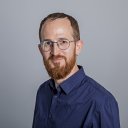
 Shai Bagon
· 5 previous affiliations
- Weizmann Institute of ScienceSince 2018
- Research Associate · Since 2018
- PhD student · 2008–2012
- Doctor of Philosophy (Ph.D.), Computer Vision · 2006–2012
- MSc, Computer Vision · 2006–2008
- BreatheVision Ltd.2020–2021
- Consultant · 2020–2021
- Brodmann172017–2018
- R&D algorithm scientist · 2017–2018
- Magisto2012–2017
- R&D algorithm engineer · 2012–2017
- Undergrad student · 2000–2004
Research Overview
Shai Bagon focuses on computer vision, image and video understanding, and deep learning analysis. His research trajectory spans from classical image segmentation and internal patch statistics to modern generative models and medical imaging applications. Currently, his work investigates the internal representations of self-supervised vision and vision-language models to improve image manipulation and visual comprehension.
Research Trajectory
Early in his career, his work addressed fundamental problems in computer vision by analyzing the internal properties of images. He introduced a unified non-parametric framework for segment extraction in What Is a Good Image Segment? A Unified Approach to Segment Extraction, defining visually meaningful segments by their internal compositional properties rather than relying on external priors. This interest in internal image statistics naturally extended to the research direction of Exploiting Internal Patch Recurrence across Image Scales. In Super-resolution from a single image, he and his collaborators demonstrated how the redundant recurrence of patches within a single natural image could be leveraged to achieve super-resolution without requiring an external database of examples.
The focus on internal patch distributions later intersected with the development of deep generative architectures. In InGAN: Capturing and Retargeting the "DNA" of a Natural Image, he helped develop an image-specific generative adversarial network designed to learn a single image's internal patch distribution, enabling the synthesis of new images with varying sizes and aspect ratios that maintain the original visual "DNA." Continuing to explore the trade-offs between classical patch-based methods and modern neural architectures, he participated in research evaluating single-image generative models in Drop the GAN: In Defense of Patches Nearest Neighbors as Single Image Generative Models.
Concurrently, he applied deep learning techniques to critical medical imaging challenges. During the COVID-19 pandemic, he led efforts to assess disease severity from lung ultrasound data. This included Assessment of COVID-19 in lung ultrasound by combining anatomy and sonographic artifacts using deep learning, which addressed the technical challenge of handling different ultrasound probe types and their varying sonographic artifacts. He expanded on this foundation by integrating domain knowledge directly into neural networks in Integrating Domain Knowledge Into Deep Networks for Lung Ultrasound With Applications to COVID-19 and contributed to broader clinical discussions in AI and Point of Care Image Analysis for COVID-19.
Returning to core computer vision, his research began investigating the internal representations of self-supervised models. He collaborated on Deep ViT Features as Dense Visual Descriptors, demonstrating that features extracted from pretrained Vision Transformers encode well-localized semantic information useful for tasks like co-segmentation. He also explored unsupervised segmentation using graph neural networks in DeepCut: Unsupervised Segmentation using Graph Neural Networks Clustering. In the video domain, he contributed to the area of Space Time Rectification of Rolling Shutter Distortion with Combining Internal and External Constraints for Unrolling Shutter in Videos, combining general frame interpolation with video-specific patch constraints to correct rolling shutter distortion.
As diffusion models emerged as a dominant paradigm, he focused on controlling and editing their outputs. He contributed to the research directions of Structural Preservation via Attention Feature Injection and High Fidelity Latent Space Inversion for Image Editing through Plug-and-Play Diffusion Features for Text-Driven Image-to-Image Translation. This framework utilizes pre-trained text-to-image models to generate new images while preserving the semantic layout of a guidance image. This approach was subsequently extended to video in TokenFlow: Consistent Diffusion Features for Consistent Video Editing, which enforces temporal consistency by propagating edited internal features across frames based on the original video's motion.
In parallel, he continued to oversee applied imaging research. He directed work on Detecting bone lesions in X-ray under diverse acquisition conditions, utilizing self-supervised vision transformers to improve object detection across highly variable clinical settings. He also guided the development of a combinatorial staining platform and algorithmic framework in Escalating High-dimensional Imaging using Combinatorial Channel Multiplexing and Deep Learning to exponentially increase the number of proteins measurable in tissue imaging.
Most recently, his research has expanded into novel sensing modalities and the analysis of large multimodal models. He co-developed a method for contactless liquid level estimation using speckle vibrometry in Learning to See Inside Opaque Liquid Containers using Speckle Vibrometry. Simultaneously, he has investigated the internal mechanisms of Vision-Language Models. In What's in the Image? A Deep-Dive into the Vision of Vision Language Models, he contributed to the broader area of Mapping Information Flow via Selective Attention Intervention, revealing how these models utilize the internal representations of query tokens to store and process global image information.
Current Directions
Recent work investigates the internal mechanisms of large-scale generative and multimodal architectures. This includes analyzing how Vision-Language Models process and store global visual information within query tokens, contributing to broader efforts in mapping information flow and selective attention intervention. Additionally, his current research explores novel computational imaging and sensing techniques, ranging from combinatorial channel multiplexing for high-dimensional tissue imaging to the use of optical vibrometry for contactless signal recovery and physical state estimation.
Profile updated
Loading new papers…
Other researchers whose papers cluster into the same research directions — a proxy for overlapping technical interests and shared intellectual neighborhoods.
See something wrong? Report a mistake