

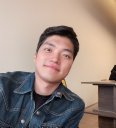
 Seunghyeon Seo
· 6 previous affiliations
- Activision Blizzard (United States)Since 2026
- Applied Research Scientist · Since 2026
- 카카오모빌리티(Kakaomobility)2025–2026
- Research Scientist · 2025–2026
- Kakao Corporation (South Korea)2025–2026
- Researcher · 2025–2026
- Seoul National University2014–2025
- PhD student · 2021–2025
- Bachelor of Arts - BA, Agricultural Economics and Rural Development (Regional Information) / Data Sciences for Humanities · 2014–2021
- Meta (United States)2024–2025
- Research Scientist · 2025
- Research Scientist · 2024–2025
- ThinkforBL Consulting Group2020
- Machine Learning Engineer · 2020
Research Overview
Seunghyeon Seo focuses on computer vision, neural rendering, and deep learning, with an emphasis on efficient 3D scene reconstruction and synthetic data generation. His trajectory spans foundational improvements in object detection and vision transformers to advanced regularization techniques for sparse-input neural radiance fields. Recently, his work investigates the integration of diffusion models with 3D Gaussian splatting to reconstruct complex environments and generate photorealistic avatars.
Research Trajectory
Seo's early research addressed efficiency and data constraints in 2D computer vision architectures. In 2022, he participated in developing MUM: Mix Image Tiles and UnMix Feature Tiles for Semi-Supervised Object Detection, a method that improves training under limited label availability by mixing image tiles and unmixing feature tiles. This work contributed to the broader research direction of Spatial Granularity in Patch-Based Neural Networks. He subsequently addressed the computational bottlenecks of scaling Vision Transformers (ViTs) by introducing ConcatPlexer: Additional Dim1 Batching for Faster ViTs, which proposed a novel batching strategy to mitigate the quadratic cost of self-attention in resource-constrained environments.
Concurrently, Seo explored probabilistic modeling to streamline complex vision tasks, specifically advancing the area of Multi Object Detection via Mixture Density Estimation. He developed MDPose: Real-Time Multi-Person Pose Estimation via Mixture Density Model, framing instance-aware keypoint estimation as a single-stage process to bypass heuristic post-grouping and improve inference speed, particularly under heavy occlusion. Building on these probabilistic frameworks, he collaborated on End-to-End Multi-Object Detection with a Regularized Mixture Model, which simplified object detection by treating it as a density estimation problem optimized with a Negative Log-Likelihood and Maximum Component Maximization loss.
In 2023, Seo's focus shifted toward 3D vision, where he began addressing the heavy data requirements of Neural Radiance Fields (NeRFs). His work in the area of Sparse View Synthesis for Neural Scene Representations aims to maintain high rendering quality when only a few input views are available. He introduced MixNeRF: Modeling a Ray with Mixture Density for Novel View Synthesis from Sparse Inputs, adapting his prior expertise in mixture density models to ray modeling. To further regularize few-shot training, he proposed FlipNeRF: Flipped Reflection Rays for Few-shot Novel View Synthesis, which derives flipped reflection rays from input directions and estimated normal vectors to serve as additional training signals. He expanded on these geometric regularizations with HourglassNeRF: Casting an Hourglass as a Bundle of Rays for Few-shot Neural Rendering, conceptualizing an "hourglass" bundle of rays between the input and reflection rays, featurized via Integrated Positional Encoding to expand coverage of unseen views. This trajectory of improving NeRF geometry also touches upon the broader directions of Surface-Aware Importance Sampling for Neural Radiance Fields and Uncertainty Guided Priors for Neural Surface Reconstruction.
By 2025, Seo continued to refine few-shot rendering while integrating generative AI into 3D pipelines. He developed ARC-NeRF: Area Ray Casting for Broader Unseen View Coverage in Few-shot Object Rendering, which covers a wider range of unseen views with a single ray and applies adaptive high-frequency regularization based on target pixel photo-consistency, contributing to the area of Surface Normals for Physically Based Neural Rendering. Expanding beyond NeRFs, he collaborated on ROODI: Reconstructing Occluded Objects with Denoising Inpainters, a framework that combines 3D Gaussian Splatting with 2D diffusion models to extract and complete occluded objects using a specialized pruning strategy. He also contributed to LoGoColor: Local-Global 3D Colorization for 360° Scenes, which replaces standard guidance-averaging with a hierarchical consistency approach to colorize geometry-only reconstructions. During his time as a research scientist intern at Meta Reality Labs, he collaborated on Generative Head-Mounted Camera Captures for Photorealistic Avatars, presenting a generative diffusion framework to synthesize photorealistic images from avatar renderings, facilitating the scalable training of facial encoders.
Current Directions
The most recent papers in the evidence indicate a strong focus on the intersection of explicit 3D representations—such as 3D Gaussian Splatting—and 2D generative diffusion models. Seo's current work investigates how diffusion priors can be leveraged to solve ill-posed 3D problems, such as amodal perception for heavily occluded objects and multi-view consistent colorization for complex 360-degree environments. Additionally, his recent collaborations address the scalable generation of synthetic training data for photorealistic avatars, utilizing generative frameworks to bridge the gap between rendered geometry and realistic sensor captures.
Profile updated
| Paper | Venue | Year |
|---|---|---|
| End-to-End Multi-Object Detection with a Regularized Mixture ModelGitHublhj815/ | ICML | 2023 |
Loading new papers…
Other researchers whose papers cluster into the same research directions — a proxy for overlapping technical interests and shared intellectual neighborhoods.
See something wrong? Report a mistake