

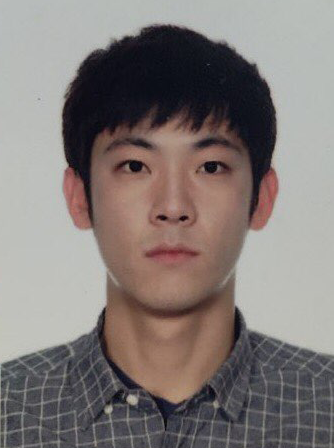
 Seung-Wook Kim
· 3 previous affiliations
- Pukyong National UniversitySince 2022
- Associate Professor · Since 2026
- Assistant Professor · 2022–2026
- Samsung (South Korea)2020–2022
- Staff researcher · 2020–2022
- Korea University2008–2019
- Research professor · 2019
- PhD student · 2012–2019
- Undergrad student · 2008–2012
1 other author named Seung-Wook Kim: Seung Wook Kim (Nvidia (United States) · 24 papers)
Research Overview
Seung-Wook Kim focuses on the development of robust feature descriptors and deep learning architectures for image restoration, human-centric computer vision, and low-level image processing. His work addresses fundamental challenges in visual recognition and reconstruction, ranging from environmental variability in face recognition to the complexities of raw-to-RGB mapping and 3D hand pose estimation. By integrating classical computer vision principles—such as local binary patterns and kinematic modeling—with contemporary convolutional and recurrent neural network structures, Kim’s research seeks to improve the accuracy and efficiency of vision systems operating on real-world, often degraded, data.
Research Trajectory
Kim’s early research was centered on classical feature engineering for biometric recognition. In 2014, his work addressed the degradation of face recognition systems caused by illumination changes, occlusions, and varying facial expressions. This period was characterized by an emphasis on robust descriptors that could maintain discriminative power under non-ideal environmental conditions. By leveraging statistical methods like Principal Component Analysis (PCA) in conjunction with localized texture descriptors, Kim contributed to the refinement of visible image-based recognition systems.
By 2019, Kim’s focus shifted significantly toward the optimization and application of deep neural networks for image processing and restoration. This transition involved two primary directions: the analytical study of network architectures and the application of these models to complex image-to-image translation tasks. He led investigations into how hyper-parameters within image operators—such as smoothing strength or super-resolution scales—could be effectively parameterized within Convolutional Neural Networks (CNNs). Simultaneously, he addressed the problem of raw-to-RGB mapping, specifically focusing on the challenges of learning from misaligned data and the absence of camera metadata, which are common in real-world mobile photography contexts.
During this same period, Kim expanded his research into human-centric vision, specifically 3D hand pose estimation. Recognizing that standard CNNs often fail to exploit the inherent structural constraints of articulated objects, he contributed to the development of models that incorporate kinematic chains. By using recurrent neural networks (RNNs) to model the sequential dependencies of finger joints, this work sought to improve the anatomical plausibility of estimated poses.
In the early 2020s, Kim’s work further diversified into stereo matching and advanced image restoration techniques like denoising and deblurring. His research in stereo matching revisited classical non-parametric transforms, introducing modifications based on the human visual system to resolve ambiguities in local patch matching. His most recent work in image deblurring explores "divide and conquer" strategies, using multi-decoder architectures to decompose complex blur kernels into more manageable directional components. Throughout this evolution, Kim has maintained a consistent interest in bridging the gap between theoretical model performance and the practical constraints of real-world visual data.
Representative Work
Kim’s research is exemplified by several key contributions to feature descriptor design and neural network architecture optimization. In Eigen directional bit-planes for robust face recognition, Kim and his colleagues introduced the Eigen Directional Bit-Plane (EDBP) descriptor. This work observed that the Local Binary Pattern (LBP) could be decomposed into eight directional bit-planes, each capturing specific directional information of a facial image. By applying PCA to this decomposed space, the researchers obtained a compact and robust feature set that significantly improved recognition performance in environments characterized by variable lighting and occlusions.
As the field moved toward deep learning, Kim led a critical comparative study in Evaluating Parameterization Methods for Convolutional Neural Network (CNN)-Based Image Operators. This research addressed a practical limitation in image processing: the need for operators to handle varying hyper-parameters (e.g., the strength of a smoothing filter) within a single model. Kim analytically explored various parameterization techniques, providing a framework for understanding how these inputs influence the operation principles of CNNs. This work is foundational for developing flexible image restoration models that do not require retraining for every specific parameter configuration.
In the domain of image-to-image translation, Kim contributed to the development of W-Net: Two-Stage U-Net With Misaligned Data for Raw-to-RGB Mapping. This research tackled the Zurich Raw-to-RGB (ZRR) dataset, where input raw images and target RGB images were captured by different cameras, leading to imperfect alignment and a lack of metadata. The proposed W-Net architecture utilized a two-stage U-Net structure and a specialized loss function to mitigate the effects of misalignment, demonstrating an effective approach for high-quality photo enhancement on mobile devices.
Kim’s work on articulated object tracking is represented by Capturing Hand Articulations using Recurrent Neural Network for 3D Hand Pose Estimation. This paper addressed the limitations of standard CNNs in capturing the complex motions of the hand. By viewing the hand as a set of six local parts (the palm and five fingers) and modeling each finger as a kinematic chain, the research employed a hierarchically-structured convolutional recurrent neural network. This approach allowed the model to exploit the sequential constraints of joint movements, leading to more accurate 3D estimations from single depth images.
In the area of stereo vision, Kim contributed to the development of the Quaternary Census Transform Based on the Human Visual System for Stereo Matching. The standard census transform, while effective, often produces identical binary codes for different local patches due to simple thresholding. Kim and his collaborators introduced a quaternary transform that encodes both relative intensity ordering and structural information inspired by human visual perception. This refinement reduced matching ambiguities and improved the reliability of depth estimation in stereo matching tasks.
More recently, Kim participated in the development of XYDeblur: Divide and Conquer for Single Image Deblurring. This work critiques the standard single-lane encoder-decoder (U-Net) structures commonly used in deblurring, arguing that they fail to account for the complexity of blur kernels caused by multi-directional motions. The proposed XYDeblur architecture utilizes a one-encoder-two-decoder framework designed to decompose encoded features into complemental directional components. This "divide and conquer" strategy allows the network to more effectively reconstruct sharp images from complex, motion-blurred inputs.
Current Directions
Kim’s recent trajectory suggests a deepening interest in specialized architectures for complex restoration tasks. His participation in large-scale challenges, such as the NTIRE 2019 challenge on real image denoising and the AIM 2019 challenge on RAW to RGB mapping, indicates a continued focus on benchmarking and advancing the state-of-the-art in image enhancement. Furthermore, his work on multi-scale feature pyramids for denoising suggests an ongoing exploration of how contextual information across different scales can be integrated to better separate image structures from noise. These directions point toward a research program that increasingly prioritizes the handling of real-world sensor noise and complex degradations through sophisticated architectural design and the incorporation of domain-specific priors.
Profile updated
| Title | Venue | Year |
|---|---|---|
| XYDeblur: Divide and Conquer for Single Image Deblurring | CVPR | 2022 |
| Fast and Accurate 3D Hand Pose Estimation via Recurrent Neural Network for Capturing Hand Articulations | IEEE Access | 2020 |
| Quaternary Census Transform Based on the Human Visual System for Stereo Matching | IEEE Access | 2020 |
| Parallel Feature Pyramid Network for Image Denoising | Icce | 2020 |
| AIM 2019 Challenge on RAW to RGB Mapping: Methods and Results | Workshops @ ICCV | 2019 |
| Evaluating Parameterization Methods for Convolutional Neural Network (CNN)-Based Image Operators | Workshops @ CVPR | 2019 |
| NTIRE 2019 Challenge on Real Image Denoising: Methods and Results | Workshops @ CVPR | 2019 |
| W-Net: Two-stage U-Net with misaligned data for raw-to-RGB mapping | Workshops @ ICCV | 2019 |
| Eigen directional bit-planes for robust face recognition | IEEE Trans. Consumer Electron | 2014 |
Loading new papers…
Other researchers whose papers cluster into the same research directions — a proxy for overlapping technical interests and shared intellectual neighborhoods.
See something wrong? Report a mistake