

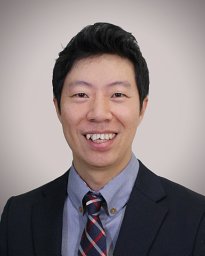
 Seulki Lee
· 5 previous affiliations
- Associate Professor · Since 2026
- Current
- Associate Professor · 2025–2026
- Assistant Professor · 2021–2025
- Research Assistant · 2016–2021
- Doctor of Philosophy - PhD, Computer Science · 2021
- Master's degree, Computer Science · 2018
- Nokia Bell Labs2018
- Research Intern · 2018
- Software Engineering Intern · 2017
Research Overview
Seulki Lee focuses on embedded artificial intelligence, on-device machine learning, and resource-constrained sensing systems. His work spans the development of energy-efficient neural network architectures, memory-optimized training algorithms, and real-time inference frameworks for mobile and Internet of Things devices. Recently, his research has expanded to address memory bottlenecks in large-scale model training and the optimization of time-series forecasting models.
Research Trajectory
Lee’s early research established foundational techniques for executing machine learning tasks on devices with extreme power and memory constraints. In 2019, he introduced Intermittent Learning: On-Device Machine Learning on Intermittently Powered System, which proposed algorithms and heuristics to enable energy-harvested computing platforms to perform machine learning under tight energy budgets. He expanded on this paradigm with Neuro.ZERO: a zero-energy neural network accelerator for embedded sensing and inference systems, detailing a co-processor architecture that opportunistically accelerates deep neural network (DNN) inference using harvested energy.
To address the memory limitations of embedded systems, Lee developed methods for dynamic and scalable model execution. He presented Fast and scalable in-memory deep multitask learning via neural weight virtualization (2020), introducing a technique to pack multiple heterogeneous DNNs into fixed-size main memory through fine-grained parameter sharing. That same year, he proposed SubFlow: A Dynamic Induced-Subgraph Strategy Toward Real-Time DNN Inference and Training, which dynamically constructs and executes subnetworks to meet fluctuating real-time constraints. Continuing to optimize models for intelligent sensing systems, he later developed Deep Functional Network (DFN): Functional Interpretation of Deep Neural Networks for Intelligent Sensing Systems (2021), a framework that approximates black-box DNNs into interpretable functional programs for easier deployment.
As his work progressed, Lee increasingly focused on the memory bottlenecks associated with training and architecture search. He collaborated on Softmax Output Approximation for Activation Memory-Efficient Training of Attention-based Networks (2023), which reduces the memory footprint of intermediate activations by approximating softmax outputs during the backward pass. Concurrently, he explored on-device neural architecture search with On-NAS: On-Device Neural Architecture Search on Memory-Constrained Intelligent Embedded Systems, utilizing meta-learning to drastically curtail the memory required to find and train optimal architectures directly on embedded devices. His focus on microcontroller-level constraints also led to MicroDeblur: Image Motion Deblurring on Microcontroller-based Vision Systems, which combined deep neural networks with classical matrix-based algorithms to perform image deblurring within hundreds of kilobytes of RAM.
In recent years, Lee has pushed the boundaries of extreme memory efficiency while expanding his focus to time-series analysis and generative models. His lab developed Designing Extremely Memory-Efficient CNNs for On-Device Vision Tasks (2024), introducing design principles like input segmentation to run image classification using as little as 63 KB of memory. In the domain of time-series data, he guided research on CAFO: Feature-Centric Explanation on Time Series Classification to identify key features in complex multivariate datasets, and AliO: Output Alignment Matters in Long-Term Time Series Forecasting (2025), which addresses consistency issues to mitigate non-stationary distribution shifts. Further advancing sequence modeling, he oversaw PPT: Patch Order Do Matters In Time Series Pretext Task, a self-supervised method that leverages temporal ordering to improve classification and clustering.
Lee's most recent work tackles the computational bottlenecks of training large-scale models and deploying generative AI. He introduced SMMF: Square-Matricized Momentum Factorization for Memory-Efficient Optimization (2025), an optimizer that compresses momentum tensors to significantly lower memory footprints, contributing directly to the broader area of Reducing Optimizer State Memory Overhead in Training. He also explored automated optimization in Bayesian Code Diffusion for Efficient Automatic Deep Learning Program Optimization. To bring advanced generative capabilities to mobile platforms, he developed On-device Sora: Enabling Training-Free Diffusion-based Text-to-Video Generation for Mobile Devices, optimizing pre-trained diffusion models for resource-constrained environments. Continuing to refine training efficiency, he participated in ECAI: Efficient Convolution Activation Inversion for Constant-Memory Convolutional Neural Networks Training (2026), which reconstructs activations to maintain constant memory usage during the backward pass. Additionally, he collaborated on Enabling Fine-Tuning of Direct Feedback Alignment via Feedback-Weight Matching, proposing a novel method to stabilize and improve the fine-tuning of pre-trained models using biologically plausible parallel training alternatives.
Current Directions
The most recent papers in the evidence indicate a strong focus on overcoming the fundamental memory and computational bottlenecks of modern deep learning, both during training and inference. Recent work investigates constant-memory training techniques, such as activation inversion, and memory-efficient optimizers that drastically reduce the overhead of adaptive learning rate methods. Additionally, Lee is exploring alternative, parallelizable credit assignment mechanisms like Direct Feedback Alignment to decouple sequential dependencies in neural network training. Alongside these foundational training improvements, his research addresses the practical deployment of highly complex models—such as diffusion-based text-to-video generators—directly onto mobile and edge devices without the need for extensive on-device fine-tuning.
Profile updated
Loading new papers…
Other researchers whose papers cluster into the same research directions — a proxy for overlapping technical interests and shared intellectual neighborhoods.
See something wrong? Report a mistake