

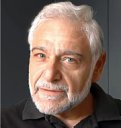
 Sergios Theodoridis
2 previous affiliations
- Full Professor · 1995–2023
- Aalborg University2020–2023
- Full Professor · 2020–2023
Research Overview
Sergios Theodoridis focuses on adaptive online learning algorithms, sparsity-aware modeling, and robust signal processing. His foundational work established key methodologies in complex kernel adaptive filtering and distributed learning over sensor networks. More recently, his research addresses self-supervised audio representation learning, adversarial robustness in deep neural networks, and the integration of large language models into Bayesian optimization.
Research Trajectory
Theodoridis's early trajectory in signal processing began with contributions to adaptive estimation. In 1991, he collaborated on Fast Newton transversal filters-a new class of adaptive estimation algorithms, which presented a novel class of algorithms for estimating finite impulse response transversal filters by efficiently computing the necessary gain vectors.
By the early 2010s, his focus expanded into infinite-dimensional spaces and kernel methods. He introduced a general tool for convexly constrained parameter and function estimation in Adaptive Learning in a World of Projections, adapting classical projections onto convex sets (POCS) for sequential data in reproducing kernel Hilbert spaces (RKHS). Recognizing that adaptive kernel-based strategies were largely limited to real-valued data, he and his collaborators developed Extension of Wirtinger's Calculus to Reproducing Kernel Hilbert Spaces and the Complex Kernel LMS. This work successfully brought online kernel methods to complex-valued signals. Building on this foundation, he contributed to The Augmented Complex Kernel LMS, an algorithm that leveraged both a complex signal and its conjugate in a high-dimensional feature space to improve estimation for non-circular signals. These advancements significantly shaped the area of Complex Kernel Adaptive Filtering, while also driving progress in the broader field of Overcoming Model Growth in Online Kernel Learning and the research direction of Widely Linear Processing for Noncircular Complex Signals.
Concurrently, Theodoridis explored decentralized learning architectures. His group developed Adaptive Robust Distributed Learning in Diffusion Sensor Networks, which introduced a combine-project-adapt protocol for node cooperation that remained robust even when individual nodes failed. This interest in robustness naturally extended to linear estimation. In Robust Linear Regression Analysis - A Greedy Approach, his team addressed the challenge of outliers by explicitly modeling them through sparsity arguments within a greedy algorithmic framework. This work contributed to the research direction of Robust Estimation via Iterative Residual Thresholding and the area of Scalable Robust Statistics for High-Dimensional Data.
In the late 2010s and early 2020s, Theodoridis's research pivoted toward the complexities of deep learning, focusing on model efficiency and adversarial robustness. He directed research into Nonparametric Bayesian Deep Networks with Local Competition, aiming to infer deep networks that maintain high accuracy while dynamically deducing the minimal necessary model complexity from the data. This aligned with his contributions to the area of Sparse Neural Coding via Competitive Activation. He further investigated the defensive properties of these architectures in Local Competition and Stochasticity for Adversarial Robustness in Deep Learning and Stochastic Local Winner-Takes-All Networks Enable Profound Adversarial Robustness, demonstrating how stochastic local winner-takes-all mechanisms could protect neural networks against adversarial gradients.
His expertise in sparsity and Bayesian inference also found applications in tensor decomposition and hardware accelerators. He oversaw the development of Towards Flexible Sparsity-Aware Modeling: Automatic Tensor Rank Learning Using the Generalized Hyperbolic Prior, which tackled the computationally hard problem of determining optimal tensor rank for canonical polyadic decomposition. In the hardware domain, his team presented Bayesian Photonic Accelerators for Energy Efficient and Noise Robust Neural Processing, introducing a Bayesian learning framework to mitigate phase uncertainty and crosstalk in silicon photonic integrated chips. Continuing to refine complex probabilistic models, he contributed to Towards Efficient Modeling and Inference in Multi-Dimensional Gaussian Process State-Space Models, which utilized normalizing flows to capture inter-dimensional dependencies with significantly reduced computational overhead.
Most recently, Theodoridis has focused heavily on self-supervised representation learning, particularly for audio. He developed Masked Autoencoders with Multi-Window Attention Are Better Audio Learners, introducing an architecture that allows transformer decoder heads to focus on varying window sizes to capture the multi-scale nature of audio. He subsequently provided An overview of neural architectures for self-supervised audio representation learning from masked spectrograms, comparing Transformers, State Space Models (Mamba), and xLSTMs. Building on these insights, he introduced AxLSTMs: learning self-supervised audio representations with xLSTMs, demonstrating that recurrent architectures trained on masked spectrogram patches could outperform comparable Transformer baselines with greater parameter efficiency. In parallel with his audio research, his team explored the intersection of large language models and optimization, presenting Adaptive Kernel Design for Bayesian Optimization Is a Piece of CAKE with LLMs, a framework that leverages LLMs to automatically design and evolve custom kernels for Bayesian optimization tasks.
Current Directions
The most recent papers in the evidence indicate a strong focus on efficient, self-supervised representation learning and the integration of modern sequence models into domain-specific tasks. A major current direction involves advancing neural architectures for audio processing, specifically by moving beyond standard Transformers to explore State Space Models (Mamba) and extended Long Short-Term Memory (xLSTM) networks. This work emphasizes parameter efficiency, multi-scale feature extraction, and robust performance in low-data regimes for masked spectrogram modeling. Additionally, recent research investigates the use of large language models as reasoning engines to automate complex mathematical design tasks, such as evolving custom kernels for Bayesian optimization in high-dimensional and physical systems.
Profile updated
Loading new papers…
Other researchers whose papers cluster into the same research directions — a proxy for overlapping technical interests and shared intellectual neighborhoods.
See something wrong? Report a mistake