

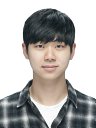
 Seong-Joon Park
2 previous affiliations
- Postdoc · 2024–2025
- Seoul National University2019–2024
- PhD student · 2019–2024
Research Overview
Seong-Joon Park focuses on information theory, channel coding, and machine learning for error correction. His research trajectory spans an unusual evolution from early work in biological sciences and oncology to his current emphasis on deep learning architectures for communications. Currently, his primary focus is on developing efficient, transformer-based decoders for wireless communication and memory systems.
Research Trajectory
Park's recorded publication history exhibits a pronounced disciplinary shift, beginning with early first-author work in ecology and oncology before transitioning entirely to information theory, channel coding, and machine learning.
In his early research phase, Park focused on biological systems and medical interventions. As the first author of The Analysis and Conservation of Patch Network of Endangered Butterfly Parnassius bremeri(Lepidoptera: Papilionidae) in Fragmented Landscapes (2012), he investigated metapopulation survival, demonstrating that habitat patches must remain within specific spatial thresholds to maintain healthy migration and colonization. His subsequent work moved into oncology and cellular biology. In Naphthazarin enhances ionizing radiation-induced cell cycle arrest and apoptosis in human breast cancer cells (2015), Park led research identifying a plant-derived compound as a radiosensitizer that inhibits specific repressive protein complexes to trigger programmed cell death. Continuing in precision medicine, he was the first author of EpCAM peptide-primed dendritic cell vaccination confers significant anti-tumor immunity in hepatocellular carcinoma cells (2018), which explored immunotherapy approaches using dendritic cell vaccines targeted at cancer stem-like cell markers.
Following this period, Park's academic focus shifted to electrical and computer engineering, supported by his graduate studies at Seoul National University and a postdoctoral position at POSTECH. His recent trajectory is defined by the intersection of deep learning and communication systems, specifically the development of AI-based decoders for error-correcting codes. This work addresses the limitations of traditional, topology-blind neural networks when applied to the rigid logical structures of channel coding.
A central contribution to this modern phase is CrossMPT: Cross-attention Message-passing Transformer for Error Correcting Codes (2025). As first author, Park introduced a novel transformer-based decoder that replaces standard self-attention with a dual cross-attention mechanism. By treating bit reliability and error checks as separate interacting modalities, the architecture achieves state-of-the-art accuracy while significantly reducing computational complexity and memory usage. This publication aligns with his broader engagement in the research direction Foundation Models for Universal Error Correction and the broader area of Graph Masked Attention for Structural Transformers. During this period of research, Park also assumed a role as a Staff Engineer at Samsung Electronics.
Current Directions
Park’s most recent research investigates the optimization and scaling of transformer architectures for advanced communication networks and quantum computing. The most recent papers in the evidence, including preprints from 2025 and 2026, address the challenge of deploying complex neural decoders in resource-constrained environments.
A major theme in his current work is model efficiency. Park is actively contributing to themes such as Minimizing the Computational Cost of Post-Pruning Model Recovery and the area of Performance Recovery in Pruned Neural Networks. This involves developing spectral-aligned pruning techniques for universal error-correcting code transformers, allowing models to be compressed without the computationally prohibitive retraining tax typically associated with structural pruning. This aligns with his interest in the research direction Elastic Neural Networks for Dynamic Hardware Constraints, ensuring that deep learning models can adapt to the dynamic memory and power limitations of edge devices.
Additionally, Park is expanding his message-passing transformer architectures into new domains. Recent work explores code-agnostic decoding for 6G networks and qubit-centric transformers for surface code decoding in quantum error correction. To support these deeper, more complex models without linear growth in memory footprint, his research also intersects with work in the area of Iterative Weight Sharing for Deep Recursive Refinement, enabling compact parameter blocks to achieve the representational depth required for next-generation error correction.
Profile updated
Loading new papers…
Other researchers whose papers cluster into the same research directions — a proxy for overlapping technical interests and shared intellectual neighborhoods.
See something wrong? Report a mistake