

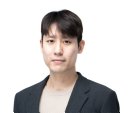
 Seong Jae Hwang
· 8 previous affiliations
- Yonsei UniversitySince 2022
- Associate Professor · Since 2025
- Assistant Professor · 2022–2025
- Individual2022–2025
- Assistant Professor · 2022–2025
- University of Pittsburgh2019–2022
- Assistant Professor · 2019–2022
- Google (United States)2018–2019
- Research Intern · 2019
- Software Engineer Internship · 2018
- University of Wisconsin–Madison2014–2019
- Doctor of Philosophy (Ph.D.), Computer Science · 2014–2019
- Zepp Labs, Inc.2014
- Software Engineer Internship · 2014
- University of Pennsylvania2011–2013
- MS student · 2011–2013
- Undergrad student · 2007–2011
Research Overview
Seong Jae Hwang focuses on computer vision, representation learning, and the interpretability of multimodal foundation models. His early work addressed optimization and structural regularization for visual relationship detection and medical imaging. Recently, his research investigates generative diffusion models, vision-language alignment, and real-time visual grounding to improve the physical consistency and semantic accuracy of large-scale architectures.
Research Trajectory
Hwang's early research focused on optimization techniques and structured representations for complex visual and medical data. In 2015, he introduced A Projection Free Method for Generalized Eigenvalue Problem with a Nonsmooth Regularizer, addressing the computational bottlenecks of eigenvalue problems common in computer vision tasks like multi-view geometry and image segmentation. Expanding into medical imaging, he developed Coupled Harmonic Bases for Longitudinal Characterization of Brain Networks, which utilized the Laplacian of connectivity graphs to model the temporal evolution of brain networks. He subsequently applied structured regularization to scene understanding, proposing Tensorize, Factorize and Regularize: Robust Visual Relationship Learning to better model infrequent visual relationships through multi-relational tensor decomposition.
Transitioning into 3D vision and domain generalization, Hwang collaborated on Point Cloud Augmentation with Weighted Local Transformations, introducing a method for smoothly varying non-rigid deformations to augment sparse 3D point cloud data. His work in domain generalization includes contributions to Test-time Fourier Style Calibration for Domain Generalization, which aligns image styles at test-time using Fourier transforms, advancing the area of Decoupling Style and Structure in the Frequency Domain. Concurrently, he directed theoretical research on domain adaptation, establishing non-uniform sample complexity bounds in PAC-Bayesian Domain Adaptation Bounds for Multiclass Learners. This theoretical foundation was complemented by an analysis of domain adversarial neural networks in Domain adversarial neural networks for domain generalization: when it works and how to improve, contributing to the research direction of The Invariance Discriminability Tradeoff in Domain Adaptation.
In recent years, Hwang has overseen extensive research into point cloud processing, semantic segmentation, and generative image editing. His group introduced PLATYPUS: Progressive Local Surface Estimator for Arbitrary-Scale Point Cloud Upsampling, utilizing curvature-based sampling to densify sparse 3D data—a key advancement in the broader area of Adaptive Point Sampling via Local Surface Curvature. For 2D perception, his team designed Distilling Spectral Graph for Object-Context Aware Open-Vocabulary Semantic Segmentation, addressing the lack of object-level context in vision-language models handling arbitrary query prompts, which supports the broader area of Aligning Global Semantics with Local Spatial Precision. In the domain of generative editing, his lab proposed Dragtext: Rethinking Text Embedding in Point-Based Image Editing, which optimizes text embeddings alongside image latents to maintain semantic consistency, contributing to the research direction of Directional Embedding Alignment for Image Editing.
Hwang's most recent trajectory heavily emphasizes the interpretability, physical consistency, and alignment of large multimodal and diffusion models. Investigating the internal mechanics of vision-language architectures, he guided the study Interpreting Attention Heads for Image-to-Text Information Flow in Large Vision-Language Models, which maps how specific attention heads process semantic information, advancing work in The Decoupling of Attention Weights and Feature Importance. Building on this interpretability, his team developed Real-Time Visual Attribution Streaming in Thinking Model, a framework that uses a lightweight linear surrogate to provide real-time visual grounding for multimodal reasoning models.
In the generative space, Hwang has addressed both spatial and physical consistency in diffusion models. He guided the creation of WAVE: Warp-Based View Guidance for Consistent Novel View Synthesis Using a Single Image, a training-free method leveraging 3D warping to guide attention for coherent view synthesis. Similarly, his research on video generation yielded Physics in 2-Steps: Locking Motion Priors Before Visual Refinement Erases Them, which demonstrated that locking in early-step generation priors significantly improves adherence to physical laws. To resolve prompt adherence failures in text-to-image models, he directed Inference-Time CLIP Embedding Manipulation for Compositional Text-to-Image Alignment, mitigating concept loss and confusion during multi-object generation. Advancing this line of research within Compositional Attribute Binding in Text to Image Diffusion, his group introduced TIE: Training-free CLIP Embedding Guidance for Compositional Text-to-Image Alignment, leveraging entropy-aware singular value amplification and attention-based binding to resolve concept loss and confusion without fine-tuning. Finally, addressing the limitations of parallel sequence generation, his group published Mitigating Mask Prior Drift and Positional Attention Collapse in Large Diffusion Vision-Language Models, identifying and correcting architectural failures that cause repetitive text and poor visual grounding in long-form generation. Hwang also supervised structural investigations into visual backbones in On the Necessity of Attention-FFN Split in Vision Transformers, introducing the unified AttenFeed module and uViT architecture to probe how rigid alternating Attention-FFN splits constrain performance across vision transformer scales.
Current Directions
Hwang's most recent work investigates the interpretability, alignment, and physical consistency of large-scale generative architectures and vision-language models. A primary focus is understanding and manipulating the internal representations of these models—such as attention heads and CLIP embeddings—to improve semantic accuracy and real-time visual grounding during complex reasoning tasks. Additionally, his research addresses the structural and physical limitations of diffusion models, developing training-free interventions that enforce spatial coherence in novel view synthesis, preserve physical laws in video generation, and prevent attention collapse in long-form multimodal generation.
Profile updated
Loading new papers…
Other researchers whose papers cluster into the same research directions — a proxy for overlapping technical interests and shared intellectual neighborhoods.
See something wrong? Report a mistake