

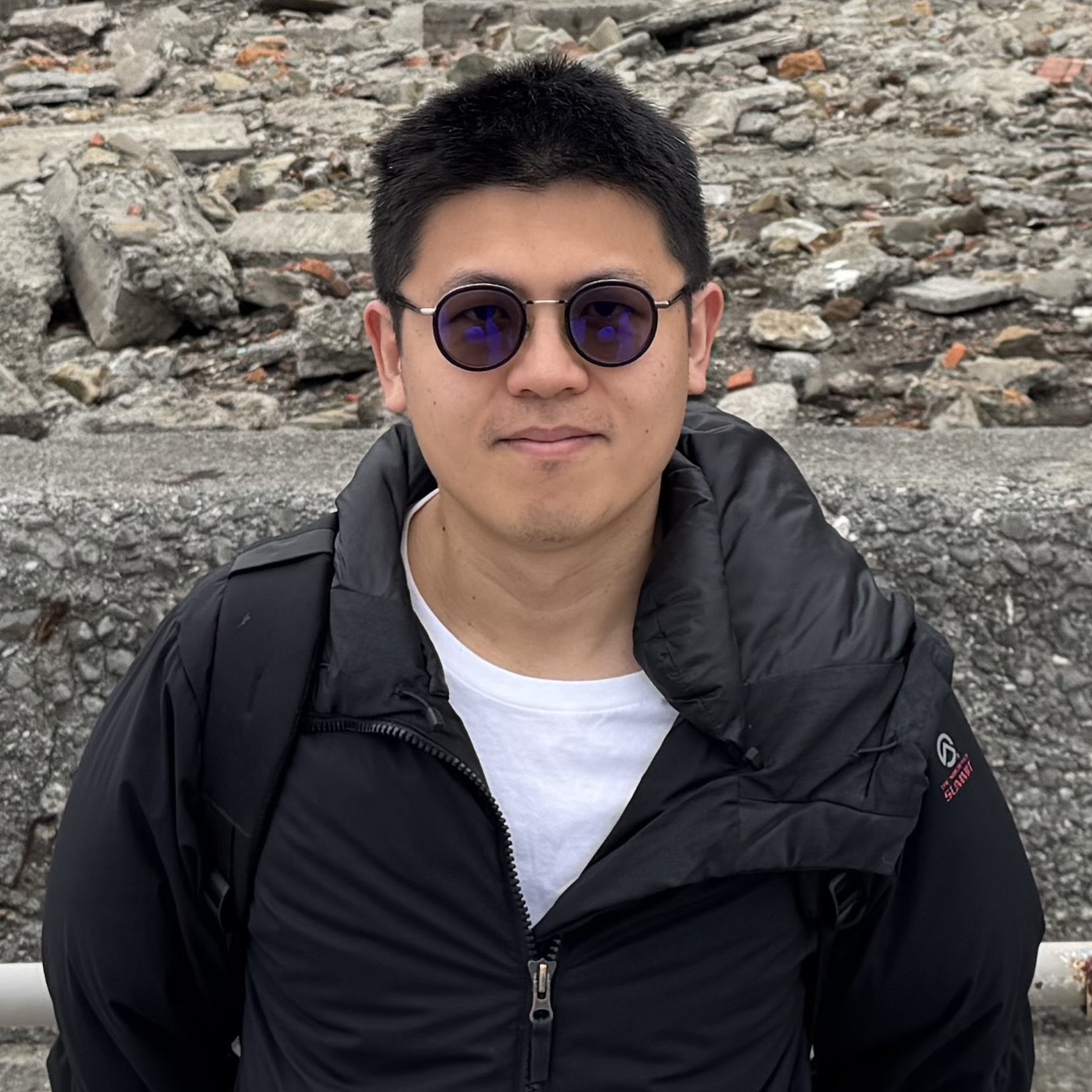
 Seng Pei Liew
· 6 previous affiliations
- LY Corp.Since 2023
- Researcher · Since 2023
- SB intuitionsSince 2024
- Researcher · Since 2024
- LINE Corp.2020–2023
- Researcher · 2020–2023
- NEC2018–2020
- Researcher · 2018–2020
- Technical University of Munich2017–2018
- Postdoc · 2017–2018
- The University of Tokyo2012–2017
- PhD student · 2012–2017
Research Overview
Seng Pei Liew focuses on the security and privacy of machine learning systems, differential privacy, and the training dynamics of large language models. Originally trained as a theoretical physicist, his trajectory spans foundational privacy mechanisms for distributed learning to empirical scaling laws for mixture-of-experts architectures. His current work investigates computationally efficient pretraining strategies and adaptive optimization in federated environments.
Research Trajectory
Liew’s early research addressed digital forensics and system security vulnerabilities. He initially explored endpoint threat detection in Detecting Adversary using Windows Digital Artifacts (2019), proposing algorithms to estimate file execution times from inherent Windows operating system artifacts without relying on third-party sensors. This interest in system vulnerabilities soon extended to machine learning models. In 2020, he demonstrated how transfer learning paradigms can inadvertently expose sensitive training data through black-box queries in FaceLeaks: Inference Attacks against Transfer Learning Models via Black-box Queries. This work highlighted critical vulnerabilities in model sharing, contributing to the broader research area of The Privacy-Utility Trade-off in Differentially Private Learning.
By 2022, Liew’s focus shifted heavily toward developing robust differential privacy (DP) mechanisms, particularly in distributed and federated settings. A major theme of this period was the "shuffle model" of differential privacy, which seeks to balance the strong guarantees of local DP with the higher utility of central DP. He contributed to the area of Bridging the Local Central Privacy Utility Gap by developing Shuffled Check-in: Privacy Amplification towards Practical Distributed Learning, which mitigates the trilemma between privacy, utility, and trust in distributed networks. Expanding on decentralized privacy architectures, he introduced Network Shuffling: Privacy Amplification via Random Walks to eliminate the need for a trusted central shuffler. He also advanced the theoretical foundations of these systems in Shuffle Gaussian Mechanism for Differential Privacy, deriving non-trivial Rényi differential privacy guarantees for Gaussian noise in the shuffle model and proving its advantages in composing multiple DP mechanisms.
Beyond shuffling, Liew explored privacy in deep generative models. He proposed a novel synthesis framework in PEARL: Data Synthesis via Private Embeddings and Adversarial Reconstruction Learning, which sanitizes sensitive data in a one-shot fashion without the degrading privacy costs typical of iterative gradient methods. This approach advanced the direction of One-Shot Perturbation for Differentially Private Machine Learning. Concurrently, he investigated the practical realities of privacy guarantees in federated learning. By simulating various adversary types, he collaborated on Measuring Lower Bounds of Local Differential Privacy via Adversary Instantiations in Federated Learning, demonstrating that theoretical bounds are often overly pessimistic compared to real-world risks, providing a key insight in the area of The Gap Between Privacy Theory and Practice.
As machine learning models grew in scale, applying differential privacy became increasingly computationally prohibitive due to the noise required for large parameter spaces. To address this, Liew developed frameworks in the area of Sparse plus Low Rank Decomposition for Efficient Models. In Scaling Private Deep Learning with Low-rank and Sparse Gradients (2023), he introduced a method to compress and sparsify gradient updates based on neuron importance, significantly reducing the "noise tax" and improving accuracy for private natural language processing and computer vision tasks.
In recent years, Liew’s trajectory has expanded to encompass the training dynamics of large language models (LLMs) alongside continued advancements in federated learning. In 2025, he investigated computationally efficient pretraining strategies. He analyzed the empirical scaling behavior of converting standard LLMs into mixture-of-experts architectures in Scaling Laws for Upcycling Mixture-of-Experts Language Models. He further explored the limits of model reuse in From Acceleration to Saturation: Scaling Behavior of Bootstrapped Language Model Pretraining, identifying a logarithmic decay in scaling efficiency when continually pretraining overtrained base models.
Parallel to his LLM research, Liew continued to refine distributed optimization. He participated in the development of DP-FedEXP, detailed in Accelerating Differentially Private Federated Learning via Adaptive Extrapolation (2025), which adaptively adjusts global step sizes based on client data diversity. This adaptive approach was further generalized in FedDuA: Doubly Adaptive Federated Learning (2026), a framework designed to tackle data heterogeneity and parameter space anisotropy without increasing communication overhead. Returning to foundational privacy theory in 2026, he contributed to Optimal Variance and Covariance Estimation under Differential Privacy in the Add-Remove Model and Beyond, establishing minimax optimal mechanisms for variance estimation where dataset size must remain private. Finally, he bridged the utility gap between local and central privacy models in Shuffling-Aware Optimization for Private Vector Mean Estimation, proposing a Blanket-Mixed Gaussian mechanism optimized specifically for the shuffle model. Extending the analysis of Privacy Amplification by Shuffling, Liew collaborated on Analysis of Shuffling Beyond Pure Local Differential Privacy (2026) to establish privacy amplification bounds when local randomizers satisfy relaxations beyond pure local differential privacy. In parallel, Liew led Towards Principled Design of Mixture-of-Experts Language Models under Memory and Inference Constraints (2026), providing systematic design principles for configuring MoE language models under strict inference and memory limits.
Current Directions
The most recent papers in the evidence indicate a dual focus on the efficient scaling of large language models and the optimization of privacy-preserving distributed systems. In the domain of language modeling, Liew investigates empirical scaling laws for computationally efficient architectures, particularly examining the trade-offs involved in upcycling dense models into mixture-of-experts (MoE) networks and the saturation limits of bootstrapped pretraining. Concurrently, his work in federated learning addresses the challenges of data heterogeneity and communication overhead through doubly adaptive optimization techniques. He also continues to advance the theoretical boundaries of differential privacy, focusing on optimal variance estimation in the add-remove model and designing shuffling-aware mechanisms that achieve central-level privacy utility without relying on a trusted curator.
Profile updated
Loading new papers…
Other researchers whose papers cluster into the same research directions — a proxy for overlapping technical interests and shared intellectual neighborhoods.
See something wrong? Report a mistake