

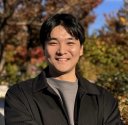
 Sekeun Kim
· 1 previous affiliation
- Harvard UniversitySince 2022
- Postdoc · Since 2022
Research Overview
Sekeun Kim focuses on the adaptation of computer vision foundation models for medical image analysis and the development of generative frameworks to address data scarcity in clinical domains. Kim’s work primarily addresses the challenges of Automated Prompting for Foundation Segmentation Models and the creation of Clinical Indistinguishability of Synthetic Medical Data. By integrating temporal-spatial constraints and multimodal signals, Kim develops robust architectures for cardiac imaging, including echocardiography and magnetic resonance imaging, while exploring the broader implications of Controllable Generative Modeling without Human Labels.
Research Trajectory
Kim’s research trajectory is defined by a rapid evolution from task-specific medical image segmentation to the adaptation of large-scale foundation models for specialized clinical applications. Beginning in 2023, Kim’s work focused on the "cold-start" problem in medical AI, where the lack of expertly labeled datasets limits the deployment of deep learning models. This period was characterized by the development of methods to adapt the Segment Anything Model (SAM) to the unique requirements of medical video, specifically echocardiography. This work emphasized the need for Anatomical Constraints for Biologically Plausible Medical Image Analysis, moving beyond simple pixel-wise loss functions to incorporate the temporal and spatial consistency required for cardiac function analysis.
In 2024, Kim expanded this focus to address Generative Synthesis to Overcome Medical Data Scarcity. This phase of research moved toward Synthetic Data Generation for Clinical Machine Learning, utilizing multimodal inputs such as electrocardiogram (ECG) signals to guide the generation of high-fidelity echocardiogram videos. This approach sought to bypass the privacy and cost bottlenecks associated with real-world medical data by creating synthetic datasets that maintain clinical utility and anatomical accuracy. During this time, Kim also investigated the composition of model adapters, treating the integration of specialized modules as a geometry-aware problem to enable zero-shot adaptation to new clinical tasks.
By 2025, Kim’s work has diversified into clinical natural language processing and the application of generative models to surgical guidance. This includes the development of specialized large language models for radiology and the use of flow-matching models to predict tissue changes during interoperative procedures. Throughout this evolution, a consistent theme has been the optimization of foundation models—through parameter-efficient fine-tuning and spatio-temporal adaptation—to ensure they perform reliably in high-stakes medical environments where human-provided geometric cues are often unavailable or impractical to generate at scale.
Current Directions
Kim’s current research focuses on three primary areas: the refinement of biomedical foundation models, the advancement of controllable generative modeling, and the integration of fairness and clinical knowledge into AI frameworks.
A major current focus is the optimization of SAM-2 for biomedical contexts. While natural domain foundation models possess immense zero-shot capabilities, they often struggle with the low contrast and complex textures of medical imagery. Kim’s work in this area involves adapting the memory mechanisms of video segmentation models to handle the specific challenges of 3D and 4D medical data, ensuring that segmentation remains consistent across frames and anatomical planes.
In the domain of generative modeling, Kim is exploring ways to synthesize medical data that is not only visually realistic but also clinically valid. This involves using discrete visual tokenization and transformer architectures to generate videos conditioned on physiological signals. The goal is to create synthetic datasets that can be used to train downstream diagnostic models, particularly for rare conditions where real data is insufficient.
Finally, Kim is increasingly involved in projects that address the ethical and practical deployment of medical AI. This includes collaborative work on distribution-aware fairness in segmentation, which utilizes optimal control theory to ensure models perform equitably across diverse patient demographics. Additionally, Kim is contributing to the development of localized generative models, such as Radiology-GPT, which are tailored for specific medical specialties while adhering to strict privacy standards like HIPAA.
Representative Work
The following papers represent the core of Kim's contributions to medical image analysis, foundation model adaptation, and generative modeling.
MediViSTA: Medical Video Segmentation via Temporal Fusion SAM Adaptation for Echocardiography (2023) introduces a framework for adapting SAM to echocardiography. By updating only a small fraction of the model's parameters and introducing spatial frequency fusion and temporal attention, the work demonstrates how foundation models can achieve state-of-the-art accuracy in specialized domains without the need for manual prompts. This paper established Kim's early focus on parameter-efficient adaptation for medical video.
Biomedical SAM 2: Segment Anything in Biomedical Images and Videos (2024), where Kim serves as first author, extends the foundation model paradigm to the SAM-2 architecture. The research identifies the limitations of natural-domain models in medical contexts and proposes BioSAM-2, a fine-tuned model that optimizes memory mechanisms for biomedical images and videos. This work is central to Kim's efforts in creating generalized tools for medical image segmentation.
ECHOPulse: ECG controlled echocardio-grams video generation (2024) represents a significant contribution to generative modeling in medicine. As a primary author, Kim developed a framework that synthesizes echocardiogram videos conditioned on ECG signals. By using a masked transformer architecture, the model achieves high clinical accuracy and faster inference times than traditional diffusion models, addressing the need for high-quality synthetic data in cardiology.
Cardiac Magnetic Resonance 2D+T Short- and Long-axis Segmentation via Spatio-temporal SAM Adaptation (2024) focuses on the challenges of cine cardiac magnetic resonance (CMR) segmentation. Kim’s work here incorporates both temporal and spatial information into the SAM framework to ensure accurate myocardium segmentation across the entire cardiac cycle. This research emphasizes generalizability on unseen clinical datasets, a critical requirement for real-world medical AI applications.
Beyond Adapter Retrieval: Latent Geometry-Preserving Composition via Sparse Task Projection (2024) explores the technical foundations of model adaptation. Kim participated in this research which treats the composition of Low-Rank Adaptation (LoRA) modules as a sparse reconstruction problem. This approach allows for the blending of multiple specialized adapters into a single optimized model for new tasks, facilitating zero-shot adaptation in complex multi-task environments.
Radiology-GPT: A large language model for radiology (2025) marks a contribution to the field of clinical natural language processing. The work involves instruction tuning a large language model on extensive radiology domain knowledge. This model demonstrates superior performance in radiological diagnosis and research compared to general-purpose models, highlighting the potential for localized, privacy-compliant generative AI in specialized medical fields.
In addition to these primary works, Kim has participated in collaborative research regarding diagnostic assessment, such as the Assessment of valve regurgitation severity via contrastive learning and multi-view video integration, and emerging applications in surgical guidance and fairness. These contributions reflect a broad engagement with the technical and clinical challenges of modern medical artificial intelligence.
Profile updated
Loading new papers…
Other researchers whose papers cluster into the same research directions — a proxy for overlapping technical interests and shared intellectual neighborhoods.
See something wrong? Report a mistake