

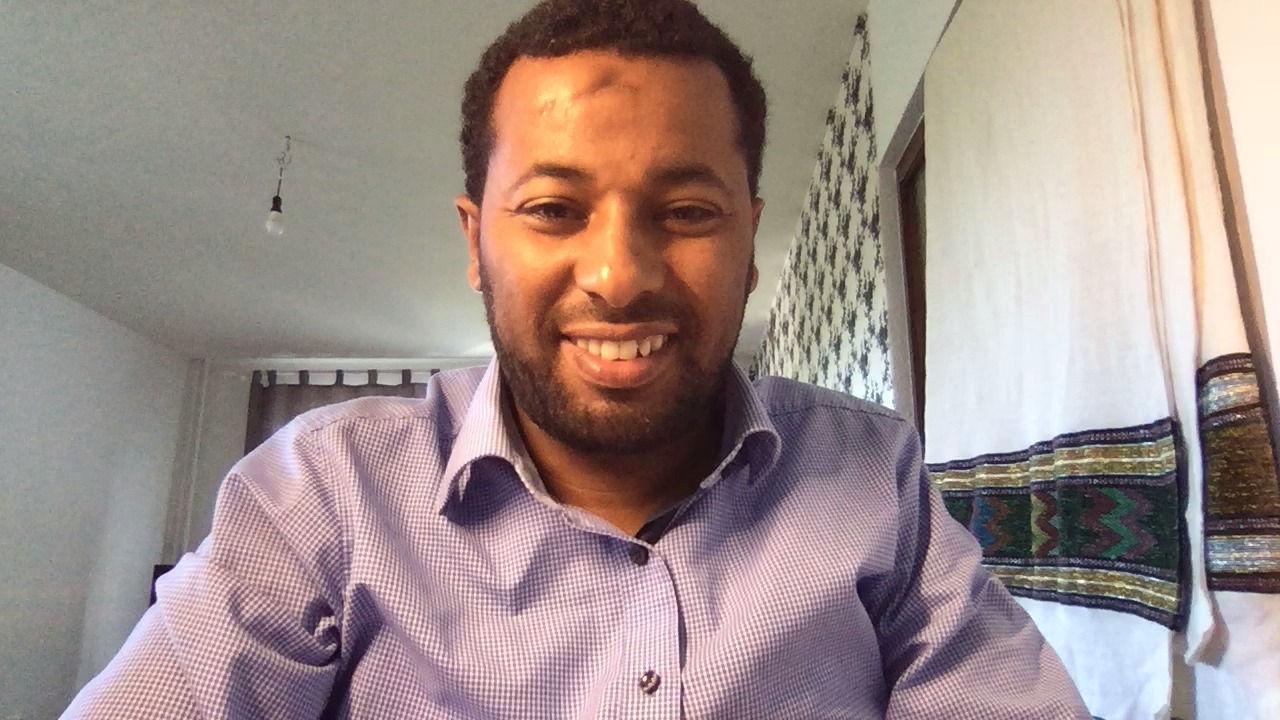
 Seid Muhie Yimam
· 6 previous affiliations
- Universität HamburgSince 2016
- Technical Lead, HCDS, Universität Hamburg · Since 2022
- Postdoc · 2019–2022
- Doctoral Researcher · 2016–2019
- Hub of Computing and Data Science (HCDS)Since 2022
- Technical Lead · Since 2022
- Technische Universität Darmstadt2012–2016
- Doctoral Researcher · 2014–2016
- Research assistant · 2012–2016
- OKKAM s.r.l.2011–2012
- Semantic Web Software Engineer · 2011–2012
- University of Trento2010–2011
- Profesional Master, Human Language Technology and Interfaces · 2010–2011
- Adama Science and Technology University2010
- Lecturer · 2010
Research Overview
Seid Muhie Yimam focuses on natural language processing for low-resource languages, cross-cultural model evaluation, and the development of scalable linguistic annotation systems. His trajectory spans from building foundational web-based annotation architectures to advancing multilingual benchmarks for African and Asian languages. Currently, his work addresses cultural alignment and robust language identification in large language models.
Research Trajectory
Yimam’s early research focused on building robust infrastructure for linguistic annotation. He introduced WebAnno: A Flexible, Web-based and Visually Supported System for Distributed Annotations, a general-purpose tool designed to manage complex annotation projects. The system supported arbitrarily large documents, freely configurable tagsets, and an interface for crowdsourcing platforms, accommodating tasks ranging from part-of-speech tagging to co-reference chain annotations. This work contributed significantly to the research direction of Scalable Data Annotation through Centralized Web Architectures and the broader area of Integrated Quality Assurance for Collaborative Data Labeling. Building on this foundation, he developed Automatic Annotation Suggestions and Custom Annotation Layers in WebAnno, which extended the platform to support custom, web-configured annotation layers. This extension integrated machine learning components to automatically suggest span annotations, streamlining the manual labeling process for diverse linguistic phenomena.
Around 2021, his focus expanded toward mitigating disparities in natural language processing resources, particularly for African languages. He collaborated on MasakhaNER: Named Entity Recognition for African Languages, which provided a high-quality dataset for ten African languages, addressing their severe underrepresentation in NLP research by working closely with native speakers. During this period, he also participated in efforts to improve the interpretability of models dealing with toxic online content, contributing to HateXplain: A Benchmark Dataset for Explainable Hate Speech Detection. This dataset annotated posts from three distinct perspectives: a basic three-class classification (hate, offensive, or normal), the specific target communities victimized by the speech, and the textual rationales behind the annotators' labels.
Continuing to advance multilingual and cross-cultural NLP evaluation, Yimam was part of the collaborative effort behind AfriSenti: A Twitter Sentiment Analysis Benchmark for African Languages. This project compiled over 110,000 tweets across 14 diverse languages to foster more equitable AI technologies. The initiative subsequently led to the organization of SemEval-2023 Task 12: Sentiment Analysis for African Languages (AfriSenti-SemEval), which further standardized sentiment analysis evaluation in these linguistic contexts.
In 2024, his work increasingly addressed the nuances of semantic understanding and cultural context in large language models. He contributed to SemEval Task 1: Semantic Textual Relatedness for African and Asian Languages, a shared task investigating the broader phenomenon of semantic relatedness—rather than mere similarity—across 14 languages originating from five distinct language families. This work advanced the research direction of Addressing Linguistic Inequality in Natural Language Processing and touched upon areas such as Restoring Isotropy in Geometric Embedding Spaces. Concurrently, he collaborated on BLEnD: A Benchmark for LLMs on Everyday Knowledge in Diverse Cultures and Languages, which evaluated the ability of models to comprehend everyday cultural knowledge across 16 countries and 13 languages, highlighting significant performance gaps when models process information from underrepresented cultures.
The most recent papers in his trajectory emphasize culturally nuanced evaluation and robust language identification. He participated in the development of AmharicStoryQA: A Multicultural Story Question Answering Benchmark in Amharic, which demonstrated that current LLM evaluations often overlook regional cultural nuances within a single language, such as the variations across different regions of Ethiopia. Additionally, he contributed to CommonLID: Re-evaluating State-of-the-Art Language Identification Performance on Web Data, a benchmark designed for noisy web data across 109 languages. This work revealed that existing language identification models frequently overestimate their real-world performance, underscoring the need for more rigorous evaluation metrics on unstructured text.
Current Directions
The most recent work in Yimam's evidence points toward an increasing focus on the cultural and regional alignment of large language models, alongside the foundational challenge of robust language identification in noisy environments. A major current theme is moving beyond monolithic representations of language to capture intra-language cultural nuances, ensuring that models can comprehend regional variations in storytelling, context, and everyday knowledge. Additionally, his recent collaborations investigate the reliability of core NLP pipelines—such as language identification—when deployed on unstructured, real-world web data for under-served languages. Together, these directions aim to create more equitable, culturally aware, and practically robust natural language technologies for the global long tail of languages.
Profile updated
Loading new papers…
Other researchers whose papers cluster into the same research directions — a proxy for overlapping technical interests and shared intellectual neighborhoods.
See something wrong? Report a mistake