

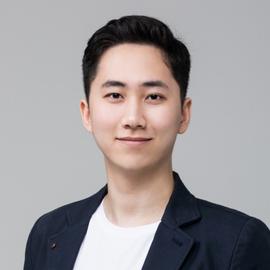
 Sei Chang
· 7 previous affiliations
- New York Genome CenterSince 2022
- Graduate Researcher · Since 2022
- GenentechSince 2026
- Machine Learning Scientist Intern · Since 2026
- Columbia UniversityCurrent
- Current
- Doctor of Philosophy - PhD, Computer Science · 2022–2024
- PhD student · From 2022
- UCLA Health2019–2022
- Computational Medicine Researcher · 2019–2022
- Discover2018–2022
- Undergrad student · 2018–2022
- Parallel Systems2021
- Software Engineering Intern · 2021
- Bioinformatics Intern · 2021
Research Overview
Sei Chang focuses on the development of interpretable machine learning frameworks for modeling complex biological systems, with a particular emphasis on single-cell transcriptomics and gene regulation. Chang’s work integrates mechanistic biological models with neural architectures to infer cellular dynamics, splicing kinetics, and causal gene interactions from high-throughput data. By leveraging techniques such as Neural Ordinary Differential Equations (Neural ODEs) and self-supervised learning, Chang addresses fundamental challenges in computational biology, including the scalability of causal discovery and the non-linear nature of cellular differentiation.
Research Trajectory
Chang’s research trajectory reflects a consistent interest in bridging the gap between flexible deep learning methods and interpretable biophysical models. In the earlier stages of this observed period (2024), Chang’s work focused on the refinement of RNA velocity-based methods. This research addressed the limitations of existing models that often relied on restrictive biophysical assumptions or lacked the flexibility to account for gene-specific kinetic rates. By introducing architectures that combine neural dimensionality reduction with latent time estimation, Chang sought to improve the accuracy of developmental trajectory inference in single-cell studies.
Starting in 2025 and continuing into 2026, Chang’s focus expanded toward the discovery of Gene Regulatory Networks (GRNs) under experimental perturbations. This shift represents a move from modeling internal cellular states to inferring the underlying causal structures—the "wiring diagrams"—that govern those states. During this period, Chang contributed to the development of frameworks designed to handle large-scale datasets, such as those generated by CRISPR-based perturbation assays. This work emphasizes the use of Neural ODEs to capture the dynamic, non-linear interactions between genes, moving away from the linear and acyclic assumptions that have traditionally constrained GRN inference models.
Methodological Focus
A central theme in Chang’s research is the pursuit of "interpretable" machine learning. Rather than treating neural networks as black boxes, Chang’s contributions involve embedding biological knowledge directly into the model architecture. For example, in the context of RNA velocity, this involves modeling the transition from unspliced to spliced mRNA as a mechanistic process while using neural networks to learn the complex, high-dimensional representations of the data.
In the realm of GRN discovery, Chang’s work focuses on the challenge of causal graph inference. Biological processes are inherently dynamic and often involve feedback loops, making them difficult to represent with standard Directed Acyclic Graphs (DAGs). Chang’s involvement in the development of PerturbODE suggests a methodological preference for continuous-time modeling via Neural ODEs. This approach allows for the simulation of how a cell’s state evolves over time in response to specific genetic "tweaks," providing a more realistic mathematical framework for understanding cellular growth, healing, and differentiation.
Representative Work
The following papers represent the core of Chang’s contributions to computational biology and machine learning between 2024 and 2026.
In CellFlows: Inferring Splicing Kinetics from Latent and Mechanistic Cellular Dynamics, Chang (as first author) introduced a new architecture for estimating cellular dynamics. The paper addresses the variability in RNA velocity-based models, which often differ in their biophysical assumptions and architectures. CellFlows incorporates self-supervised neural dimensionality reduction with neural-based latent time estimation into a mechanistic model. This approach allows for the inference of gene- and context-specific kinetic rates at single-cell resolution, improving both the interpretability and the accuracy of identified linear and branching developmental trajectories.
Chang’s subsequent work moved toward causal discovery in gene regulation. In Interpretable Neural ODEs for Gene Regulatory Network Discovery under Perturbations, Chang contributed as a second author to the PerturbODE framework. This research targets the discovery of causal graphs from high-throughput biological datasets containing thousands of perturbations. The framework addresses the limitations of existing models—such as restrictive linearity and acyclicity assumptions—by incorporating biologically informative Neural ODEs. This allows for the discovery of GRNs that better capture the dynamic nature of processes like cellular differentiation while maintaining scalability for large-scale datasets.
A further iteration or presentation of this work, also titled Interpretable Neural ODEs for Gene Regulatory Network Discovery under Perturbations, continues the exploration of how cells respond to genetic perturbations. As a second author, Chang participated in refining these mathematical models to better capture the non-linear reality of biological change. This work is positioned as a solution to the "massive puzzle" of the GRN, utilizing data from tools like CRISPR to map the complex interactions where genes regulate one another to determine cell identity.
While the current corpus of work is focused on a specific three-year window, it demonstrates a clear progression from modeling individual cellular trajectories to mapping the broader regulatory networks that drive those trajectories. The consistent use of Neural ODEs and mechanistic integration suggests a focused research program aimed at making deep learning a more robust and interpretable tool for the biological sciences.
Profile updated
Loading new papers…
Other researchers whose papers cluster into the same research directions — a proxy for overlapping technical interests and shared intellectual neighborhoods.
See something wrong? Report a mistake