

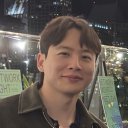
 Sehwan Kim
· 2 previous affiliations
- Seoul National UniversitySince 2016
- PhD student · 2022–2027
- Current
- Undergrad student · 2016–2022
- Intern · 2022
Research Overview
Sehwan Kim focuses on statistical machine learning, Bayesian inference, and the robustness of generative models. His early work addressed optimization challenges in deep learning and generative adversarial networks through stochastic sampling techniques. More recently, his research investigates extended fiducial inference for uncertainty quantification, causal inference, and methods for ensuring fairness and privacy in complex neural architectures.
Research Trajectory
Kim’s published research record begins with early explorations in computer vision, specifically addressing Image retrieval using multi-scale color clustering in 2001. Following this early work, his focus shifted toward the theoretical foundations of deep learning optimization and Bayesian inference. In 2020, he introduced Stochastic Gradient Langevin Dynamics Algorithms with Adaptive Drifts. Recognizing that Bayesian deep learning is often bottlenecked by the slow convergence of sampling algorithms in complex neural network landscapes, this work proposed a new class of samplers. By incorporating adaptive drifts inspired by optimization techniques like Momentum and Adam, the algorithms help samplers navigate pathological curvatures. This contribution advanced the research direction of Stochastic Noise Injection for Escaping Saddle Points, providing a more efficient framework for AI safety and uncertainty quantification.
Building on these stochastic sampling techniques, Kim addressed fundamental instabilities in generative modeling. In 2023, he presented A New Paradigm for Generative Adversarial Networks based on Randomized Decision Rules. This research reframed GAN training as a mixed-strategy Nash equilibrium. By treating the generator as a distribution rather than a single fixed point and sampling it via stochastic gradient Markov Chain Monte Carlo (MCMC) methods, the framework effectively mitigates the notorious mode collapse problem across image generation, clustering, and statistical testing.
In 2024, Kim’s work expanded into several distinct areas of robust, private, and theoretically grounded machine learning. He explored the intersection of topological data analysis and differential privacy in Differentially Private Topological Data Analysis. Concurrently, he contributed to robust computer vision by addressing label noise in remote sensing; his collaborative work on Instance-Dependent Multilabel Noise Generation for Multilabel Remote Sensing Image Classification investigates how to train deep learning models that are resilient to complex, instance-dependent noise in multilabel datasets, a critical challenge given the high cost of accurate manual labeling.
A major theoretical theme in his recent trajectory is the development of extended fiducial inference. In Extended Fiducial Inference: Toward an Automated Process of Statistical Inference, he proposed a framework designed to bridge the historical gap between Frequentist maximum likelihood estimation—which can be brittle to outliers—and Bayesian inference, which relies on subjective priors. This work offers a pathway for prior-free uncertainty quantification. Alongside this theoretical work, he collaborated on methods for improving model robustness in practice. In Mitigating Spurious Correlations via Disagreement Probability, he helped develop a resampling method that uses an intentionally biased reference model to identify and prioritize bias-conflicting examples. This approach prevents models from relying on spurious correlations without requiring manual annotations of those biases.
Kim’s publications in 2025 demonstrate a broad application of his theoretical foundations to diverse machine learning challenges. He extended his work on fiducial inference to the domain of causal inference in Extended fiducial inference for individual treatment effects via deep neural networks, providing new mechanisms for quantifying uncertainty in large-scale models estimating individual treatment effects. In the realm of generative AI, he contributed to Adjusting Initial Noise to Mitigate Memorization in Text-to-Image Diffusion Models. This research demonstrates that subtly modifying the starting noise can prevent diffusion models from memorizing and reproducing training data, thereby addressing critical privacy and copyright concerns while maintaining prompt fidelity.
He has also been active in the research direction of Information Theoretic Fair Representation Learning. As part of a collaborative effort, he explored Constructing Fair Latent Space for Intersection of Fairness and Explainability, contributing to the broader area of Fair Representation Learning through Latent Disentanglement by developing interventions for pre-trained models. Finally, addressing challenges in medical research and reliability engineering, he introduced Self-Consistent Equation-guided Neural Networks for Censored Time-to-Event Data, a novel approach to survival analysis that handles interval-censored data where standard regression models typically fail.
Current Directions
The most recent papers in the evidence indicate a strong focus on uncertainty quantification, fairness, and the robustness of generative models. Current work investigates the application of extended fiducial inference to causal inference, specifically for estimating individual treatment effects with deep neural networks. Additionally, Kim is actively exploring methods to mitigate memorization in text-to-image diffusion models by adjusting initial noise distributions to steer generation away from training data basins.
Another key focus involves survival analysis and time-to-event modeling, utilizing equation-guided neural networks to handle censored data in medical and engineering contexts. Finally, ongoing collaborative efforts address the intersection of fairness and explainability through the construction of disentangled latent spaces, aiming to provide post-hoc fairness interventions for complex pre-trained models.
Profile updated
Loading new papers…
Other researchers whose papers cluster into the same research directions — a proxy for overlapping technical interests and shared intellectual neighborhoods.
See something wrong? Report a mistake