

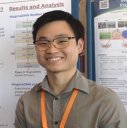
 Sedrick Keh
· 3 previous affiliations
- Toyota Research InstituteSince 2023
- Research Scientist · Since 2023
- AI Resident · 2023
- Carnegie Mellon University2021–2022
- MS student · 2021–2022
- Undergrad student · 2017–2021
Research Overview
Sedrick Keh focuses on the optimization of large language models, data curation strategies, and the development of advanced reasoning capabilities in artificial intelligence. His trajectory spans early work in applied natural language processing and computer vision to recent contributions in model alignment and test-time compute scaling. Currently, his research investigates open-source recipes for cognitive behaviors and reasoning models.
Research Trajectory
Keh's early research explored the adaptation of deep learning architectures to specialized downstream tasks across both text and vision. In Myers-Briggs Personality Classification and Personality-Specific Language Generation Using Pre-trained Language Models (2019), he investigated the use of BERT for identifying personality types and generating nuanced, empathetic text, contributing to the broader area of Adapting Pre-Trained Transformers to Downstream Tasks. Shifting to visual domains, he addressed the research direction of Computer Vision for Scalable Crop Disease Detection with Semi-Supervised Noisy Student Pre-training on EfficientNet Architectures for Plant Pathology Classification (2020). This work combined semi-supervised learning paradigms with the area of Compound Scaling of Neural Network Architectures to achieve highly accurate disease classification on agricultural datasets.
Returning to natural language processing, Keh expanded his focus to creative text generation, low-resource classification, and zero-shot capabilities. He developed methods for generating personification data in PINEAPPLE: Personifying INanimate Entities by Acquiring Parallel Personification Data for Learning Enhanced Generation (2022), advancing techniques in Contextual Token Substitution with Masked Language Models. That same year, he explored the area of Prompting Large Language Models for Zero Shot Inference through Exploring Euphemism Detection in Few-Shot and Zero-Shot Settings, demonstrating that models like RoBERTa could classify novel euphemisms without explicit training. His work on specialized text continued with Hashtag-Guided Low-Resource Tweet Classification (2023), which introduced a model to automatically generate hashtags to enrich short, ambiguous social media posts for better classification. He also applied active learning to environmental domains in NewsPanda: Media Monitoring for Timely Conservation Action (2023), creating a toolkit to detect infrastructure projects impacting conservation areas. In the realm of creative generation, he introduced PANCETTA: Phoneme Aware Neural Completion to Elicit Tongue Twisters Automatically (2023), which incorporated phoneme-level representations to enforce Formal Structural Constraints in Creative Text Generation.
As foundation models grew in scale, Keh's research shifted toward optimizing their architecture, training data, and alignment processes. He participated in efforts to reduce inference costs in Linearizing Large Language Models (2024), which introduced a method to convert pre-trained Transformers into recurrent neural networks, contributing to Sub-Quadratic Sequence Modeling for Long Contexts. Recognizing the critical role of data quality, he collaborated on DataComp-LM: In search of the next generation of training sets for language models (2024). This benchmark provided a standardized framework for evaluating data curation strategies, advancing the research directions of Auditing Opaque Training Datasets in Foundation Models and High Information Density Curation for Model Training. Concurrently, he investigated model alignment methodologies in A Critical Evaluation of AI Feedback for Aligning Large Language Models (2024). This work demonstrated that supervised fine-tuning on high-quality data often matches more complex reinforcement learning pipelines, addressing the area of Overcoming the Sparse Reward Bottleneck in Language Model Reasoning.
Keh's subsequent work explored multimodal integration, test-time compute scaling, and the theoretical limits of model training. In Should VLMs be Pre-trained with Image Data? (2025), he demonstrated that introducing image data late in the text pre-training process improves vision performance without degrading text capabilities, contributing to Staged Pre-training for Multi-modal Representation Learning. He also tackled inference efficiency in Improving Test-Time Search for LLMs with Backtracking Against In-Context Value Verifiers (2025), developing a framework that uses learned verifiers to identify and correct reasoning errors dynamically. Further investigating model efficiency, he contributed to Language models scale reliably with over-training and on downstream tasks (2025), which extended scaling laws to predict the performance of models trained far beyond compute-optimal points.
Most recently, Keh's research has focused on democratizing advanced reasoning capabilities and cognitive behaviors in AI systems. He contributed to SkillFactory: Self-Distillation for Learning Cognitive Behaviors (2026), which explores self-distillation techniques to teach smaller models complex skills like self-correction and verification, advancing the area of Inference Time Compute Scaling for Complex Reasoning. He also collaborated on OpenThoughts: Data Recipes for Reasoning Models (2026), a project providing transparent, reproducible methodologies and massive open datasets for training high-performance reasoning models, further driving progress in the broader area of high-quality data curation.
Current Directions
The most recent work in the evidence addresses the development and democratization of advanced reasoning capabilities in large language models. Current directions investigate how to instill complex cognitive behaviors—such as self-correction, verification, and strategic retrying—into smaller, more efficient models. This involves exploring self-distillation techniques that allow compact architectures to mimic the reasoning traces of larger, proprietary systems. Additionally, ongoing research focuses on creating transparent, reproducible data recipes for reasoning models. By developing massive open datasets and rigorous ablation frameworks, this work aims to mitigate the alignment tax in open-weight models and establish reliable methodologies for high-information-density data curation.
Profile updated
Loading new papers…
Other researchers whose papers cluster into the same research directions — a proxy for overlapping technical interests and shared intellectual neighborhoods.
See something wrong? Report a mistake