

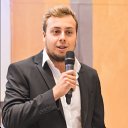
 Sebastian Schmidt
· 2 previous affiliations
- BMW (Germany)Since 2022
- PhD student · Since 2022
- Technical University of MunichSince 2022
- PhD student · Since 2022
- MS student · 2018–2020
Research Overview
Sebastian Schmidt focuses on active learning, out-of-distribution detection, and uncertainty estimation for computer vision systems. His trajectory spans from optimizing data selection for autonomous driving perception to developing unified frameworks for open-world segmentation and geometric image generation. Recently, his focus has expanded to include evidential deep learning and differential privacy mechanisms for visual models.
Research Trajectory
Sebastian Schmidt’s early research addressed the fundamental data bottleneck in training deep learning models for computer vision, particularly in the context of autonomous driving. Because perception systems require vast amounts of manually labeled data, his initial work focused on active learning strategies to intelligently select the most informative samples for annotation. In Advanced Active Learning Strategies for Object Detection (2020), he proposed novel methods for estimating sample uncertainties in both 2D and 3D object detection tasks. By utilizing model ensembles to gauge uncertainty, this work demonstrated how continuous training strategies could substantially reduce the data required to achieve robust perception capabilities.
Recognizing the limitations of traditional pool-based active learning—which assumes all unlabeled data is readily available in a centralized datacenter—Schmidt subsequently shifted his focus toward edge-based and streaming applications. For mobile devices and autonomous robots, data must often be filtered directly from perception sensor streams before transmission. In Bridging between Pool- and Stream-Based Active Learning with Temporal Data Coherence (2023), he investigated active learning specifically tailored for continuous image streams. By exploiting the temporal properties inherent in sequential data, he developed methods that utilize a pseudo-uncertainty metric based on loss learning, allowing systems to efficiently filter and select data on the fly.
As his focus on real-world deployment deepened, Schmidt identified a critical intersection between active learning and the handling of unknown environments. When models operate in open-world scenarios, they must not only select informative candidates from near-infinite unlabeled data but also robustly identify anomalies that fall outside their training distribution. In 2024, he introduced SISOM in A Unified Approach Towards Active Learning and Out-of-Distribution Detection. Rather than treating active learning and out-of-distribution (OOD) detection as separate challenges, this framework leveraged feature space distance metrics to combine the strengths of both tasks, providing a unified solution for managing open-world data streams effectively.
By 2025, Schmidt’s research broadened to encompass generative modeling, advanced segmentation, and privacy-preserving machine learning. In collaborative work on generative vision, he contributed to the area of Vertical Feature Collapse in Spatial Projections and the research direction Generative Simulation for Scaling Embodied AI. This was realized in GeoDiffusion: A Training-Free Framework for Accurate 3D Geometric Conditioning in Image Generation, which introduced a novel framework enabling precise 3D geometric control over 2D image generation. Utilizing a 3D reference object and a drag-based editing method called GeoDrag, the framework allows users to accurately modify object dimensions and proportions without requiring extensive model retraining, effectively bridging structural 3D design with 2D concept visualization.
Concurrently, Schmidt continued to advance open-world perception through the broader area of Evidential Deep Learning for Predictive Uncertainty Quantification. He developed Prior2Former (P2F), detailed in Prior2Former - Evidential Modeling of Mask Transformers for Assumption-Free Open-World Panoptic Segmentation (2025). This approach applied evidential learning to mask transformers, enabling panoptic segmentation models to reliably detect unknown objects without any prior exposure to out-of-distribution data. By removing the assumption that models must be pre-exposed to anomalies, P2F provided a highly applicable solution for safety-critical applications like autonomous driving.
In parallel with his work on perception and generation, Schmidt participated in research addressing the privacy implications of deploying computer vision models. Contributing to work in Privacy Amplification by Shuffling, the area of Privacy Amplification by Subsampling, and the research direction The Privacy-Utility Trade-off in Differentially Private Learning, he collaborated on Amplified Patch-Level Differential Privacy for Free via Random Cropping (2025). This research introduced the concept of patch-level differential privacy, demonstrating that random cropping can serve as a free privacy amplification mechanism. By localizing privacy guarantees to specific image patches rather than entire images, the method improved the privacy-utility trade-off without incurring additional computational costs.
Current Directions
The most recent papers in the evidence indicate a dual focus on the safety of open-world perception systems and the structural control of generative models, alongside emerging interests in privacy-preserving computer vision. A primary ongoing direction is the application of evidential deep learning to complex segmentation tasks. Recent work investigates how mask transformers can be modeled to perform assumption-free out-of-distribution detection, ensuring that autonomous systems can safely navigate environments containing entirely novel objects.
Simultaneously, recent collaborative efforts address the need for precise geometric conditioning in generative AI. This involves developing training-free frameworks that allow for the accurate manipulation of 3D features within 2D image generation pipelines. Finally, current research explores novel mechanisms for differential privacy in visual models, specifically investigating how standard data augmentation techniques like random cropping can be mathematically leveraged to amplify privacy guarantees at the patch level, thereby maintaining model utility while securing localized visual data.
Profile updated
Loading new papers…
Other researchers whose papers cluster into the same research directions — a proxy for overlapping technical interests and shared intellectual neighborhoods.
See something wrong? Report a mistake