

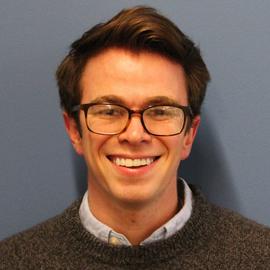
 Sean Kulinski
· 4 previous affiliations
- Databricks (United States)Since 2024
- AI Research Scientist · Since 2024
- Microsoft (United States)2022–2023
- Research Intern (ML) · 2023
- Data Scientist · 2022
- Purdue University West Lafayette2015–2023
- PhD student · 2019–2023
- Graduate Research Assistant · 2019–2020
- Undergrad student · 2015–2019
- AbbVie (United States)2021–2022
- Machine Learning Scientist · 2021–2022
Research Overview
Sean Kulinski focuses on machine learning reliability, specifically the detection and explanation of distribution shifts, as well as data-efficient methods for training and evaluating large language models. His early research developed statistical frameworks to localize feature shifts and generate domain counterfactuals in complex environments. Recently, his work has transitioned toward reinforcement learning techniques for enhancing the reasoning and search capabilities of foundation models.
Research Trajectory
Sean Kulinski's research initially concentrated on the robustness of machine learning systems, particularly addressing how models behave when the data they process changes over time. A central problem in this domain is not just identifying that a distribution shift has occurred, but understanding exactly what changed. He formalized this challenge in Feature Shift Detection: Localizing Which Features Have Shifted via Conditional Distribution Tests, proposing statistical tests to isolate specific compromised features in multivariate data. He expanded on this framework in a subsequent 2021 preprint of the same name, utilizing Fisher divergence to scale the identification of compromised nodes. This work contributes to the broader area of Detecting Performance Degrading Shifts in Deployed Models by providing a scalable way to identify compromised network nodes even when adversarial changes mimic individual sensor distributions.
Building on detection, his focus shifted toward interpretability and diagnosis. In Towards Explaining Image-Based Distribution Shifts, he explored how to align source and target distributions in latent image spaces to explain visual domain shifts. He generalized this approach in Towards Explaining Distribution Shifts, introducing a framework based on interpretable transportation maps. This method morphs a source distribution into a target distribution to provide human-readable insights into feature-level changes and subgroup movements, advancing research directions such as Explaining and Diagnosing Distribution Shifts and Sparse Feature Attribution for Explaining Distribution Shifts.
During this period, he also investigated causal representation learning and spatial reasoning. He addressed the challenge of answering counterfactual queries when causal variables are unobserved in Towards Characterizing Domain Counterfactuals for Invertible Latent Causal Models. By focusing on specific equivalence classes for latent causal models, this work sought to balance practical generative modeling with theoretical guarantees for domain counterfactuals. Additionally, he facilitated research in multi-agent spatial reasoning by developing StarCraftImage: A Dataset For Prototyping Spatial Reasoning Methods For Multi-Agent Environments, which distills complex game dynamics into standardized image formats to lower the overhead of prototyping spatial reasoning models.
More recently, as a researcher at Databricks Mosaic Research, his work has pivoted toward the optimization and reasoning capabilities of large language models. With collaborators, he contributed to A State-of-the-Art SQL Reasoning Model using RLVR, which applied a two-stage reinforcement learning recipe to significantly improve text-to-SQL accuracy. This work intersects with the emerging area of Scaling Language Model Reasoning Beyond Verifiable Rewards. Continuing this trajectory into enterprise applications, he participated in the development of KARL: Knowledge Agents via Reinforcement Learning, a system designed to train search agents across diverse, hard-to-verify tasks such as cross-document synthesis, tabular numerical reasoning, and procedural reasoning over technical documentation.
Current Directions
The most recent papers in the evidence investigate the application of reinforcement learning to enhance the reasoning and agentic capabilities of foundation models. A primary focus is the use of verifiable rewards to improve performance in structured domains, such as SQL generation, and the training of knowledge agents for complex enterprise search tasks. These directions emphasize data-efficient training methods and the robust evaluation of large language models in multi-step reasoning and synthesis scenarios.
Profile updated
Loading new papers…
Other researchers whose papers cluster into the same research directions — a proxy for overlapping technical interests and shared intellectual neighborhoods.
See something wrong? Report a mistake