

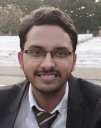
 Sayan Layek
· 3 previous affiliations
- JLRSince 2023
- Graduate Software Engineer Trainee · Since 2024
- Software Engineer · 2023
- Current
- Undergraduate Student Researcher · 2023–2026
- Researcher · 2024–2026
- Undergrad student · 2020–2024
- Research Intern · 2022
- Core Member · 2021–2022
- DAV Model School - Durgapur2011–2020
- 2011–2020
Research Overview
Sayan Layek focuses on the safety alignment, robustness, and ethical integrity of large language models (LLMs), with a particular emphasis on the unintended consequences of model editing and the development of test-time intervention frameworks. His work investigates the tension between updating model knowledge and maintaining foundational safety constraints, seeking to move beyond static alignment toward dynamic, prosocial, and preference-conditioned generation. By exploring how Emergent Misalignment from Narrow Fine-Tuning can occur during model updates, Layek contributes to the design of steering mechanisms that ensure models remain helpful and safe across diverse deployment contexts.
Research Trajectory
Layek’s research trajectory is characterized by an evolution from identifying vulnerabilities in model modification to engineering modular, training-free solutions for safety alignment. In 2024, his work concentrated on the systemic risks associated with model editing—the process of surgically updating a model's parameters to correct facts or inject new information. This research highlighted a critical paradox: while Precision Neuron Interventions for Knowledge Locality are effective for maintaining factual accuracy, they can destabilize the model’s broader ethical framework, potentially re-introducing vulnerabilities that were previously mitigated during initial alignment.
Following this investigation into model instability, Layek shifted toward developing "Safety Arithmetic," a framework designed to patch these vulnerabilities without the need for computationally expensive retraining. This work utilized Geometric Interventions for Large Language Model Safety Alignment to steer model behavior at the level of activations and parameters. By formalizing "Harm Direction Removal," Layek and his collaborators provided a method to excise unsafe tendencies from base and edited models alike, addressing the Automated Discovery of Model Specific Safety Vulnerabilities through a flexible, test-time approach.
By 2026, Layek’s focus expanded to include the qualitative aspects of model responses, specifically empathy and prosociality. Recognizing that rigid safety filters often lead to the problem of Mitigating False Refusals in Safety-Aligned Language Models, he contributed to the development of frameworks that treat safety as a multi-objective optimization problem. This recent work emphasizes preference-conditioned alignment, where models are steered to provide responses that are not only safe but also emotionally intelligent and value-aligned, a necessary step toward Aligning Language Models to Local Cultural and Legal Norms.
Current Directions
Layek’s current research continues to explore the boundaries of test-time alignment and the formalization of human-centered objectives in LLM generation. A primary focus is the refinement of lexicographic constrained generation, a method that prioritizes hard safety constraints while optimizing for secondary qualities like empathy and helpfulness. This approach aims to solve the "refusal-only" problem, where models alienate users by declining to engage with sensitive but benign queries.
Additionally, Layek is investigating the robustness of these steering mechanisms in high-stakes and emotionally charged settings. By moving away from the paradigm of "frozen" safety, his work seeks to create models that can adapt their alignment profile based on specific user preferences and regional contexts without requiring a full fine-tuning cycle. This modular approach to safety is intended to make LLMs more resilient to jailbreaking and more capable of nuanced interaction in global applications.
Representative Work
In Sowing the Wind, Reaping the Whirlwind: The Impact of Editing Language Models, Layek and his co-authors examine the complex relationship between model accuracy and ethical integrity. As the second author, Layek contributed to an in-depth analysis of how injecting accurate information through model editing can paradoxically destabilize a model's foundational safety framework. The paper frames this as a crucial challenge for the long-term reliability of LLMs, suggesting that surgical updates to knowledge can have systemic effects on a model's resistance to harmful content.
Layek also served as the second author on Safety Arithmetic: A Framework for Test-time Safety Alignment of Language Models by Steering Parameters and Activations. This work introduces a training-free framework designed to enhance safety across various model states, including base, fine-tuned, and edited versions. The researchers propose a dual-mechanism approach: Harm Direction Removal to suppress dangerous outputs and Safety Alignment to encourage positive responses. The paper also introduces "NoIntentEdit," a dataset specifically curated to highlight instances where model edits might lead to unintended safety lapses.
In the 2026 paper ProSocialAlign: Preference-Conditioned Test-Time Alignment in Language Models, Layek participated in the development of a parameter-efficient framework for steering generation toward empathetic and value-aligned responses. As the second author, he helped formalize five human-centered objectives, casting safety as a lexicographic constrained generation problem. The ProSocialAlign method combines directional regulation with optimization within a "safe set" of possible continuations, providing a more nuanced alternative to traditional refusal-based safety paradigms.
Profile updated
Loading new papers…
Other researchers whose papers cluster into the same research directions — a proxy for overlapping technical interests and shared intellectual neighborhoods.
See something wrong? Report a mistake