

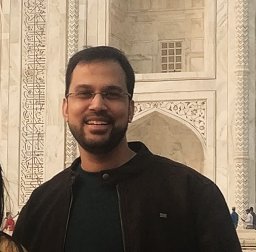
 Saurabh Goyal
· 6 previous affiliations
- Research Scientist · Since 2021
- Researcher · Since 2017
- IBM (India)2017–2021
- Research Scientist · 2017–2021
- Indian Institute of Technology Delhi2015–2017
- Master's degree, Computer Science · 2015–2017
- CSEART Systems2012–2015
- Senior Research Analyst · 2012–2015
- Bachelor of Technology (B.Tech.) · 2007–2011
- Research Fellow MITACS · 2010
Research Overview
Saurabh Goyal focuses on resource-efficient machine learning, specifically designing algorithms for highly constrained edge devices and microcontrollers. His work addresses the challenges of deploying predictive models on hardware with severe memory and computational limits, such as early Internet of Things sensors. The available evidence highlights his contributions to compressed inference techniques during 2017.
Research Trajectory
The available evidence centers on Goyal's research in 2017, which primarily addresses the deployment of machine learning models on extremely resource-constrained hardware. A major focus of this period was the research direction of Deep Learning for Resource-Constrained Microcontrollers, where standard neural networks and prediction algorithms are typically too large or computationally expensive to run.
In this context, Goyal and his collaborators developed novel algorithmic approaches tailored for early Internet of Things (IoT) devices. In the paper Resource-efficient Machine Learning in 2 KB RAM for the Internet of Things, he helped introduce Bonsai, a tree-based algorithm designed specifically for prediction on microcontrollers with as little as 2 kilobytes of RAM, such as the 8-bit ATmega328P found on Arduino Uno boards. This work intersects with several related areas, including the broader area of Hardware Efficient Approximation of Non Linear Operations and the research direction of On-Device Adaptation for Inference-Only Hardware. By optimizing how models are structured and evaluated, this research also touches upon the area of Joint Optimization of Dimensionality Reduction and Task Learning and techniques in the area of Random Projections for Streaming Data Reduction. Ultimately, enabling such local inference supports the broader goal of Trading Local Computation for Efficient Wireless Communication, as processing data directly on the edge reduces the need to transmit raw sensor data over power-hungry wireless radios.
During the same year, Goyal participated in a larger collaborative effort to adapt instance-based learning for similar hardware environments. He contributed to ProtoNN: Compressed and Accurate kNN for Resource-scarce Devices, which proposed a highly compressed k-nearest neighbors algorithm. This work addressed the need for real-time prediction on IoT sensors that demand minimal storage and computational overhead, further advancing methods for preserving model accuracy under extreme physical constraints.
Current Directions
The most recent papers in the provided evidence are from 2017. At that time, Goyal's work was heavily concentrated on algorithmic compression and hardware-aware machine learning. The central open problems addressed in this corpus involve balancing predictive accuracy with the severe memory, compute, and energy limitations inherent to microcontrollers and edge sensors.
Profile updated
Loading new papers…
Other researchers whose papers cluster into the same research directions — a proxy for overlapping technical interests and shared intellectual neighborhoods.
See something wrong? Report a mistake