

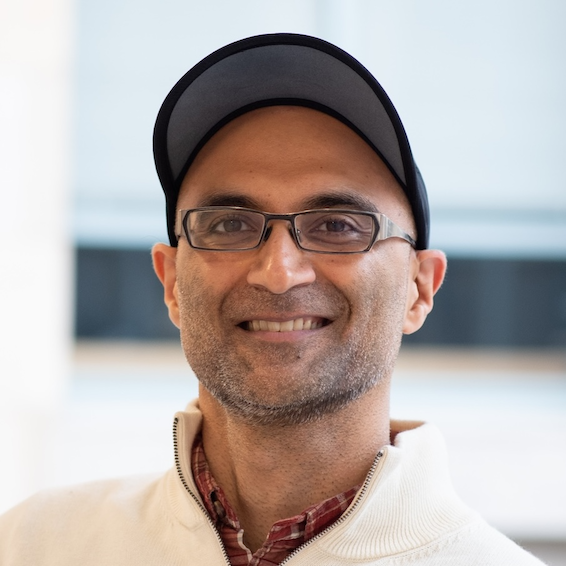
 Satpreet H. Singh
· 6 previous affiliations
- Harvard UniversitySince 2023
- Postdoc · Since 2023
- Baylor College of Medicine2022–2023
- Postdoctoral Researcher · 2022–2023
- Rice University2022–2023
- Postdoc · 2022–2023
- Research Scientist, ML/AI · 2022
- University of Washington2017–2021
- PhD student · 2017–2021
- Oregon State University2015–2017
- MS student · 2015–2017
- Master of Science - MS, Computer Science · 2016–2017
Research Overview
Satpreet H. Singh focuses on computational neuroscience, deep reinforcement learning, and the analysis of naturalistic behavior. His early work emphasized extracting neural and behavioral dynamics from unconstrained human intracranial recordings. More recently, his research applies artificial intelligence and multi-agent reinforcement learning to model biological active sensing and decipher animal communication.
Research Trajectory
Beginning around 2020, Singh's research addressed the limitations of highly controlled, repetitive laboratory experiments in motor neuroscience. Contributing to the research direction of Neural Dynamics of Unconstrained and Naturalistic Behavior, he focused on analyzing spontaneous movements in human subjects. As first author of Towards naturalistic human neuroscience and neuroengineering: behavior mining in long-term video and neural recordings, Singh developed automated approaches to analyze simultaneously recorded long-term electrocorticography (ECoG) and video data. This work advanced the broader area of The Generalizability Gap Between Healthy and Clinical Brains by demonstrating how machine learning could extract meaningful neural correlates from unstructured, multi-modal clinical data, moving beyond traditional cued experimental designs. This early focus also intersected with themes such as Automated Behavioral Analysis for Human and Animal Research, highlighting the necessity of computer vision in quantifying naturalistic actions.
Alongside this applied neuroscience work, Singh also explored foundational machine learning methods. In 2022, he authored A Non-Negative Matrix Factorization Game, which introduced a novel game-theoretic formulation for Non-Negative Matrix Factorization (NNMF). This approach maintained the reconstruction performance of traditional multiplicative updates while offering improved scaling and parallelization properties, contributing to the computational toolkits used in large-scale data analysis.
Around 2023, Singh's trajectory shifted toward a synthesis of deep reinforcement learning (DRL) and ethology, using artificial agents to model complex biological navigation and sensing. As first author of Emergent behaviour and neural dynamics in artificial agents tracking odour plumes, he demonstrated how DRL could be used to explore the strategies agents use to navigate chaotic olfactory environments. This research provided a computational bridge between artificial intelligence and insect behavior, illustrating how neural dynamics adapt to complex sensory inputs.
This methodology of using artificial agents as "virtual laboratories" became a central pillar of his subsequent research. In 2024, Singh contributed as second author to Understanding biological active sensing behaviors by interpreting learned artificial agent policies, which applied neural network-based agents to model the active electrolocation strategies of weakly electric fish. Building on this paradigm, he led the 2025 study Dissecting Larval Zebrafish Hunting using Deep Reinforcement Learning Trained RNN Agents. By training recurrent neural networks in a simulated environment, this work provided a normative explanation for the stereotyped hunting behaviors of larval zebrafish. It demonstrated that complex biological patterns—such as eye vergence-linked pursuit and precise approach trajectories—can emerge naturally as optimal solutions to sensory and energetic constraints, without requiring the agents to be trained directly on biological data.
Expanding from individual agent behavior to multi-agent interactions, Singh recently proposed using multi-agent reinforcement learning (MARL) to study animal signaling. In Proposal: Deciphering Electrocommunication with MARL and Unsupervised Machine Translation (2025), he argued that generating synthetic corpora through biologically realistic MARL simulations could bridge the representational gaps that currently limit unsupervised machine translation in deciphering animal communication.
Current Directions
The most recent papers in the evidence indicate a continued focus on the intersection of dynamical systems, artificial intelligence, and biological modeling. Recent work investigates methods for comparing the underlying structure of complex dynamical systems—such as biological brains and artificial neural networks—by separating their internal recurrent dynamics from the effects of external inputs. By "demixing" these components, this line of research aims to enable accurate comparisons of non-autonomous systems even when they are only partially observed or driven by noisy surrogate data.
Additionally, Singh's current research explores the use of multi-agent reinforcement learning to simulate and decode complex biological phenomena, such as electrocommunication. By leveraging deep reinforcement learning and recurrent neural networks, this ongoing work seeks to uncover the normative principles that govern adaptive behavior, latent state inference, and communication in naturalistic environments.
Profile updated
| Paper | Venue | Year |
|---|---|---|
| Using Deep Reinforcement Learning to Understand Odor Plume Tracking in Walking and Flying AgentsGitHubaaravsinhaofficial/ | Neurips2025-ai4science | 2025 |
Loading new papers…
Other researchers whose papers cluster into the same research directions — a proxy for overlapping technical interests and shared intellectual neighborhoods.
See something wrong? Report a mistake