

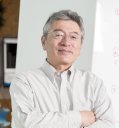
 Satoshi Nakamura
· 4 previous affiliations
- Chinese University of Hong KongSince 2024
- Full Professor · Since 2024
- Nara Institute of Science and TechnologySince 2011
- Emeritus · Since 2024
- Full Professor · 2011–2023
- Associate Professor · 1994–1999
- Director General · 2008–2010
- Director · 2000–2008
Research Overview
Satoshi Nakamura focuses on machine translation, spoken language processing, and dialogue systems, with a particular emphasis on simultaneous translation and affective computing. His trajectory spans foundational work in syntax-based statistical machine translation to recent advancements leveraging large language models for real-time, context-aware translation. Currently, his research investigates zero-shot capabilities and segmentation strategies in LLM-driven simultaneous translation architectures.
Research Trajectory
Nakamura's early documented work includes participation in developing domain-specific spoken language systems. In Towards High-Reliability Speech Translation in the Medical Domain (2013), he collaborated on a system designed to bridge language barriers in healthcare settings. This project intersected with several foundational research areas, including the direction of Hierarchical Phrase Based Translation with Synchronous Grammars, as well as work in Resolving Zero Anaphora in Pro Drop Languages and the broader area of Mitigating Error Propagation in Spoken Language Translation.
A major focus of his subsequent research has been simultaneous speech translation, where minimizing latency without sacrificing accuracy is critical. He led the development of novel segmentation algorithms in Optimizing Segmentation Strategies for Simultaneous Speech Translation, replacing heuristic methods with dynamic programming and greedy search approaches that directly maximize translation performance. He expanded on this by addressing the challenges of sub-sentential segments in syntax-based models with Syntax-based Simultaneous Translation through Prediction of Unseen Syntactic Constituents. During this period, his group also advanced parsing robustness with Ckylark: A More Robust PCFG-LA Parser, introducing techniques like probability scaling and intermediate result generation to prevent parsing failures across large corpora. Additionally, he improved low-resource translation techniques in Improving Pivot Translation by Remembering the Pivot, proposing a novel approach to retain and utilize pivot language models during the triangulation stage.
Continuing his work in statistical and syntax-based methods, Nakamura oversaw research on A Continuous Space Rule Selection Model for Syntax-based Statistical Machine Translation and explored acoustic integrations in Learning a Lexicon and Translation Model from Phoneme Lattices. Concurrently, as neural machine translation (NMT) began to dominate the field, he directed efforts to address its limitations. In Incorporating Discrete Translation Lexicons into Neural Machine Translation, his team proposed augmenting NMT systems with discrete lexicons to better handle low-frequency content words, utilizing the model's attention vector to dynamically select lexical probabilities.
To improve the computational efficiency of NMT, he introduced techniques for Neural Machine Translation via Binary Code Prediction. By predicting a binary code for each word, this method reduced the memory and time requirements of the output layer to be logarithmic in vocabulary size, contributing directly to the research direction of The Vocabulary Scaling Bottleneck in Language Models. He also explored retrieval-augmented generation in Guiding Neural Machine Translation with Retrieved Translation Pieces, utilizing search engines to recall and integrate previously seen translation n-grams into the decoding process.
Beyond translation, Nakamura expanded his focus to affective computing and dialogue systems. In Eliciting Positive Emotion through Affect-Sensitive Dialogue Response Generation: A Neural Network Approach, he guided the creation of a data-driven dialogue system designed to dynamically mimic affective human interactions and promote positive emotional states in users. This work advanced the research areas of Causal Emotion Reasoning in Long Conversational Contexts and Modeling Emotional Trajectories in Multi-Turn Conversations.
Most recently, Nakamura's trajectory has integrated large language models (LLMs) into his long-standing focus on simultaneous machine translation. In TransLLaMa: LLM-based Simultaneous Translation System, his group demonstrated that fine-tuned decoder-only LLMs can directly control input segmentation by generating wait tokens, bypassing the need for separate policy modules. He further established the viability of these models in LLMs Are Zero-Shot Context-Aware Simultaneous Translators, showing that open-source LLMs can achieve highly competitive zero-shot performance while easily incorporating background information for challenging technical domains.
Current Directions
Recent work investigates the application of decoder-only large language models to simultaneous machine translation (SiMT). Moving beyond traditional encoder-decoder architectures and heuristic segmentation policies, this research explores how LLMs can natively manage translation latency and segmentation through specialized token generation. A key focus is evaluating the zero-shot capabilities of open-source models in real-time translation scenarios, particularly their ability to maintain context awareness and integrate background knowledge dynamically. This direction aims to build massively multilingual, context-aware simultaneous translation systems that perform robustly even when processing highly technical subject matter.
Profile updated
| Paper | Venue | Year |
|---|---|---|
| Learning a Lexicon and Translation Model from Phoneme LatticesGitHuboadams/ | EMNLP | 2016 |
Loading new papers…
Other researchers whose papers cluster into the same research directions — a proxy for overlapping technical interests and shared intellectual neighborhoods.
See something wrong? Report a mistake