

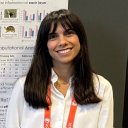
 Sara Sarto
· 1 previous affiliation
- University of Modena and Reggio EmiliaSince 2022
- Postdoc · 2025–2027
- Current
- PhD student · 2022–2025
Research Overview
Sara Sarto focuses on vision-and-language architectures, specifically advancing image captioning and the evaluation of multimodal models. Her trajectory spans the integration of retrieval-augmented generation into visual tasks and the development of robust, reference-free metrics for machine-generated text. Most recently, her work addresses multimodal large language models and prompt learning under missing modality scenarios.
Research Trajectory
Sarto’s early research investigated how external knowledge and memory mechanisms could improve the generation of natural language descriptions for visual inputs. In 2022, she developed the Retrieval-Augmented Transformer for Image Captioning, introducing an architecture that utilized a k-nearest neighbors (kNN) memory to retrieve information from an external corpus based on visual similarities. This approach allowed the model to condition its token prediction on both the immediate context and retrieved text, bridging a gap between parametric learning and external knowledge access. She expanded on the use of memory structures the following year with With a Little Help from your own Past: Prototypical Memory Networks for Image Captioning. In this work, she and her collaborators designed a network capable of attending to activations from past training samples, using a prototypical memory model to capture the distribution of past keys and values rather than relying solely on the current input sample.
A significant portion of Sarto’s trajectory has been dedicated to solving the complex challenge of evaluating machine-generated captions, as traditional metrics often fail to align with human judgment or penalize hallucinations effectively. To address this, she proposed Positive-Augmented Contrastive Learning for Image and Video Captioning Evaluation (PAC-S) in 2023. This metric unified the learning of a contrastive visual-semantic space with the inclusion of generated images and text, demonstrating strong correlation with human judgments across both image and video datasets. She continued to refine evaluation methodologies in 2024 with BRIDGE: Bridging Gaps in Image Captioning Evaluation with Stronger Visual Cues. BRIDGE introduced a learnable, reference-free metric that mapped visual features into dense vectors, integrating them into multi-modal pseudo-captions to better encode fine-grained details and assess caption quality without relying on human reference texts.
As the field transitioned toward larger foundational models, Sarto’s research evolved to encompass Multimodal Large Language Models (MLLMs) and broader retrieval-augmented architectures. She consolidated her earlier work on kNN-augmented generation in Towards Retrieval-Augmented Architectures for Image Captioning, presenting comprehensive model variants that integrated visual similarity retrievers with differentiable encoders. Concurrently, she participated in mapping the rapidly expanding landscape of MLLMs through The Revolution of Multimodal Large Language Models: A Survey. This comprehensive overview detailed architectures, training strategies, and applications, contributing to the broader research direction of Aligning Visual Features with Language Model Embeddings.
Building on these foundational insights, Sarto collaborated on Wiki-LLaVA: Hierarchical Retrieval-Augmented Generation for Multimodal LLMs. This approach endowed MLLMs with the ability to answer complex questions by accessing an external knowledge source of multimodal documents through a hierarchical retrieval pipeline, effectively augmenting the model's context window with relevant passages. Most recently, her work has addressed the robustness of multimodal systems in imperfect real-world conditions. In Semantically Conditioned Prompts for Visual Recognition Under Missing Modality Scenarios (2025), she and her co-authors introduced a prompt learning module designed to generate sample-specific, modality-agnostic prompts. By querying a learnable memory bank based on the semantic representation of available modalities, the model can self-adjust to diverse scenarios where certain input modalities are missing.
Current Directions
Sarto’s most recent work investigates the adaptability and robustness of multimodal large language models, particularly when faced with incomplete data. A primary focus is the development of dynamic prompt learning mechanisms that allow visual recognition systems to maintain performance even when expected modalities are absent. By leveraging learnable memory banks and semantic conditioning, this research aims to make multimodal Transformers more resilient in real-world applications where data streams are often noisy or missing. Additionally, her ongoing efforts continue to explore the intersection of retrieval-augmented generation and vision-language tasks, seeking more sophisticated ways to ground generative models in external, multimodal knowledge bases to reduce hallucinations and improve factual accuracy.
Profile updated
Loading new papers…
Other researchers whose papers cluster into the same research directions — a proxy for overlapping technical interests and shared intellectual neighborhoods.
See something wrong? Report a mistake