

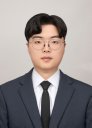
 Sanmin Kim
· 3 previous affiliations
- Kookmin UniversitySince 2025
- Assistant Professor · Since 2025
- Postdoctoral Researcher · 2024–2025
- Ph.D., CCS Graduate School of Mobility · 2020–2024
- Master's degree, CCS Graduate School of Green Transportation · 2018–2020
- Undergrad student · 2012–2018
- Interim Engineering Intern · 2024
Research Overview
Sanmin Kim focuses on autonomous driving perception, 3D object detection, and trajectory prediction for intelligent vehicles. His work addresses the challenges of sensor fusion, particularly integrating camera and radar data, and explores methods for generating diverse, map-adaptive motion forecasts. Recently, he investigates cross-modal knowledge distillation to improve camera-based detection systems by mitigating the inherent imperfections of teacher modalities.
Research Trajectory
Sanmin Kim’s research initially concentrated on the behavioral modeling of human drivers to improve trajectory prediction for autonomous vehicles. In 2020, he introduced RECUP Net: RECUrsive Prediction Network for Surrounding Vehicle Trajectory Prediction with Future Trajectory Feedback. Recognizing that human drivers actively consider future predictions when navigating interactions, this work proposed a recursive encoder-decoder architecture that incorporates initial future prediction results as feedback for subsequent prediction computations. He continued to expand on motion forecasting by addressing the scarcity of action-reaction pair data in real-world datasets. Working with collaborators, he developed a semi-supervised learning framework to predict the future reactions of surrounding vehicles to an ego vehicle's planned actions in Are Reactions to Ego Vehicles Predictable Without Data?: A Semi-Supervised Approach. This framework utilized auxiliary structures, including action reconstructor and identifier modules, to handle the lack of identical scene histories. Recognizing that standard prediction models often suffer from a bias toward straight maneuvers, he later proposed a map-aware solution in Diverse Multiple Trajectory Prediction Using a Two-Stage Prediction Network Trained With Lane Loss. By employing a two-stage network trained with a specialized lane loss, this approach ensures that generated trajectories maintain map-adaptive diversity and adhere to geometric constraints.
In parallel with his work on motion forecasting, Kim’s focus expanded significantly into 3D object detection and multi-modal sensor fusion. A major theme in this period was improving camera-based perception by exploiting temporal and depth cues. He developed a "predict-to-detect" system in Predict to Detect: Prediction-guided 3D Object Detection using Sequential Images, which leverages sequential camera frames by explicitly predicting object motion from past frames. This approach significantly improves accuracy for moving objects and contributes to the broader research direction of Disambiguating Visual Twins through Temporal Motion Signatures. To further enhance monocular 3D detection without the computational overhead of running separate depth estimation networks, he collaborated on Boosting Monocular 3D Object Detection With Object-Centric Auxiliary Depth Supervision. This work jointly trains the detection network with a depth prediction loss, bypassing the limitations and latency of sequential depth map approaches.
Recognizing the limitations of single-modality perception, Kim has extensively investigated camera-radar fusion to combine the semantic richness of images with the robust, long-range sensing capabilities of radar. He contributed to CRN: Camera Radar Net for Accurate, Robust, Efficient 3D Perception, a fusion network designed to generate accurate Bird's-Eye-View (BEV) representations. This research advances methodologies in the area of Vertical Feature Collapse in Spatial Projections as well as the research direction of Overcoming Radar Sparsity through Cross Modal Fusion. Building on the potential of early fusion strategies, he also co-developed CRAFT: Camera-Radar 3D Object Detection with Spatio-Contextual Fusion Transformer. Because traditional late fusion cannot fully exploit the complementary properties of different sensors, CRAFT introduces a proposal-level early fusion approach that uses a transformer architecture to effectively associate image proposals with radar points, exploiting both spatial and contextual properties.
Most recently, Kim has explored cross-modal knowledge distillation to bridge the performance gap between camera-based and LiDAR-based 3D detectors. In LabelDistill: Label-guided Cross-modal Knowledge Distillation for Camera-based 3D Object Detection, he introduced a novel method that leverages aleatoric uncertainty-free features from ground truth labels. This approach mitigates the transfer of inherent LiDAR imperfections—such as measurement ambiguities on distant or occluded objects—from the teacher model to the image-based student detector.
Current Directions
The most recent work in the evidence indicates a continuing focus on refining autonomous driving perception systems, particularly through advanced training paradigms like cross-modal knowledge distillation. A primary open problem in this domain is bridging the performance gap between accessible, low-cost sensors (such as cameras and radar) and high-fidelity, expensive sensors (like LiDAR) without inheriting the latter's measurement ambiguities. Current efforts investigate how to effectively transfer precise geometric knowledge to camera-based detectors while filtering out imperfections caused by occlusion or distance. Additionally, ongoing themes in his research emphasize the integration of temporal dynamics and spatial context to create robust, map-aware representations for both object detection and diverse trajectory forecasting in complex driving environments.
Profile updated
Loading new papers…
Other researchers whose papers cluster into the same research directions — a proxy for overlapping technical interests and shared intellectual neighborhoods.
See something wrong? Report a mistake