

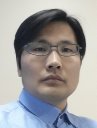
 Sangtae Ha
· 1 previous affiliation
- University of Colorado BoulderSince 2014
- Associate Professor · Since 2021
- Assistant Professor · 2014–2021
Research Overview
Sangtae Ha focuses on computer networking, mobile systems, and the intersection of machine learning with distributed systems. His work spans from optimizing cellular network protocols and mobile data pricing to developing efficient execution engines for deep neural networks on resource-constrained devices. Recently, his research addresses the systems challenges of large language model fine-tuning and latency-critical inference over cellular networks.
Research Trajectory
Ha’s early work addressed the economics and performance of mobile data networks. He investigated time-dependent pricing models for mobile data in TUBE: time-dependent pricing for mobile data. Building on this, he developed systems to empower users to make cost-aware offloading decisions to WiFi networks. This research, detailed in AMUSE: Empowering users for cost-aware offloading with throughput-delay tradeoffs, contributed to the broader research direction of Balancing Throughput and Latency in Stochastic Networks by utilizing predictive models for WiFi availability alongside receiver-side TCP rate control to accommodate individual user delay tolerances.
Moving deeper into cellular network infrastructure and security, his research explored congestion control and latency. He introduced mechanisms for extremely low-latency congestion control in mobile cellular networks with ExLL: an extremely low-latency congestion control for mobile cellular networks. He also analyzed data buffering behaviors in I Sent It: Where Does Slow Data Go to Wait? and identified critical security vulnerabilities in emergency alert systems in This is Your President Speaking: Spoofing Alerts in 4G LTE Networks.
Expanding into cloud infrastructure and applied machine learning, he investigated memory disaggregation for cloud environments in FluidMem: Full, Flexible, and Fast Memory Disaggregation for the Cloud and efficient miss ratio approximation for multi-tier caching in eMRC: Efficient Miss Ratio Approximation for Multi-Tier Caching. Concurrently, he applied deep learning to optimize mobile and cellular systems. To address video streaming stalls caused by uplink fluctuations, his group developed PERCEIVE: deep learning-based cellular uplink prediction using real-time scheduling patterns, an LSTM-based framework trained on LTE network traces to predict throughput in 100-millisecond windows. He also participated in research on dynamic voltage and frequency scaling (DVFS), contributing to zTT: learning-based DVFS with zero thermal throttling for mobile devices, which balances CPU and GPU power budgets under dynamic thermal constraints.
His focus on real-time communications continued with reinforcement learning approaches to Forward Error Correction (FEC) in WebRTC, aiming to improve user Quality of Experience (QoE) by managing the complex interactions between video recovery mechanisms and rate control in R-FEC: RL-based FEC Adjustment for Better QoE in WebRTC. This work on video conferencing was further expanded in Converge: QoE-driven Multipath Video Conferencing over WebRTC.
During this period, a major theme emerged around optimizing deep neural network (DNN) execution on constrained hardware. He led the development of CPrune: Compiler-Informed Model Pruning for Efficient Target-Aware DNN Execution, which bridges the gap between model compression and compiler auto-tuning to meet target accuracy and hardware latency requirements. He also collaborated on ASPEN: Breaking Operator Barriers for Efficient Parallelization of Deep Neural Networks, an execution engine that decomposes neural networks into fine-grained, tile-based dataflow graphs for opportunistic, asynchronous CPU execution. Extending these optimizations to large-scale models, his lab introduced LLMem: Estimating GPU Memory Usage for Fine-Tuning Pre-Trained LLMs. This framework accurately predicts peak GPU memory usage prior to execution by accounting for mixed-precision states and distributed training strategies like ZeRO-3 and Tensor Parallelism, thereby mitigating out-of-memory errors.
Current Directions
Recent work investigates the intersection of next-generation media streaming and energy-efficient edge AI. The most recent papers in the evidence address the delivery of immersive media, such as live volumetric video streaming, utilizing novel encoding techniques in DeltaStream: 2D-Inferred Delta Encoding for Live Volumetric Video Streaming. Additionally, his research tackles the strict latency and energy constraints of on-device and edge-assisted machine learning. This includes developing coordination frameworks between Radio Access Networks (RAN) and edge servers for latency-critical inference serving, as seen in End-to-End Coordination of RAN and Edge Server for Latency-Critical Inference Serving over Cellular Networks. To further optimize on-device AI, he has explored resource allocation strategies that balance system frequencies to ensure deep neural network inferences are completed punctually without wasting energy, detailed in NeuroBalancer: Balancing System Frequencies With Punctual Laziness for Timely and Energy-Efficient DNN Inferences.
Profile updated
Loading new papers…
Other researchers whose papers cluster into the same research directions — a proxy for overlapping technical interests and shared intellectual neighborhoods.
See something wrong? Report a mistake