

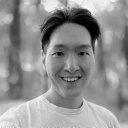
 Sang Keun Choe
· 3 previous affiliations
- Anthropic (United States)Since 2024
- Researcher · Since 2024
- Carnegie Mellon University2018–2024
- PhD student · 2020–2024
- MS student · 2018–2020
- Seoul National University2011–2018
- Undergrad student · 2011–2018
Research Overview
Sang Keun Choe focuses on the intersection of gradient-based optimization, distributed systems, and data-centric AI. His work centers on developing scalable algorithms and software infrastructure for complex machine learning problems, including multilevel optimization, meta-learning, and training data attribution. Currently a member of the technical staff at Anthropic, Choe’s research trajectory has evolved from improving generative model stability and cluster scheduling to building foundational tools for large-scale model interpretability and data valuation.
Research Trajectory
Choe’s early research, beginning around 2020, addressed fundamental stability and efficiency challenges in deep learning. During this period, he contributed to methods for stabilizing the training of Generative Adversarial Networks (GANs), specifically targeting issues like mode collapse and cycling. This work, exemplified by Online Kernel based Generative Adversarial Networks, utilized kernel-based methods to improve convergence. Simultaneously, he engaged with the systems side of machine learning, participating in the development of Pollux: Co-adaptive Cluster Scheduling for Goodput-Optimized Deep Learning, which received the Jay Lepreau Best Paper Award at OSDI 2021. This work introduced a co-adaptive approach to resource allocation, optimizing the "goodput" of deep learning clusters by dynamically adjusting batch sizes and learning rates alongside hardware resources.
Between 2022 and 2023, Choe’s focus shifted toward the mathematical and computational challenges of Multilevel Optimization (MLO). MLO is essential for tasks where one optimization problem is nested within another, such as hyperparameter optimization, neural architecture search, and meta-learning. Choe identified a significant gap between the theoretical potential of MLO and its practical implementation, which was often hindered by the memory and compute intensity of best-response Jacobians. To address this, he led the development of Betty: An Automatic Differentiation Library for Multilevel Optimization. By rethinking MLO as a specialized dataflow graph, this work reduced computational complexity and provided a modular framework for scaling nested optimization to models with hundreds of millions of parameters.
Following the development of Betty, Choe extended these optimization principles to the domain of meta-learning at scale. In Making Scalable Meta Learning Practical, he introduced the ScalAble Meta learning Algorithm (SAMA). This work replaced traditional, computationally expensive second-order mathematics with first-order approximations. By co-designing the algorithm with distributed systems, the research demonstrated significant speedups and memory reductions, making meta-learning viable for Large Language Models (LLMs) and large-scale datasets like ImageNet.
In his most recent work (2024–2025), Choe has pivoted toward data-centric AI, specifically focusing on training data attribution (TDA) and data valuation. As LLMs grow in complexity, understanding the contribution of individual training examples to model outputs has become a critical problem for interpretability, safety, and legal compliance. Choe has developed methods to scale influence functions—a popular but traditionally expensive TDA method—to the level of modern LLMs. This research includes the introduction of the LoGra gradient projection strategy and the LogIX library, aimed at making data valuation and model debugging computationally feasible for models with billions of parameters.
Representative Work
Choe’s research is characterized by a dual focus on algorithmic innovation and the creation of scalable software tooling. The following papers represent the core pillars of his work in optimization, meta-learning, and data attribution.
In Betty: An Automatic Differentiation Library for Multilevel Optimization, Choe addressed the implementation difficulties of gradient-based MLO. The core contribution was a novel dataflow graph that allowed for efficient automatic differentiation, reducing the computational complexity of calculating nested gradients from $O(d^3)$ to $O(d^2)$. This library enabled researchers to treat MLO problems with a "plug-and-play" modularity, facilitating progress in areas like reinforcement learning and meta-learning that rely on hierarchical optimization structures.
Building on the infrastructure established by Betty, Choe led the research on Making Scalable Meta Learning Practical. This work addressed the "learning to learn" paradigm, which is often bottlenecked by the need for second-order derivatives. By introducing SAMA, Choe demonstrated that first-order approximations, when combined with distributed system optimizations, could achieve up to a 4.8x speedup and substantial memory savings. This allowed meta-learning techniques to be applied to much larger architectures than previously possible.
Choe’s recent focus on the "black box" nature of LLMs led to What is Your Data Worth to GPT? LLM-Scale Data Valuation with Influence Functions. This research tackles the technical necessity of quantifying the contribution of specific training examples to model outputs. Given the increasing scrutiny over training data, this work provides a framework for LLM-scale data valuation, moving influence functions from theoretical exercises to practical tools for data curation and citation.
This line of inquiry was further refined in Large-Scale Training Data Attribution with Efficient Influence Functions. In this paper, Choe introduced LoGra, an efficient gradient projection strategy that leverages the inherent structure of gradients in backpropagation. This method significantly improves the scalability of influence functions, allowing for training data attribution on massive datasets and models where previous methods were limited by prohibitive compute and memory costs. This work provides both the theoretical motivation for gradient projection and the practical means to implement it in large-scale settings.
Earlier in his trajectory, Choe contributed to the systems-level optimization of deep learning in Pollux: Co-adaptive Cluster Scheduling for Goodput-Optimized Deep Learning. While his specific author position is not noted in the provided evidence, the work is a significant component of his background in distributed ML systems. Pollux improved cluster efficiency by recognizing that the relationship between resource allocation and training speed is not linear; by co-tuning the system and the model's hyperparameters, the scheduler achieved higher overall throughput in shared cluster environments.
Choe also participated in research regarding the efficiency of LLM fine-tuning, as seen in AdaNF: Quantization Group Adaptive NormalFloat for Low Bit Fine-tuning of LLMs. As a fourth author, he contributed to the development of AdaNF, which improves upon QLoRA by adjusting the cumulative distribution function (CDF) offset of NormalFloat. This adjustment helps mitigate the information loss and convergence issues typically associated with very low-bit (e.g., 2-bit) quantization, facilitating more memory-efficient fine-tuning of large models.
Current Directions
Choe’s current work at Anthropic continues his focus on the scalability and interpretability of large-scale machine learning. His recent release of LogIX, a PyTorch library for scalable data valuation and attribution, suggests a continued commitment to building open-source tooling that bridges the gap between optimization theory and practical AI deployment. His research remains centered on making complex mathematical frameworks—whether for multilevel optimization or influence-based attribution—practical for the current generation of massive-scale models.
Profile updated
Loading new papers…
Other researchers whose papers cluster into the same research directions — a proxy for overlapping technical interests and shared intellectual neighborhoods.
See something wrong? Report a mistake