

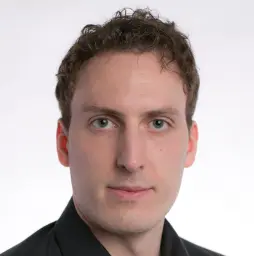
 Sandro Lombardi
· 5 previous affiliations
- Maivico GmbHSince 2024
- Independent Contractor / Freelancer - Computer Vision · Since 2024
- Technum GmbHSince 2024
- Software Lead · Since 2024
- ETH ZurichCurrent
- Current
- Postdoc · 2023–2024
- Postdoctoral Researcher · 2019–2023
- Research Assistant · 2017–2018
- Master of Science ETH, Computer Science · 2015–2017
- Undergrad student · 2011–2015
- Software Developer · 2015
- Rola Security Systems AG2013–2014
- Junior Software Developer · 2013–2014
Research Overview
Sandro Lombardi focuses on the development of neural representations for 3D reconstruction, specifically addressing the challenges of scalability, articulated motion, and the conversion of implicit neural fields into explicit geometric structures. His work bridges the gap between raw sensor data, such as unstructured point clouds, and high-fidelity digital models suitable for visualization and physical simulation. By leveraging machine learning to interpret complex geometric signals, he has contributed to methods that improve the efficiency and topological integrity of 3D models across various domains, from human body modeling to large-scale scene reconstruction.
Research Trajectory
Lombardi’s research trajectory began with a focus on the fundamental limitations of early neural implicit representations, particularly their inability to scale to large or complex scenes. In 2020, his work addressed the "bottleneck" of global latent codes, which often failed to capture fine-grained details in extensive point cloud data. By introducing hierarchical feature maps and local implicit functions, he moved the field toward more scalable Neural Surface Reconstruction via Gradient Based Point Projection. During this same period, he explored the intersection of geometry and temporal dynamics, developing self-supervised methods to disentangle ego-motion from non-rigid scene flow, a critical step for understanding motion in 3D environments.
In 2021, Lombardi transitioned toward the modeling of articulated objects, specifically the human body. This phase of his research sought to overcome the constraints of traditional parametric statistical models, which are often limited by linear combinations of shapes. By developing neural implicit representations with disentangled latent spaces for shape and pose, he enabled more flexible and physically meaningful human reconstructions. This work emphasized the importance of controllability in neural representations, ensuring that reconstructed models could be manipulated in a way that remains consistent with human anatomy.
By 2022, his focus shifted toward the interface between implicit neural representations and explicit geometric outputs like triangle meshes. This period was characterized by an effort to solve the "smoothness trap"—the tendency of neural networks to over-smooth surfaces and lose sharp features. His contributions included the development of differentiable meshing algorithms that allow for the direct extraction of surfaces from neural fields. This work was deeply concerned with Watertight Manifold Reconstruction for Physical Simulation and Mesh Quality Sensitivity in Numerical Solvers, ensuring that the resulting meshes were not only visually plausible but also topologically sound for engineering applications. This era also saw advancements in Curvature Adaptive Mesh Refinement, where computational resources are dynamically allocated to areas of high geometric complexity.
In his more recent work, Lombardi has expanded into the realm of dynamic scene reconstruction and real-time SLAM-based systems. This involves moving beyond static geometry to capture evolving environments from limited sensor input, such as monocular video. This research utilizes advanced sampling techniques, including Surface-Aware Importance Sampling for Neural Radiance Fields, and leverages emerging primitives like Gaussian Splatting to achieve high-quality renderings of moving objects and static backgrounds simultaneously.
Current Directions
Lombardi’s current work continues to explore the boundaries of digital automation and 3D computer vision. Having transitioned from academic research at ETH Zurich to independent consultancy and the founding of Maivico GmbH, his focus has shifted toward the practical application of 3D reconstruction and machine learning in real-world products. This includes the integration of Large Language Models (LLMs) into automation workflows and the refinement of computer vision pipelines for industrial use. His interests remain grounded in solving complex problems related to Preserving Sharp Geometric Features in 3D Reconstruction and improving the efficiency of 3D data processing for commercial and scientific applications.
Representative Work
In Scalable Point Cloud-based Reconstruction with Local Implicit Functions, Lombardi addressed the scalability issues of learning-based 3D shape representations. While previous methods relied on a single global latent code to encode an entire scene—often resulting in a loss of detail—this work proposed a hierarchical feature map attached to unstructured point clouds. By encoding only local parts of objects, the method achieved significantly higher accuracy in representing larger scenes, demonstrating that local implicit functions are essential for high-fidelity reconstruction from raw sensor data.
Lombardi’s work on Self-Supervised Learning of Non-Rigid Residual Flow and Ego-Motion moved the focus toward dynamic 3D scenes. Rather than treating scene flow as a simple per-point translation, this research proposed a joint estimation of rigid ego-motion and non-rigid residual flow. By learning the relative rigid transformation between pairs of point clouds and iteratively refining the non-rigid components, the method provided a more nuanced understanding of motion. The use of self-supervisory signals based on temporal consistency allowed the model to learn effectively without the need for exhaustive manual labeling.
In LatentHuman: Shape-and-Pose Disentangled Latent Representation for Human Bodies, Lombardi introduced a novel neural implicit representation for the human body. This work addressed the limitations of traditional parametric models by providing a fully differentiable and optimizable framework. The key innovation was the disentanglement of shape and pose latent spaces, which allowed for independent control over the subject's identity and their physical configuration. This approach provided a more flexible alternative to linear statistical models while maintaining the physical meaningfulness required for realistic animation and reconstruction.
The challenge of converting neural representations into usable geometry was addressed in NeuralMeshing: Differentiable Meshing of Implicit Neural Representations. Traditional meshing techniques often rely on non-differentiable post-processing steps like Marching Cubes, which disconnect the reconstruction process from the final mesh output. Lombardi contributed to a novel differentiable meshing algorithm that allows for the end-to-end training of surface extraction. This method is particularly significant for tasks where the topology and size of the mesh are unknown, providing a bridge between data-driven neural fields and traditional triangle-based graphics pipelines.
Lombardi provided a comprehensive synthesis of the field in On Neural Representations for Point Cloud-based 3D Shape and Motion Modeling. This work evaluated the benefits and drawbacks of various 3D scene representations—including point clouds, triangle meshes, and voxel grids—against the emerging class of neural representations. The analysis highlighted how neural methods offer lightweight alternatives that provide continuous surface definitions, while also identifying the specific tasks where traditional representations remain superior. This work serves as a foundational overview of the transition from classical geometry to deep learning-based 3D modeling.
Lombardi also participated in the development of ProDyG: Progressive Dynamic Scene Reconstruction via Gaussian Splatting from Monocular Videos, a system designed for high-quality, online reconstruction of dynamic environments. The system utilizes a SLAM-based approach to disentangle static backgrounds from moving objects in monocular RGB video. By leveraging 3D Gaussian Splatting and a "Motion Scaffolds" graph, the method achieves novel-view renderings that match the quality of slow, offline reconstruction techniques while maintaining robust camera tracking in real-time. This work represents a significant step toward deploying complex 3D reconstruction algorithms in live, unpredictable environments.
Profile updated
Loading new papers…
Other researchers whose papers cluster into the same research directions — a proxy for overlapping technical interests and shared intellectual neighborhoods.
See something wrong? Report a mistake