

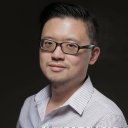
 Samuel Yen-Chi Chen
· 3 previous affiliations
- Wells Fargo (United States)Since 2022
- Researcher · Since 2022
- Brookhaven National Laboratory2020–2022
- Researcher · 2020–2022
- National Taiwan University2016–2020
- PhD student · 2016–2020
Research Overview
Samuel Yen-Chi Chen focuses on quantum machine learning, hybrid quantum-classical architectures, and quantum reinforcement learning. His trajectory spans the development of variational quantum circuits for deep reinforcement learning to the design of quantum sequence models and automated architecture search frameworks. Recent work investigates parameter-efficient quantum neural networks and single-shot measurement strategies for near-term quantum hardware.
Research Trajectory
Chen’s early research established foundational methods for integrating quantum computing with reinforcement learning. In 2019, he presented Variational Quantum Circuits and Deep Reinforcement Learning, providing a proof-of-principle demonstration of using variational quantum circuits (VQCs) to solve deep reinforcement learning tasks. By incorporating classical stability techniques like experience replay into a hybrid framework, this work advanced the broader area of Parameter Efficiency in Variational Quantum Machine Learning. He expanded on this framework in Variational Quantum Circuits for Deep Reinforcement Learning, addressing the intractability of deep quantum circuits by designing feasible algorithms tailored for noisy intermediate-scale quantum (NISQ) devices.
In 2021, his research expanded into automated design and distributed learning. He participated in developing a framework for Quantum Architecture Search via Deep Reinforcement Learning, where an agent learns to construct optimal quantum circuits from scratch, contributing to the research direction of Automated Search for Optimal Quantum Circuit Architectures. Concurrently, he introduced Federated Quantum Machine Learning, proposing a distributed training scheme for hybrid quantum-classical models to improve data privacy and training efficiency across multiple quantum nodes.
Moving into temporal data, Chen developed the Quantum Long Short-Term Memory (QLSTM) model in 2022. This hybrid approach demonstrated faster learning and stable convergence for sequence modeling compared to classical counterparts, establishing a foundation for the area of Recurrent Quantum Neural Networks for Temporal Sequence Modeling.
By 2025, while affiliated with Wells Fargo, Chen's work diversified significantly across architecture optimization, measurement strategies, and applied quantum machine learning. In the domain of architecture and compression, he developed Differentiable Quantum Architecture Search in Quantum-Enhanced Neural Network Parameter Generation. This DiffQAS-QT framework automates the design of quantum neural networks used to generate classical model weights, driving progress in the direction of Quantum Parameter Generation for Classical Model Compression by drastically reducing parameter counts.
A major theme in his 2025 research involves optimizing the measurement phase of quantum circuits. He guided the development of the Yomo framework in You Only Measure Once: On Designing Single-Shot Quantum Machine Learning Models, which shifts from expectation-value estimation to probability aggregation to enable accurate inference using a single measurement shot. He also introduced the Adaptive Non-local Observable (ANO) paradigm in Quantum Reinforcement Learning by Adaptive Non-local Observables, allowing joint optimization of circuit parameters and multi-qubit measurement operators. This concept was further generalized in Learning to Measure Quantum Neural Networks, where he made measurement observables end-to-end trainable to boost performance on classification tasks.
Chen has also applied quantum machine learning to diverse, complex datasets. He explored brain activity decoding with Exploring the Potential of QEEGNet for Cross-Task and Cross-Dataset Electroencephalography Encoding with Quantum Machine Learning, utilizing techniques in the area of Angle Encoding for Quantum Machine Learning to improve feature representation. For financial applications, he contributed to the design of a hybrid framework in Quantum-Enhanced Forecasting for Deep Reinforcement Learning in Algorithmic Trading, combining QLSTM for trend forecasting with quantum reinforcement learning for decision-making. In the industrial domain, he proposed Federated Quantum Kernel Learning for Anomaly Detection in Multivariate IoT Time-Series, leveraging quantum feature maps to detect non-linear anomalies while preserving data privacy.
His recent work also emphasizes rigorous benchmarking of quantum models against classical baselines. In Benchmarking Quantum and Classical Sequential Models for Urban Telecommunication Forecasting, he systematically compared quantum-inspired models with classical LSTMs, highlighting the trade-offs between short-term parameter efficiency and long-range robustness. He further investigated system-level performance in Batched Training for QLSTM vs. QFWP: A System-Oriented Approach to EPC-Aware RMSE-DA, analyzing the computational bottlenecks of batched training in quantum sequence models under an equal-parameter-count framework. Looking toward the compilation and execution of quantum circuits, his 2026 work includes EDDQC: Enhanced Dynamical Distributing Quantum Compilation, which focuses on dynamic distribution strategies for quantum compilation.
Current Directions
The most recent papers in the evidence indicate a strong focus on optimizing the execution and measurement of quantum machine learning models on near-term hardware. Recent work investigates single-shot measurement strategies to reduce the computational overhead of quantum inference, as well as the development of learnable measurement observables that adapt to specific classification and reinforcement learning tasks. Additionally, Chen continues to explore the practical deployment of hybrid quantum-classical architectures, focusing on parameter-efficient sequence modeling, federated quantum learning for privacy-preserving anomaly detection, and dynamic quantum compilation techniques to bridge the gap between algorithmic design and hardware execution.
Profile updated
| Paper | Venue | Year |
|---|---|---|
| Data Augmentation for Deep Candlestick LearnerGitHubpecu/ | arXiv | 2020 |
Loading new papers…
Other researchers whose papers cluster into the same research directions — a proxy for overlapping technical interests and shared intellectual neighborhoods.
See something wrong? Report a mistake