

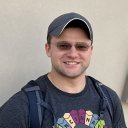
 Samuel Stevens
· 2 previous affiliations
- Liquid AISince 2026
- Researcher · Since 2026
- The Ohio State UniversityCurrent
- Current
- PhD student · 2021–2026
- Undergrad student · 2017–2021
Research Overview
Samuel Stevens focuses on AI-accelerated scientific discovery, computer vision, and neural network interpretability. His early work explored language model reasoning and web agents before shifting toward large-scale biological foundation models. Currently, he investigates sparse autoencoders for vision models and the evaluation of artificial intelligence in small-data regimes.
Research Trajectory
His early research examined language model reasoning and the human editing process. He began by investigating interpretability in An Investigation of Language Model Interpretability via Sentence Editing. By repurposing a sentence editing dataset, he demonstrated that attention weights can generate rationales that align with human explanations, often outperforming gradient-based methods. Following this, he led the development of a computational framework for text revision in arXivEdits: Understanding the Human Revision Process in Scientific Writing, introducing an annotated corpus of full papers to study fine-grained span-level edits and their underlying intentions.
Expanding the capabilities of autoregressive language models, he explored their potential for data encoding by proposing a symmetric encryption algorithm in Memorization for Good: Encryption with Autoregressive Language Models. During this period, he also participated in building generalist web agents, contributing to Mind2Web: Towards a Generalist Agent for the Web. This project provided a dataset of open-ended tasks across real-world websites, advancing the broader area of Live Environment Benchmarking for Autonomous Web Agents and the research direction of Boilerplate Interference in Web Crawled Text. In a separate domain, he investigated post-quantum cryptography vulnerabilities in Salsa Fresca: Angular Embeddings and Pre-Training for ML Attacks on Learning With Errors, demonstrating how angular embeddings and model pre-training can significantly accelerate machine learning attacks on LWE problems. He also contributed to the evaluation of expert-level artificial general intelligence as part of the team behind MMMU: A Massive Multi-Discipline Multimodal Understanding and Reasoning Benchmark for Expert AGI.
A major theme of his subsequent trajectory is the application of computer vision to organismal biology. He introduced BioCLIP: A Vision Foundation Model for the Tree of Life, curating a massive, diverse dataset to train a model capable of general biological image understanding. Recognizing the limitations of standard evaluation metrics for these specialized models, he developed BioBench: A Blueprint to Move Beyond ImageNet for Scientific ML Benchmarks. This work demonstrated that traditional ImageNet transfer accuracy fails to predict performance on scientific imagery and provided an open ecology vision benchmark to replace it. He also helped scale these approaches in BioCLIP 2: Emergent Properties from Scaling Hierarchical Contrastive Learning, which investigates the emergent properties of hierarchical contrastive learning and contributes to the research area of Learning from Long Tailed Biological Distributions.
His collaborative work continues to refine biological computer vision and address its unique challenges. He participated in evaluating long-tailed and domain-adaptive classification in Fine-Grained Beetle Taxonomy with Vision Models: A Benchmark on Long-Tailed and Domain-Adaptive Classification, which assessed vision models on challenging in-situ and laboratory datasets. To overcome the limitations of sparse symbolic labels in scientific datasets, he contributed to BioCAP: Exploiting Synthetic Captions Beyond Labels in Biological Foundation Models. This work aligns with the research direction of Semantic Regularization of Visual Features with Natural Language.
Paralleling his work in biology, he has returned to fundamental questions of model interpretability and evaluation. He developed a unified framework for vision models in Sparse Autoencoders for Scientifically Rigorous Interpretation of Vision Models. This work allows researchers to discover and causally manipulate human-interpretable visual features, advancing the area of Resolving Neural Polysemanticity via Sparse Autoencoders and the direction of Evaluating the Faithfulness of Machine Learning Explanations. Concurrently, he addressed evaluation methodologies in Mind the (Data) Gap: Evaluating Vision Systems in Small Data Applications, highlighting how traditional vision models often outperform multimodal large language models in the small-data regimes typical of real-world deployments. Finally, bridging his interests in interpretability and biology, he helped develop a modular pipeline for extracting physical traits from insect images in Automatic Image-Level Morphological Trait Annotation for Organismal Images, utilizing sparse autoencoders for precise part localization.
Current Directions
The most recent papers in the evidence address the intersection of rigorous model interpretability and specialized scientific computer vision. Recent work investigates the use of sparse autoencoders to isolate and causally manipulate human-interpretable features in vision models, moving beyond passive observation to controlled experimentation.
Concurrently, he focuses on adapting large-scale foundation models for organismal biology. This involves moving beyond standard benchmarks like ImageNet to create domain-specific evaluations, utilizing synthetic captions to enrich sparse biological labels, and developing automated pipelines for morphological trait annotation. Finally, he is actively investigating the "small-data regime" of AI evaluation, highlighting the practical deployment gaps where traditional vision models still outperform modern multimodal systems in real-world, data-constrained applications.
Profile updated
Loading new papers…
Other researchers whose papers cluster into the same research directions — a proxy for overlapping technical interests and shared intellectual neighborhoods.
See something wrong? Report a mistake