

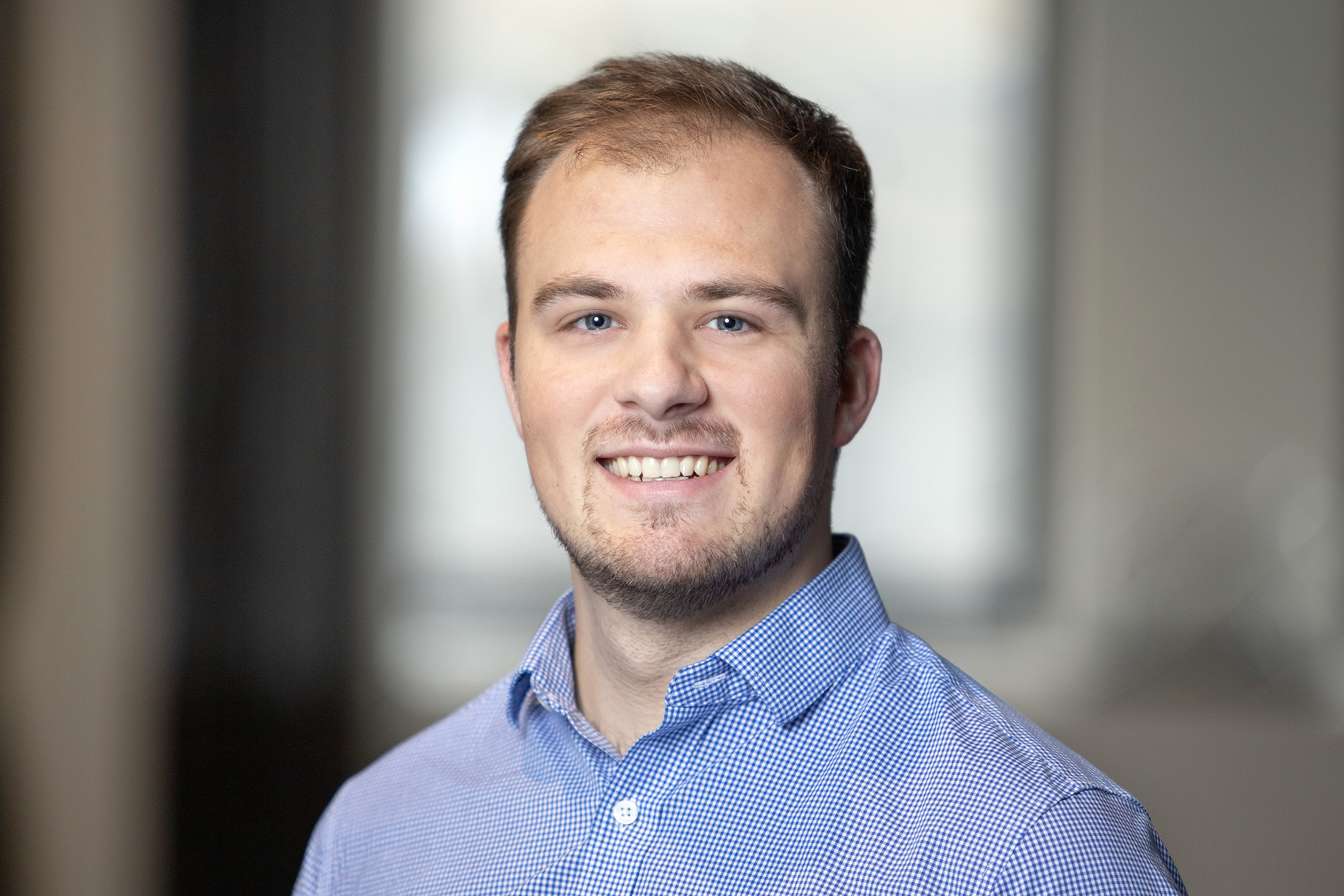
 Samuel Sledzieski
· 7 previous affiliations
- Flatiron InstituteSince 2024
- Postdoc · Since 2024
- Current
- Simons FoundationSince 2024
- Flatiron Research Fellow · Since 2024
- Graduate Research Assistant · 2019–2024
- Research Intern · 2023
- Cellarity2021
- Machine Learning Intern · 2021
- PhD student · 2019–2021
- Summer Research Program Intern · 2019
Research Overview
Samuel Sledzieski focuses on computational biology, protein language models, and the prediction of protein-protein interactions. His early work addressed phylogenetic network inference for viral transmission before shifting toward deep learning methods for structural and molecular biophysics. Currently, he investigates how integrating protein structures and dynamics with context-specific biological networks can illuminate the molecular basis of cellular processes.
Research Trajectory
Samuel Sledzieski’s early research focused on computational phylogenetics and viral epidemiology. He developed TreeFix-TP: Phylogenetic Error-Correction for Infectious Disease Transmission Network Inference, a method designed to improve the accuracy of transmission networks. He also contributed to virDTL: Viral Recombination Analysis Through Phylogenetic Reconciliation and Its Application to Sarbecoviruses and SARS-CoV-2, applying phylogenetic reconciliation techniques to understand viral recombination events.
Transitioning toward molecular biophysics and deep learning, his work began to heavily emphasize the prediction of protein-protein interactions (PPIs) from sequence data. He worked on D-SCRIPT translates genome to phenome with sequence-based, structure-aware, genome-scale predictions of protein-protein interactions, an interpretable neural language model that predicts interactions using only sequence while maintaining high accuracy across species. Trained on tens of thousands of human PPIs, D-SCRIPT demonstrated an ability to improve the functional characterization of proteins in other organisms. He subsequently collaborated on Topsy-Turvy: integrating a global view into sequence-based PPI prediction, a multi-scale deep-learning model that synthesized sequence-based "bottom-up" approaches with global "top-down" insights derived from known PPI networks.
Expanding the application of protein language models into drug discovery, he contributed to Contrastive learning in protein language space predicts interactions between drugs and protein targets. This work introduced ConPLex, a model employing a protein-anchored contrastive co-embedding to achieve high accuracy and broad adaptivity in predicting drug-target interactions. To further enhance PPI predictions, he introduced TT3D: Leveraging precomputed protein 3D sequence models to predict protein-protein interactions, which combined traditional amino acid sequence information with structural representations derived from precomputed 3D models, enabling computationally efficient, genome-wide predictions.
His research also addresses the challenge of annotating understudied species, contributing to the broader research direction of Functional Discovery Beyond the Sequence Twilight Zone. This is exemplified by his participation in Transfer of knowledge from model organisms to evolutionarily distant non-model organisms: The coral Pocillopora damicornis membrane signaling receptome. The project utilized a two-stage computational pipeline, combining remote homology detection with structural plausibility filtering, to map over a thousand human membrane receptors to coral homologs. Building on this theme, he later led the development of Decoding the Functional Interactome of Non-model Organisms with PHILHARMONIC. This framework coupled deep learning network inference with spectral clustering and a novel reconnection algorithm (ReCIPE) to uncover functional relationships in non-model organisms, aligning closely with the research area of Decoding Functional Dark Matter in the Global Proteome.
To address the computational demands of large-scale biological models, he worked in the area of Contextual Embeddings from Protein Language Models by developing Democratizing protein language models with parameter-efficient fine-tuning. By applying Low-Rank Adaptation (LoRA) to protein language models, this work achieved performance comparable to full fine-tuning on PPI and symmetry prediction tasks while drastically reducing memory requirements. In the domain of structural biology, specifically the research direction Symmetry-Aware Structural Modeling via Asymmetric Units, he collaborated on Rapid and accurate prediction of protein homo-oligomer symmetry using Seq2Symm. Seq2Symm fine-tunes language models to predict assembly symmetry directly from single sequences, processing tens of thousands of proteins per hour to guide more computationally expensive structure prediction tools.
Most recently, his research has focused on scaling and refining the architectures of foundation models for biology. He contributed to Learning the language of protein-protein interactions, which introduced MINT (Multimeric INteraction Transformer). Trained on a database of 96 million interactions, MINT utilizes cross-chain attention to explicitly model how proteins interact, advancing the prediction of binding affinities and mutational impacts. He also collaborated on Reverse Distillation: Consistently Scaling Protein Language Model Representations, a framework designed to ensure consistent performance improvements when scaling up protein language models. By nesting representations such that a large model’s embedding contains a smaller model’s embedding as its prefix, the approach mitigates the tendency of larger models to underperform their smaller counterparts.
Current Directions
The most recent papers in the evidence address the scaling, architectural refinement, and specialization of protein language models for complex biological interactions. Recent work investigates how to move beyond single-sequence analysis by explicitly modeling multimeric interactions through cross-chain attention mechanisms, enabling more precise predictions of binding affinities and mutational effects. Additionally, ongoing research focuses on the structural challenges of scaling these foundation models. This includes exploring techniques like reverse distillation and nested representations to ensure that increasing a model's parameter count consistently yields better downstream performance. Alongside model architecture, there is a continued emphasis on applying these advanced, computationally efficient representations to predict complex structural properties—such as homo-oligomer symmetry and functional interactomes—directly from sequence data, particularly for non-model organisms.
Profile updated
| Title | Venue | Year |
|---|---|---|
| Learning the language of protein-protein interactions | Nature Communications | 2026 |
| BPS2026 – RocketSHP: Ultra-fast proteome-scale prediction of protein dynamics | Biophysical | 2026 |
| Reverse Distillation: Consistently Scaling Protein Language Model Representations | ICLR | 2026 |
| BPS2025 - Structure quantization enables ultra-fast prediction of protein conformational flexibility | Biophysical | 2025 |
| Rapid and accurate prediction of protein homo-oligomer symmetry using Seq2Symm | Nature Communications | 2025 |
| Memory-efficient, accelerated protein interaction inference with blocked, multi-GPU D-SCRIPT | Bioinformatics | 2025 |
| RocketSHP: Ultra-fast Proteome-scale Prediction of Protein Dynamics | Biorxiv | 2025 |
| Decoding the Functional Interactome of Non-model Organisms with PHILHARMONIC | Recomb | 2025 |
| Learning the language of antibody hypervariability | Proceedings of the National Academy of Sciences | 2024 |
| Rapid and accurate prediction of protein homo-oligomer symmetry with Seq2Symm | Research Square | 2024 |
| Paper | Venue | Year |
|---|---|---|
| Adapting protein language models for rapid DTI predictionGitHubsamsledje/ | Unknown | 2022 |
Loading new papers…
Other researchers whose papers cluster into the same research directions — a proxy for overlapping technical interests and shared intellectual neighborhoods.
See something wrong? Report a mistake