

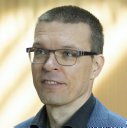
 Samuel Kaski
· 7 previous affiliations
- Aalto UniversitySince 2005
- Professor · Since 2010
- Full Professor · Since 2005
- Academy Professor · 2016–2020
- Several positions · Since 2008
- Director · Since 2017
- University of ManchesterSince 2020
- Full Professor · Since 2020
- ELLIS Institute FinlandSince 2025
- Director · Since 2025
- Finnish Center of Excellence in Computational Inference Research COIN2015–2017
- Director · 2015–2017
- University of Helsinki2004–2005
- Full Professor · 2004–2005
Research Overview
Samuel Kaski focuses on probabilistic modeling, Bayesian inference, and collaborative artificial intelligence for decision-making. His research trajectory spans foundational work in non-stationary kernel learning and differentially private inference to advanced methodologies in simulation-based inference. Currently, his work addresses out-of-distribution generalization, multi-objective optimization, and the integration of expert knowledge into machine learning systems.
Research Trajectory
The evolution of Samuel Kaski’s recent research begins with foundational contributions to probabilistic modeling and Gaussian processes. In 2019, he and his collaborators addressed the expressive limitations of standard kernels by developing Harmonizable mixture kernels with variational Fourier features. This work introduced a family of interpretable, non-stationary kernels, directly contributing to the research area of Non-Stationary Spectral Representations for Flexible Kernel Learning by enabling more flexible modeling of dynamic systems.
Building on this probabilistic foundation, his group expanded into privacy-preserving machine learning. In 2022, they published DPVIm: Differentially Private Variational Inference Improved, advancing the broader area of Noise-Aware Bayesian Inference for Differential Privacy. By mathematically aligning the gradients of different parameters and utilizing iterate averaging, the method resolved fundamental scaling issues in noise addition, achieving faster convergence and superior uncertainty estimation without compromising privacy guarantees.
By 2025, Kaski’s research increasingly emphasized optimization and the structural analysis of deep learning models. His group introduced the initial framework for TAMO in the preprint In-Context Multi-Objective Optimization. This transformer-based optimizer was designed to perform multi-objective optimization directly in-context, bypassing the need for slow, per-task surrogate model fitting. That same year, his team investigated the fundamental properties of neural architectures in From Alexnet to Transformers: Measuring the Non-linearity of Deep Neural Networks with Affine Optimal Transport. By developing an affinity score based on optimal transport, they quantified the non-linearity signatures of landmark models over the past decade, revealing that vision models had grown increasingly linear until the advent of Transformers reversed the trend.
The year 2026 marked a highly productive period characterized by significant advances in robust machine learning, Bayesian optimization, and out-of-distribution generalization. The TAMO framework was formally presented at ICLR in In-Context Multi-Objective Optimization, where it was established as a foundation model for optimization. By pretraining on a diverse corpus of synthetic functions using reinforcement learning, the model demonstrated the ability to propose high-quality designs in a single forward pass, yielding massive speedups over traditional Bayesian optimization. Alongside this, Kaski’s group tackled the scalability of multi-objective problems in Multi-Objective Bayesian Optimization via Adaptive $\varepsilon$-Constraint Decomposition. This framework replaced computationally expensive hypervolume calculations with an adaptive gap-filling strategy, transforming multi-objective problems into a sequence of constrained single-objective tasks to achieve uniform coverage of the Pareto front.
A major thematic focus during this period was addressing model misspecification and domain shifts. In Representative, Informative, and De-Amplifying: Requirements for Robust Bayesian Active Learning under Model Misspecification, his research examined covariate shifts in Bayesian Optimal Experimental Design, exploring how models trained to select maximally informative inputs behave when test samples are drawn from different distributions. Similarly, A Theory of Random Graph Shift in Truncated-Spectrum vRKHS developed a theoretical framework for graph classification under domain shift, utilizing a random-graph generative lens to analyze how changes in generative components affect non-Euclidean data structures.
Kaski has also consistently sought to improve sample efficiency and integrate domain expertise into machine learning systems. In Predictive Deep Sets, his group addressed the limitations of transformer-based amortized meta-learning by introducing a novel set encoding technique that better captures the functional structures shared across datasets. To incorporate human expertise, Incorporating Expert Knowledge into Bayesian Causal Discovery of Mixtures of Directed Acyclic Graphs proposed a variational mixture structure learning method based on Bayesian experimental design principles, allowing for the iterative inference of causal Bayesian networks in heterogeneous domains. This integration of expert feedback was further applied in Bayesian Meta-Learning with Expert Feedback for Task-Shift Adaptation through Causal Embeddings, which utilized causal embeddings to align source and target tasks, significantly reducing negative transfer in complex domains like healthcare.
Finally, his recent work has explored the vulnerabilities of machine learning models from a probabilistic standpoint. In Concept-based Adversarial Attack: a Probabilistic Perspective, his team shifted the paradigm of adversarial attacks from imperceptible pixel manipulations to the alteration of entire semantic concepts. By leveraging generative models to vary poses and backgrounds, they demonstrated how to create diverse, high-quality adversarial images that effectively fool classifiers while remaining perfectly recognizable to human observers.
Current Directions
The most recent papers in the evidence highlight a strong ongoing focus on out-of-distribution deployable machine learning and robust decision-making. Current work investigates how to maintain model reliability under severe domain shifts, whether dealing with non-Euclidean structures like graphs or managing covariate shifts in Bayesian active learning.
Additionally, Kaski’s group is actively advancing the scalability and speed of optimization techniques. Recent methodologies emphasize transformer-based in-context learning for multi-objective optimization and adaptive constraint decomposition to bypass traditional computational bottlenecks. A parallel and growing theme is the formal integration of expert knowledge into causal discovery and meta-learning, ensuring that AI systems can leverage human domain expertise to adapt safely and efficiently to novel, heterogeneous tasks.
Profile updated
Loading new papers…
Other researchers whose papers cluster into the same research directions — a proxy for overlapping technical interests and shared intellectual neighborhoods.
See something wrong? Report a mistake