

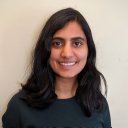
 Samira Nedungadi
· 7 previous affiliations
- SecureBioSince 2024
- Head of Engineering · Since 2026
- Researcher · 2024–2026
- Senior Software Engineer, Automation · 2023–2024
- Zymergen (United States)2018–2023
- Senior Software Engineer, Automation · 2018–2023
- Berkeley Lights, Inc.2016–2018
- Senior Software Engineer · 2018
- Software Engineer · 2016–2018
- BaseHealth, Inc.2014–2016
- Software Engineer · 2014–2016
- Pomona College2009–2013
- Undergrad student · 2009–2013
- Oregon Episcopal School2005–2009
- 2005–2009
Research Overview
Samira Nedungadi focuses on the intersection of artificial intelligence and biosecurity, specifically evaluating the dual-use risks of biological foundation models and large language models. Her work investigates how frontier AI systems augment human capabilities in laboratory workflows and complex biological tasks. Recently, she has concentrated on developing rigorous benchmarking frameworks to measure agentic capabilities and assess the robustness of safety alignments in bio-computational systems.
Research Trajectory
In 2025, Nedungadi contributed to evaluations of vulnerabilities in open-weight biological models. In the collaborative study Best Practices for Biorisk Evaluations on Open-Weight Bio-Foundation Models, the research team introduced the BioRiskEval framework to systematically assess dual-use risks. The findings demonstrated that common safety practices, such as data filtering, lack robustness against adversarial fine-tuning and probing. This work provided critical evidence for the research direction of Why Safety Alignment Fails to Erase Harmful Knowledge, suggesting a pressing need for more comprehensive safety strategies in biological generative AI.
Building on this focus on AI safety in the life sciences, her 2026 research shifted toward evaluating the active, autonomous capabilities of frontier models. In ABC-Bench: An Agentic Bio-Capabilities Benchmark for Biosecurity, she and her collaborators developed a novel evaluation suite designed to measure how effectively AI agents can utilize tools and write code to execute complex laboratory workflows. The study revealed that advanced AI agents can outperform median PhD-level biologists at specific tasks, such as DNA fragment design and generating scripts that successfully automate physical DNA assembly in a wet lab. This benchmark significantly advances the research direction of Biosecurity for Biological Foundation Models and intersects with the broader area of Automated Program Synthesis with Formal Correctness Guarantees.
Continuing the investigation into how AI systems alter the biosecurity landscape, Nedungadi also participated in a large-scale empirical study assessing the practical impact of large language models on human performance. The paper LLM Novice Uplift on Dual-Use, In Silico Biology Tasks: A Multi-Benchmark Assessment conducted a multi-model evaluation comparing novices equipped with LLMs against those relying solely on standard internet resources. By analyzing performance across eight biosecurity-relevant task sets, the research quantified a substantial "uplift" in accuracy for novices tackling complex in silico problems. This work highlights the dual-use implications of providing broad access to advanced biological reasoning capabilities and underscores the importance of measuring scientific acceleration alongside potential risks.
Current Directions
The most recent papers in the evidence indicate a sustained focus on quantifying the real-world biosecurity implications of frontier AI systems. Nedungadi's current work investigates the dual-use risks associated with both autonomous AI agents and human-AI collaboration. A primary theme is the development of rigorous benchmarking suites to measure "agentic" capabilities—specifically, the ability of models to autonomously write code, use tools, and execute complex laboratory workflows.
Alongside evaluating autonomous systems, recent research addresses the concept of novice uplift, seeking to measure exactly how much large language models accelerate human performance on sensitive biological tasks. By comparing AI-assisted users against traditional baselines, this work aims to clarify the balance between scientific acceleration and the potential democratization of dual-use biological knowledge. Additionally, her broader research profile indicates an interest in related safety domains, including the area of Safety Alignment for AI in Chemical Discovery.
Profile updated
| Paper | Venue | Year |
|---|---|---|
| Best Practices for Biorisk Evaluations on Open-Weight Bio-Foundation ModelsGitHubscaleapi/ | Biosafe Genai | 2025 |
Loading new papers…
Other researchers whose papers cluster into the same research directions — a proxy for overlapping technical interests and shared intellectual neighborhoods.
See something wrong? Report a mistake