

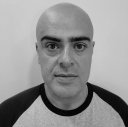
 Saif Jabari
· 2 previous affiliations
- New York UniversitySince 2015
- Associate Professor · Since 2021
- Assistant Professor · 2015–2021
- Current
Research Overview
Saif Jabari focuses on traffic flow dynamics, the security of autonomous vehicle control systems, and the application of dynamical systems theory to neural network representations. His early work established mathematical frameworks for urban traffic control and sensor placement, while his recent research develops neural operators for complex physical systems and investigates the linear dynamics of deep learning models using Koopman operator theory.
Research Trajectory
Jabari’s early research established foundational mathematical and probabilistic frameworks for monitoring and controlling urban traffic networks. In Sensor placement with time-to-detection guarantees (2016), he explored optimization strategies for sensor networks to ensure timely incident detection. He subsequently expanded into adaptive traffic control with Position weighted backpressure intersection control for connected urban networks (2018), which adapted backpressure routing algorithms to manage finite capacity and spillback in city grids. This work contributed significantly to the research direction of Coordinating Interconnected Traffic Networks.
By 2020, his focus broadened to address the emerging security vulnerabilities in AI-driven transportation. He led research demonstrating that Deep Reinforcement Learning (DRL) controllers, increasingly proposed for smoothing traffic flow, are highly susceptible to targeted manipulation. In Watch your back: Backdoor Attacks in Deep Reinforcement Learning-based Autonomous Vehicle Control Systems, he and his collaborators showed how poisoning training data with specific traffic patterns could create "sleeper agent" vehicles capable of inducing massive traffic jams when triggered. This advanced the broader area of Stealthy Backdoors and Sleeper Agents in AI Systems as well as work in Backdoor Attacks through Training Data Poisoning. The mechanisms and implications of these vulnerabilities were further detailed in Stop-and-Go: Exploring Backdoor Attacks on Deep Reinforcement Learning-Based Traffic Congestion Control Systems (2021).
Returning to traffic forecasting with new machine learning paradigms, Jabari framed high-resolution, second-by-second traffic prediction at signalized intersections as a matrix completion task in Nonlinear Traffic Prediction as a Matrix Completion Problem with Ensemble Learning (2022). His interest in the structural robustness of machine learning models also extended to graph-based architectures; in On countering adversarial perturbations in graphs using error correcting codes (2024), he proposed treating graph structures as messages requiring error correction to defend Graph Neural Networks against edge-poisoning attacks.
In 2024, a major theoretical theme emerged in his work: the application of Koopman operator theory to linearize complex, nonlinear dynamical systems. To address the "cold start" problem in traffic forecasting for data-scarce cities, his group developed Urban traffic analysis and forecasting through shared Koopman eigenmodes, connecting to the research direction of Linearizing Nonlinear Dynamics in Latent Spaces. He then applied this framework directly to deep learning architectures in Representing Neural Network Layers as Linear Operations via Koopman Operator Theory, demonstrating that complex nonlinear network activations can be mathematically treated as linear operations within a lifted latent space.
Throughout 2025 and 2026, Jabari’s research heavily emphasized neural operators and the solving of partial differential equations (PDEs) for physical systems. He introduced a novel architecture in Efficient Dilated Squeeze and Excitation Neural Operator for Differential Equations, combining dilated convolutions with adaptive feature recalibration to accelerate scientific simulations. This contributed to the area of Learning Partial Differential Equations on Irregular Domains. Concurrently, he critically evaluated the limitations of these models in Neural operators struggle to learn complex PDEs in pedestrian mobility: Hughes model case study, revealing how standard neural operators often fail to capture the sharp shocks and discontinuities inherent in certain physical models. To mitigate the computational overhead of existing spectral methods, he co-developed a lightweight alternative in Learning Solution Operators for Partial Differential Equations via Monte Carlo-Type Approximation, advancing the field of Spectral Learning on Irregular Domains.
His recent work also continues to bridge dynamical systems, adversarial robustness, and interpretability. In Catastrophic Overfitting, Entropy Gap and Participation Ratio: A Noiseless lp Norm Solution for Fast Adversarial Training (2025), he proposed an adaptive algorithm to prevent model collapse during fast adversarial training without relying on random noise injection. For spatiotemporal forecasting, he developed FlowMixer: A Constrained Neural Architecture for Interpretable Spatiotemporal Forecasting, which enforces physical consistency through shape-preserving, non-negative matrix operations. Building on his earlier Koopman research, he authored Koopman Autoencoders Learn Neural Representation Dynamics, showing how lifted representations can steer network dynamics for targeted class unlearning. Most recently, in Fractional is Better: Learnable Derivative Orders in Neural Operator Learning (2026), he demonstrated that injecting learnable fractional derivative features significantly improves the prediction accuracy of neural operators by better aligning inputs with underlying PDE structures.
Current Directions
Recent work investigates the intersection of dynamical systems, partial differential equations, and deep learning architectures. A primary focus is the development and refinement of neural operators for scientific computing and physical simulations. This includes designing architectures that can handle complex physical discontinuities, utilizing Monte Carlo-type approximations to reduce computational overhead, and integrating learnable fractional derivatives to better align neural models with underlying physical laws. Concurrently, ongoing research explores the internal dynamics of neural networks, leveraging Koopman operator theory to steer latent representations for tasks like machine unlearning, and developing constrained, physics-informed architectures for interpretable spatiotemporal forecasting.
Profile updated
Loading new papers…
Other researchers whose papers cluster into the same research directions — a proxy for overlapping technical interests and shared intellectual neighborhoods.
See something wrong? Report a mistake