

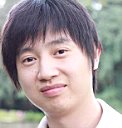
 Sai Wu
· 2 previous affiliations
- Zhejiang UniversitySince 2020
- Full Professor · Since 2020
- National University of Singapore2005–2011
- PhD student · 2005–2011
Research Overview
Sai Wu focuses on intelligent database systems, distributed data processing, and robust federated learning. His early research addressed indexing structures for peer-to-peer networks and cloud environments, gradually evolving to incorporate machine learning techniques for database optimization. Currently, his work investigates AI-native database architectures, quantum-enhanced query processing, and privacy-preserving mechanisms for distributed machine learning.
Research Trajectory
Sai Wu’s early research addressed the challenges of data retrieval and indexing in large-scale distributed systems. He introduced PISCES, a system for Just-in-time query retrieval over partially indexed data on structured P2P overlays, which optimized peer-to-peer networks by indexing only selected tuples based on query frequency and update costs. This system also incorporated a coarse-grained range index to facilitate queries that could not be fully answered by tuple-level indexing alone. Expanding into cloud environments, he developed Efficient B-tree Based Indexing for Cloud Data Processing to support scalable data management. During this period, his lab also conducted foundational evaluations of distributed processing frameworks, culminating in The Performance of MapReduce: An In-depth Study, which provided a comprehensive analysis of MapReduce execution bottlenecks.
As machine learning began to intersect with data management, Wu's focus expanded to "learned" database components and intelligent indexing. He proposed NEIST: A Neural-Enhanced Index for Spatio-Temporal Queries, which utilized Recurrent Neural Networks (RNNs) to predict the future positions of moving objects. To mitigate the prediction overhead associated with complex road networks, this approach integrated a suffix-tree to index trajectories with similar suffixes. Continuing this theme of AI-driven database optimization, he explored Dynamic Index Construction with Deep Reinforcement Learning. His group also contributed to core machine learning optimization techniques, such as Metric Learning via Penalized Optimization.
A major, sustained theme in Wu's trajectory is the robustness and viability of federated learning (FL) systems. He identified and formalized the problem of "negative federated learning" (NFL)—scenarios where clients gain no benefit from participating in the federation due to heterogeneous data or learning behaviors. His group introduced LINDT: Tackling Negative Federated Learning with Local Adaptation, proposing a metric to detect NFL at run-time across neural-network-based FL systems. This was later expanded into a comprehensive architecture with FL-GUARD: A Holistic Framework for Run-Time Detection and Recovery of Negative Federated Learning, which improved upon prior methods that either attempted to prevent NFL entirely or only addressed it after numerous learning rounds.
Alongside NFL, Wu collaborated on securing FL against malicious participants, contributing to the research direction of Distinguishing Malicious Updates from Benign Data Heterogeneity. In this area, he participated in the development of GAIN: Enhancing Byzantine Robustness in Federated Learning with Gradient Decomposition, which demonstrated how existing aggregation rules fail due to identification and integrity failures in non-IID settings. He also contributed to Byzantine-Robust Learning on Heterogeneous Data via Gradient Splitting, advancing broader work in Low-Dimensional Projections for Byzantine-Robust Federated Learning and the area of Robust Distributed Learning in High-Dimensional Parameter Spaces.
Maintaining a strong foundation in core data management, Wu's lab published A Survey on Mapping Semi-Structured Data and Graph Data to Relational Data, synthesizing approaches for cross-model data integration. More recently, his research has pushed into emerging hardware and architectural paradigms. He introduced When Quantum Computing Meets Database: A Hybrid Sampling Framework for Approximate Query Processing, leveraging quantum diffusion gates and QRAM to handle long-tail distributions by applying distinct sampling methodologies to normal and rare groups. In the domain of large language models (LLMs), his group developed DualGuard: A Parameter Space Transformation Approach for Bidirectional Defense in Split-Based LLM Fine-Tuning. This work mitigates data reconstruction attacks during secure remote fine-tuning by employing a local warm-up parameter space transformation and multi-task learning to balance privacy and utility. He also presented MorphingDB: A Task-Centric AI-Native DBMS for Model Management and Inference, proposing a database management system fundamentally designed around AI model lifecycles. Expanding further into model management and agentic intelligence, Wu co-authored Pretrained Model Recommendation for Downstream Fine-Tuning to assist downstream transfer learning, participated in advancing Autonomous Code Refinement via Execution Feedback Loops with Learner-Tailored Program Repair: A Solution Generator with Iterative Edit-Driven Retrieval Enhancement, and contributed to ToolSearcher: Optimizing Tool Selection at Scale via Reinforcement Learning to optimize large-scale tool retrieval and selection for LLM agents.
Current Directions
The most recent work in the evidence points toward two primary frontiers: the intersection of AI with database architecture, and the security of distributed large language model training. In the database domain, recent efforts investigate AI-native database management systems that treat model management and inference as first-class operations, moving beyond traditional relational structures to support task-centric AI workloads. Additionally, this research explores the integration of quantum computing techniques, such as hybrid classical-quantum sampling, to optimize approximate query processing for complex data distributions. In the realm of distributed machine learning, current directions focus on securing split-learning architectures for LLM fine-tuning, specifically developing bidirectional defense mechanisms and parameter space transformations to protect against data reconstruction attacks without sacrificing task utility.
Profile updated
Loading new papers…
Other researchers whose papers cluster into the same research directions — a proxy for overlapping technical interests and shared intellectual neighborhoods.
See something wrong? Report a mistake