

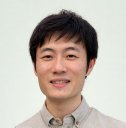
 Ryo Karakida
· 3 previous affiliations
- Researcher · Since 2017
- RIKENSince 2025
- Researcher · Since 2025
- The University of Tokyo2015–2017
- PhD student · 2015–2017
Research Overview
Ryo Karakida focuses on the theoretical foundations of deep learning, the dynamics of learning in neural networks, and optimization in the infinite-width limit. His trajectory spans from statistical mechanical analyses of continual learning to the parameterization of second-order optimization methods. Recently, his work investigates the asymptotic properties and spectral dynamics of self-attention mechanisms and transformer architectures.
Research Trajectory
Karakida's work in the provided corpus begins with an examination of the theoretical dynamics of sequential training. In Learning curves for continual learning in neural networks: Self-knowledge transfer and forgetting (2022), he utilized statistical mechanics and the neural tangent kernel to analyze generalization performance. This research explored the conditions under which models experience catastrophic forgetting or successfully transfer knowledge across tasks by leveraging an established statistical mechanical analysis of kernel ridge-less regression.
Moving into optimization and regularization, he investigated the implicit bias of neural network architectures. He introduced a finite-difference approximation for gradient regularization in Understanding Gradient Regularization in Deep Learning: Efficient Finite-Difference Computation and Implicit Bias. This approach accelerated computation while improving model generalization by encouraging sparse, high-performing solutions, contributing to the broader area of Matrix-Free Curvature Estimation for Deep Learning.
A significant portion of his trajectory from 2024 to 2025 focuses on scaling optimization methods to infinite-width limits. With collaborators, he extended the Maximal Update Parameterization ($\mu$P) framework to advanced optimization techniques. The study On the Parameterization of Second-Order Optimization Effective towards the Infinite Width identified the correct scaling for initialization, learning rates, and damping terms in methods like K-FAC and Shampoo. This research advanced the direction of The Hyperparameter Sensitivity of Second-Order Optimization and contributed to the area of Cross-Scale Hyperparameter Transfer, allowing hyperparameters tuned on small models to transfer seamlessly to massive ones. He further expanded this framework to local learning algorithms, such as predictive coding and target propagation, in Local Loss Optimization in the Infinite Width: Stable Parameterization of Predictive Coding Networks and Target Propagation. This work provided a theoretical foundation for stable scaling in the area of Zero Shot Hyperparameter Transfer Across Model Scales and touched upon the direction of Hybrid First and Second Order Optimization.
Concurrently, Karakida has analyzed the theoretical properties of modern architectures, particularly focusing on how structural choices impact expressivity and stability. In Understanding MLP-Mixer as a wide and sparse MLP, he participated in formalizing the parameter efficiency and Lipschitz expressivity tradeoffs of MLP-Mixer models. He also began a sustained investigation into self-attention mechanisms. Directing this line of research, he explored how transformers focus on specific tokens in Self-attention Networks Localize When QK-eigenspectrum Concentrates. By analyzing the eigenspectrum of Query-Key matrices, the research demonstrated that eigenvalue concentration prevents both rank and entropy collapse simultaneously, contributing to the research direction of The Single Layer Constraint in Transformer Theory.
His analysis of attention mechanisms deepened through the lens of dynamical systems and infinite-width limits. In Recurrent Self-Attention Dynamics: An Energy-Agnostic Perspective from Jacobians, he and his co-authors used Jacobian matrices to move beyond restrictive energy-based models. They discovered that normalization layers are critical for maintaining models at the "edge of chaos"—a state where the maximum Lyapunov exponent is near zero, which serves as a strong predictor of high performance. Further challenging established assumptions, Infinite-Width Limit of a Single Attention Layer: Analysis via Tensor Programs revealed that the internal activations of attention mechanisms deviate from the standard Gaussian limit traditionally assumed in infinite-width neural networks.
This line of inquiry culminates in Gaussian Equivalence for Self-Attention: Asymptotic Spectral Analysis of Attention Matrix (2026), where he and his collaborators provided a rigorous analysis of the singular value spectrum of the attention matrix. By establishing a Gaussian equivalence result, the work demonstrated that the distribution of squared singular values deviates from the Marchenko-Pastur law under constant inverse-temperature regimes.
Current Directions
Recent work investigates the rigorous mathematical foundations of modern transformer architectures, moving beyond empirical observations to exact theoretical characterizations. The most recent papers in the evidence address the asymptotic and spectral properties of self-attention layers, utilizing random matrix theory and Jacobian matrices to understand their internal dynamics. A major ongoing theme is the behavior of these models in the infinite-width limit, focusing on how attention mechanisms deviate from traditional Gaussian assumptions and how their eigenspectra dictate model stability, localization, and overall performance.
Profile updated
Loading new papers…
Other researchers whose papers cluster into the same research directions — a proxy for overlapping technical interests and shared intellectual neighborhoods.
See something wrong? Report a mistake