

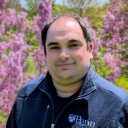
 Ryan Marcus
· 3 previous affiliations
- University of PennsylvaniaSince 2023
- Assistant Professor · Since 2023
- Postdoc · 2019–2021
- Brandeis University2014–2019
- PhD student · 2014–2019
Research Overview
Ryan Marcus focuses on the intersection of machine learning and systems, specifically developing learned components for database engines and applying reinforcement learning to distributed consensus. His trajectory spans early work on neural query optimization to recent architectures that dynamically adapt to evolving workloads. Currently, he investigates scalable Bayesian optimization and systemic biases in industrial databases.
Research Trajectory
Marcus’s early work established foundational techniques in the broader area of Learned Components for Autonomous Database Systems. In 2019, he introduced Plan-Structured Deep Neural Network Models for Query Performance Prediction, which proposed a neural architecture that mirrors the tree structure of query execution plans. By treating each operator as a neural network unit, this approach automated feature engineering and captured complex operator interactions to predict execution latency. Expanding on the evaluation of learned systems, he collaborated on Benchmarking Learned Indexes (2021), which provided a unified comparison of learned index structures against traditional baselines like B-Trees, demonstrating their performance advantages in read-only, in-memory workloads.
During this period, his focus deepened on query optimization. He developed Neo: A Learned Query Optimizer (2021), an end-to-end system that bootstraps from existing optimizers and continuously improves via deep neural networks. Recognizing the practical deployment challenges of fully learned optimizers—such as training overhead and poor tail performance—he subsequently introduced Bao (the Bandit optimizer) in Bao: Making Learned Query Optimization Practical (2021). Bao combined tree convolutional neural networks with Thompson sampling to provide per-query optimization hints, allowing the system to automatically adapt to changes in workloads, data, and schemas. This system was further detailed in a subsequent SIGMOD Record publication, Bao: Making Learned Query Optimization Practical (2022). Pushing the boundaries of this paradigm, he later proposed Learned Query Superoptimization (2023), arguing that for highly repetitive analytical queries, systems should leverage machine learning and program synthesis over hours or days to discover optimal execution strategies rather than settling for fast, heuristic-driven approximations.
Moving into distributed systems and consensus, his research group explored the application of reinforcement learning to Byzantine Fault-Tolerant (BFT) protocols. This led to the development of a decentralized reinforcement learning framework detailed in BFTBrain: Adaptive BFT Consensus with Reinforcement Learning (2024) and formally presented at NSDI as BFTBrain: Adaptive BFT Consensus with Reinforcement Learning (2025). BFTBrain dynamically switches between consensus protocols in real-time, proving resilient to data pollution from malicious nodes and significantly outperforming static protocols under adversarial attacks. Continuing the theme of secure distributed systems, he also guided work on Adaptive Sharding in Untrusted Environments (2025).
Returning to core database engine components, he contributed to the research direction of Mitigating Cardinality Estimation Errors in Database Query Optimizers with the publication of Is it Bigger than a Breadbox: Efficient Cardinality Estimation for Real World Workloads (2025). This work introduced LITECARD, which replaced slow, monolithic deep learning models with a hierarchy of simple, localized mini-regressors trained entirely online, drastically reducing query execution times with minimal training overhead.
Most recently, his work has expanded into analyzing real-world system behaviors and scaling optimization techniques. In 2026, he published Survivorship Bias in Industrial Database Workloads, examining systemic biases in how database workloads are evaluated. Additionally, he collaborated on Scaling Multi-Task Bayesian Optimization with Large Language Models (2026), which introduced the BOLT framework. By using large language models to decouple knowledge transfer from single-task optimization, this work advanced the broader area of Informed Initialization for Bayesian Optimization, achieving significant scaling without the performance saturation typical of prior multi-task methods.
Current Directions
The most recent papers in the evidence point toward three primary research vectors. First, he is investigating the integration of Large Language Models with traditional optimization frameworks, specifically using LLMs to warm-start Bayesian optimization across thousands of tasks to overcome historical scaling bottlenecks. Second, he is examining the methodological foundations of database research by identifying and quantifying survivorship bias in industrial database workloads. Finally, his recent systems work addresses adaptive infrastructure in adversarial settings, focusing on dynamic sharding and reinforcement learning-driven consensus mechanisms that can maintain high throughput in untrusted environments.
Profile updated
| Paper | Venue | Year |
|---|---|---|
| Learned Offline Query Planning via Bayesian OptimizationGitHubSpeculative/ | Proc. ACM Manag. Data | 2025 |
Loading new papers…
Other researchers whose papers cluster into the same research directions — a proxy for overlapping technical interests and shared intellectual neighborhoods.
See something wrong? Report a mistake