

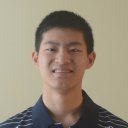
 Ryan Feng
· 3 previous affiliations
- University of MichiganSince 2019
- PhD student · Since 2019
- KLA2023
- Intern · 2023
- University of Washington2015–2019
- Undergrad student · 2015–2019
Research Overview
Ryan Feng works on computer vision, adversarial machine learning, and robotic perception, with a specific focus on the robustness and interpretability of deep learning systems. His research investigates how environmental factors, such as image compression and physical-world adversarial perturbations, affect model performance, and develops defensive frameworks to mitigate these vulnerabilities. His recent work explores the intersection of out-of-distribution (OOD) detection and foundation models, seeking to leverage large-scale model priors to achieve unsupervised invariance to real-world transformations.
Research Trajectory
Feng’s early research focused on the intersection of signal processing and computer vision, specifically examining how low-level image degradation affects high-level feature extraction. In Understanding the Impact of Compression on Feature Detection and Matching in Computer Vision, he investigated the fundamental effects of video compression on SIFT feature detection and matching. This work was motivated by the scaling of video-based sensor networks, where real-time content-based decisions must often be made at the edge under bandwidth constraints. By analyzing how reduced resolution and frame-rate impact the reliability of vision primitives, this research established a foundation for understanding the sensitivity of vision algorithms to non-semantic input variations.
In 2019, Feng transitioned toward applied robotic perception, leading a study on Robot-Assisted Feeding: Generalizing Skewering Strategies Across Food Items on a Plate. This work addressed the challenge of acquiring diverse food items with varying physical properties. By collecting a large-scale dataset of robot bite acquisition trials, Feng demonstrated that items with similar physical characteristics exhibit similar success rates across an action space. This insight allowed for the generalization of skewering strategies to previously unseen food items, moving away from item-specific programming toward a more adaptable, property-based approach to robotic manipulation.
Adversarial Robustness and Out-of-Distribution Detection
Starting in 2020, Feng’s work shifted significantly toward adversarial machine learning, focusing on both the generation of physical-world attacks and the development of robust preprocessing defenses. He led the development of GRAPHITE: Generating Automatic Physical Examples for Machine-Learning Attacks on Computer Vision Systems, a framework designed to generate adversarial "stickers" capable of fooling vision systems in black-box settings. Unlike previous methods that required internal model access, GRAPHITE operates in "hard-label" environments where only the final prediction is available, producing attacks that remain effective across varying lighting conditions and camera angles.
Parallel to this work on attacks, Feng investigated defensive mechanisms that utilize image preprocessing to reduce the attack surface. In Essential Features: Reducing the Attack Surface of Adversarial Perturbations with Robust Content-Aware Image Preprocessing, he addressed the limitations of fixed-codebook pixel discretization. He formally proved that adaptive codebooks—which adjust based on the specific content of an image—provide stronger robustness guarantees than fixed approaches. This led to the "Essential Features" defense, which discretizes images in a content-adaptive manner to balance representation accuracy with the removal of adversarial noise.
Feng further refined these defensive strategies by incorporating distribution-level constraints. In Constraining the Attack Space of Machine Learning Models with Distribution Clamping Preprocessing, he formalized the ideal preprocessor as a function that maps any input to its nearest in-distribution equivalent. By detecting anomalous pixels and "clamping" them to fit within expected distribution boundaries, this method successfully increased model robustness against patch attacks. This line of research highlights a move toward treating adversarial defense as a problem of maintaining distributional consistency.
During this period, Feng also participated in collaborative efforts to improve the interpretability of safety-critical systems. He contributed to the development of concept-based explanation frameworks for OOD detectors, which move beyond pixel-level heatmaps to provide human-understandable reasons (e.g., textures or patterns) for why a detector flags an input as out-of-distribution. He also contributed to research regarding stateful defenses against query-based black-box attacks, exploring the theoretical trade-offs between attack detection and false positive rates.
Current Directions
Feng’s recent work focuses on systemic safety and the application of foundation models to long-standing problems in computer vision. In 2024, he contributed to a comprehensive analysis of the autonomous vehicle (AV) pipeline, identifying gaps between perception-layer attacks and their downstream effects on vehicle control. This work advocates for a more integrated approach to AV security that considers the entire end-to-end system rather than isolated components.
His most recent research explores the inherent priors of large-scale vision models to solve the problem of invariance. In Foundation Vision Models are Unsupervised Image Canonicalizers, Feng and his collaborators propose Foundation Model Canonicalization (FMC). This approach treats foundation models as unsupervised engines for "undoing" nuisance transformations—such as changes in rotation, viewpoint, and lighting—without requiring task-specific retraining. By using the internal representations of foundation models to reason about and normalize these transformations, FMC aims to provide a more robust and adaptable path toward achieving true invariance in computer vision.
Profile updated
Loading new papers…
Other researchers whose papers cluster into the same research directions — a proxy for overlapping technical interests and shared intellectual neighborhoods.
See something wrong? Report a mistake