

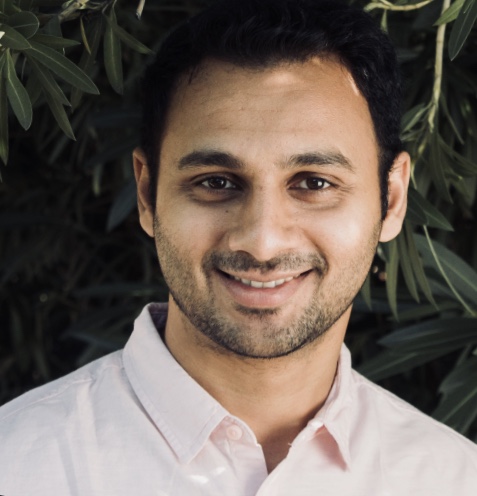
 Rushil Anirudh
· 4 previous affiliations
- Amazon (United States)Since 2024
- Applied Scientist, AGI Customization Science · Since 2025
- Current
- Applied Scientist · 2024–2025
- Principal Scientist, Machine Learning · 2023
- Computer Scientist, Machine Learning · 2018–2023
- Postdoctoral Researcher · 2016–2018
- Research Scholar · 2015
- Postdoctoral Researcher · 2016
- Arizona State University2010–2016
- Graduate Research Assistant · 2011–2016
- PhD student · 2012–2016
- Master of Science - MS, Electrical Engineering · 2010–2012
Research Overview
Rushil Anirudh focuses on uncertainty estimation in deep learning, physics-informed surrogate modeling, and representation learning for complex data structures. Early work explored topological data analysis and Riemannian geometry for computer vision, evolving into robust methods for tomographic reconstruction and physical simulations. Recent efforts address failure characterization in regression models and the development of unified foundation models for 3D medical imaging.
Research Trajectory
The trajectory begins with a focus on computer vision and action recognition, initially exploring representation techniques in A heterogeneous dictionary model for representation and recognition of human actions. This interest in structured representations soon expanded into the mathematical foundations of feature spaces. In 2016, Anirudh introduced novel geometric approaches to data analysis, including A Riemannian Framework for Statistical Analysis of Topological Persistence Diagrams. This work modeled persistence diagrams as 2D probability density functions on a Hilbert Sphere, offering a correspondence-free distance metric that advanced the broader area of Scaling Topological Data Analysis for Deep Learning. Concurrently, Elastic Functional Coding of Riemannian Trajectories. applied transported square-root velocity fields to map dynamic visual phenomena into low-dimensional Euclidean spaces, contributing to research directions such as Machine Learning on Curved Riemannian Manifolds (note: using the broader theme of manifold learning).
By 2018, the research expanded into inverse problems and tomographic reconstruction. Lose the Views: Limited Angle CT Reconstruction via Implicit Sinogram Completion proposed a convolutional neural network system to predict full-view sinograms from limited angle data, addressing challenges in the research direction of The Missing Wedge Problem in Tomographic Reconstruction. This interest in integrating deep learning with physical systems led to significant work in surrogate modeling for scientific applications. Improved surrogates in inertial confinement fusion with manifold and cycle consistencies developed techniques for physics-informed models, advancing the area of Physics Informed Surrogate Modeling and Model Order Reduction.
A major theme in Anirudh's subsequent work is the reliable deployment of neural networks, specifically through uncertainty quantification and out-of-distribution (OOD) detection. In 2021, Δ-UQ: Accurate Uncertainty Quantification via Anchor Marginalization introduced a method to estimate epistemic uncertainty using a single neural network by marginalizing out the effect of biases during inference. This contributed significantly to the field of Resource Constrained Uncertainty Estimation. Building on this principle, Out of Distribution Detection via Neural Network Anchoring and Single Model Uncertainty Estimation via Stochastic Data Centering further refined these techniques, addressing the critical research directions of Overconfidence in Out of Distribution Neural Network Predictions and Calibrating Uncertainty in Deep Neural Networks.
Alongside these methodological advancements, Anirudh continued to engage deeply with domain sciences. The 2022 Review of Data-Driven Plasma Science synthesized the intersection of machine learning and plasma physics, highlighting the growing role of data-driven methods in complex physical domains. Methodological robustness remained a priority, as seen in Mimicking of corruption in images, which detailed systems for generating uncorrupted images by iteratively training networks to model observed corruptions.
In 2023, the integration of modern architectures into scientific workflows yielded Transformer-Powered Surrogates Close the ICF Simulation-Experiment Gap with Extremely Limited Data. This research utilized transformer architectures and graph-based hyper-parameter optimization to improve prediction accuracy in inertial confinement fusion experiments, contributing to the area of Reliable Model Selection with Small Validation Sets. The focus on model reliability extended to regression tasks in PAGER: Accurate Failure Characterization in Deep Regression Models, which introduced a framework combining epistemic uncertainty and manifold non-conformity scores to systematically detect failures in deep regressors.
Most recently, the trajectory has encompassed applied computer vision and large-scale foundation models. Real-time Driver Drowsiness Detection for safer driving using MESA: A multi-agent based modeling framework and Face Recognition Models for Social Media demonstrate the application of hybrid modeling strategies to real-time, computationally constrained environments. Pushing the boundaries of representation learning in healthcare, VoxForge: A Unified Foundation Model for Dense 3D Features Across MRI, CT and PET introduced a single encoder designed to learn transferable features across multiple medical imaging modalities, advancing the research direction of Cross-Modality Generalization in Medical Artificial Intelligence.
Current Directions
Current work investigates the development of unified foundation models for complex, multi-modal data, particularly in the medical imaging domain. The most recent papers address the challenge of creating reusable, frozen feature representations that can generalize across distinct modalities such as MRI, CT, and PET without requiring end-to-end fine-tuning. This involves leveraging self-distillation and cross-modal training curricula to achieve high label efficiency and robust performance on both localized and global tasks. Additionally, ongoing research explores the practical deployment of hybrid computer vision models in real-time and cloud-based environments, balancing computational efficiency with high detection accuracy for applications ranging from social media to safety systems.
Profile updated
Loading new papers…
Other researchers whose papers cluster into the same research directions — a proxy for overlapping technical interests and shared intellectual neighborhoods.
See something wrong? Report a mistake